Mini Split Installation in Island Pond, VT
Tell us about the house, and a licensed contractor who covers Essex County will get in touch.
Tell us about the job
It takes about a minute.
A mini-split in Island Pond works hard, and mostly in the cold
Heat is the job here. Island Pond needs it September through June, ten months of the year, with winter nights averaging 8°F from December through February. Whatever mini-split goes in has to hold up at that low end, night after night, because the summer side barely comes into it. Afternoons top out around 74°F, so cooling is the easy part of the job.
A mini-split installed new has to meet the federal minimum for a split-system heat pump, 14.3 SEER2 for cooling and 7.5 HSPF2 for heating. In a place like this, the heating number matters more, since that's what the unit will lean on most months of the year. Half the homes here still heat with fuel oil, and a mini-split sized right for the cold can take real weight off that furnace through the coldest stretch.
- 10 months
- September through June, your system heats
- 8°F
- the average winter night it heats against
- 74°F
- the average summer afternoon it cools against
Vermont has no state license for HVAC contractors.
Vermont keeps no state license or registration for HVAC contractors, so there is no license to check before the work starts and none to revoke if the job goes bad. Whoever installs the mini-split answers to no state board.
For this job, the protection comes from the local building office instead. Most cities and towns in Vermont require a permit for a mini-split installation and an inspection once the work is done, and that inspection is what confirms the unit was mounted and wired to code.
Source: Vermont Department of Public Safety, Division of Fire Safety
- Is a mini split worth it?
- Yes, especially with more than half the homes here heating with fuel oil. A mini split runs on electricity and can carry the heating load through the winter on its own or work alongside an existing oil system, cutting into how much oil gets burned. At 8°F on a January night it will still be producing heat, since cold-climate models are built and rated for exactly that kind of low temperature. Cooling is not really a factor here since there is almost no need for it, but the heating side is where the value shows up over a 10-month season.
- How many rooms can a mini split cover?
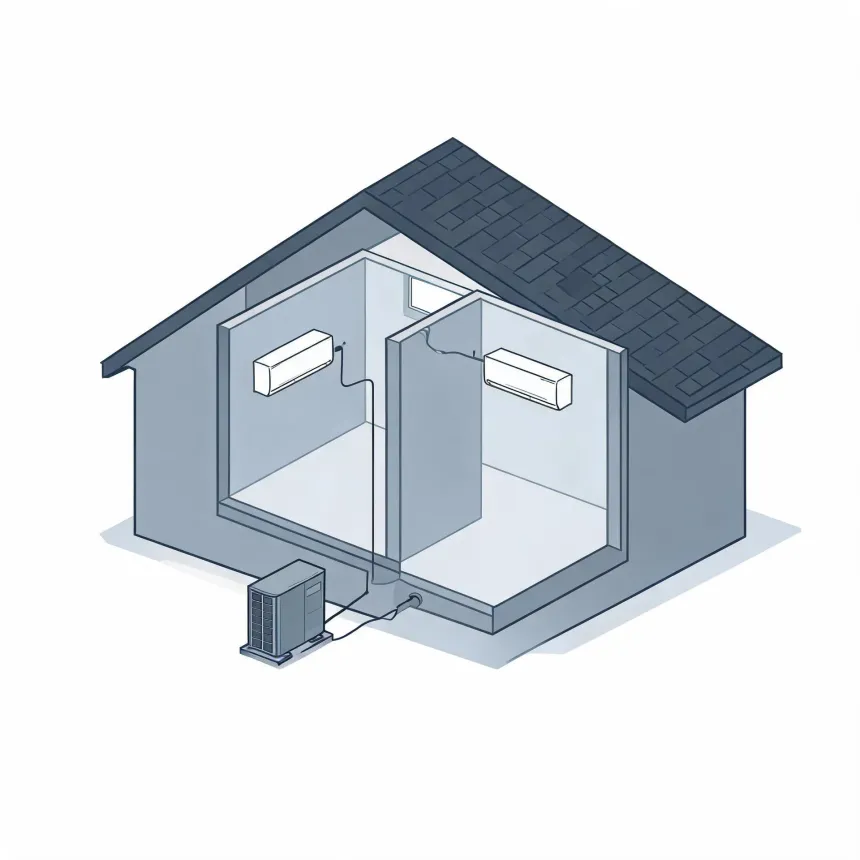
- A single outdoor unit can run one indoor head or up to eight, depending on the system. Each indoor head is sized to the room it serves, so a contractor will look at the square footage and layout of the house before deciding whether one head can cover an open floor plan or whether each bedroom needs its own. The number of rooms it can cover comes down to how many indoor heads the outdoor unit is matched to, not a fixed limit on the technology itself.
- Can a mini split heat a whole house?
- It can, if enough indoor heads are placed to reach every room, but a single head is not built to heat a whole house by itself. Heat pumps move heat rather than generate it directly, and a cold-climate model can keep working down into single digits and below, which matters for a place that sees 8°F nights all winter. Whether one is sized to carry a whole house through those temperatures depends on the size and layout of the home, so that part is worth having a contractor work out room by room.