Mini Split Installation in West Burke, VT
Tell us about the house, and a licensed contractor who covers Caledonia County will get in touch.
Tell us about the job
It takes about a minute.
West Burke asks a mini-split to heat, not just cool
Winter nights here average 9°F from December through February, and homes in West Burke need heat for 9 months of the year, September through May. A mini-split installed here spends almost all its working life in heating mode, not cooling. Summer afternoons average a mild 75°F, so cooling is the easy part of its job.
That means the heating side of the unit matters most. Any mini-split installed new has to meet the federal minimum of 7.5 HSPF2 for heating and 14.3 SEER2 for cooling, but at 9°F a unit sized and set up for this climate is what keeps the house warm on the coldest nights, not just the mildest ones. Almost half of homes in the area still heat with fuel oil, and a mini-split installed to handle the cold here can carry more of that load itself.
- 9 months
- September through May, your system heats
- 9°F
- the average winter night it heats against
- 75°F
- the average summer afternoon it cools against
Vermont has no state license for HVAC contractors.
There is no state record of who installs mini-splits in Vermont, no test and no file to check. Anyone can call themselves an HVAC contractor and take the job in Caledonia County. Whatever protection exists here comes from somewhere other than a license.
This installation still needs a permit from the local building office in most Vermont towns, and an inspection once the work is done. That inspection is what checks the job here, not a license.
Source: Vermont Department of Public Safety, Division of Fire Safety
- Is a mini split worth it?
- For most homes it is, but here it depends on whether it's your only heat source. West Burke winters drop to an average of 9°F overnight from December through February, and a mini split has to be sized and rated to keep up with that or it will lean hard on backup heat. Nearly half the homes in this area heat with fuel oil, so a mini split is often added alongside an existing system rather than replacing it outright. A contractor can tell you whether your house and your current setup make it worth the switch.
- How many rooms can a mini split cover?
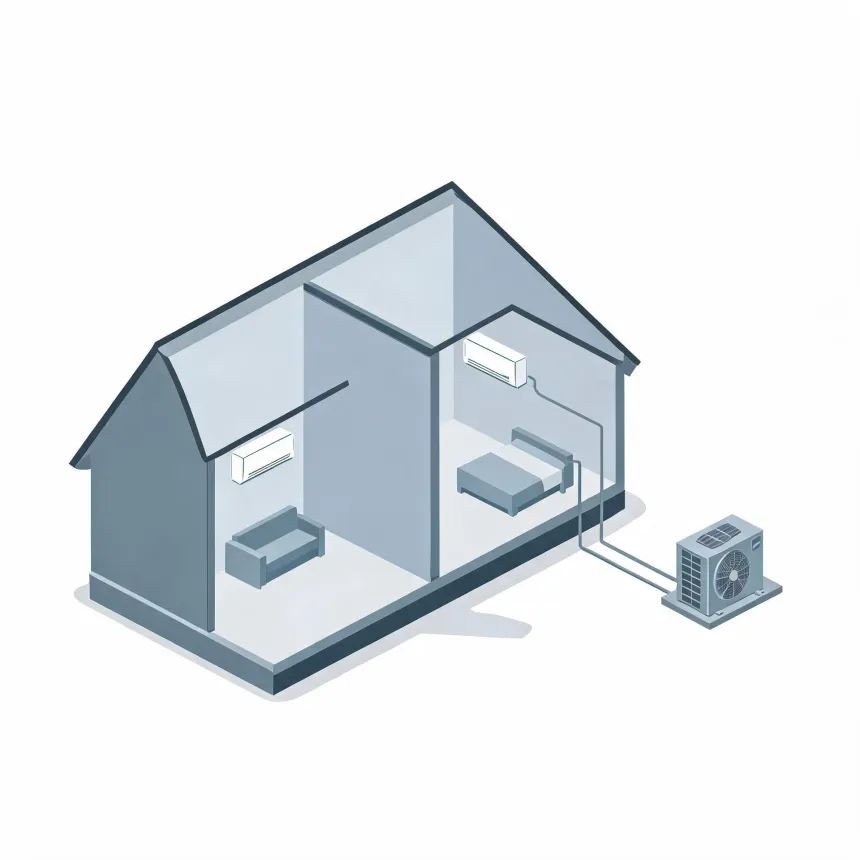
- A single outdoor unit can run more than one indoor head, so it depends on how many zones you install, not on the mini split itself. A single-zone system covers one room or open area. A multi-zone system can run several indoor heads off one outdoor unit, each with its own thermostat. The right number for your house comes down to square footage, room layout, and how much heat each zone needs to move, which is something a contractor works out room by room.
- Can a mini split heat a whole house?
- It can, if enough zones are installed and each one is sized for the room it heats. Homes here need heat nine months out of the year, September through May, with nights averaging 9°F in the coldest stretch, so whole-house coverage means the system has to be rated to keep working at that temperature. A mini split alone can do it, but plenty of homes here pair it with an existing fuel oil system rather than replace it. A contractor can size a whole-house layout against your home's heat loss and your winters.