
Ductwork doing its job
This is what moves warm air through your house all winter and keeps it comfortable come summer. The metal and flex runs stay open, the furnace pulls return air without a fight, and what comes out the vents is just air.
Answer a few questions about the duct cleaning and skip the search.
Skip the searchYou've seen the ads for duct cleaning and wondered if it actually does anything, or if it's just a service that gets pushed on homeowners whether they need it or not. With a furnace running hard all winter and the windows shut for months, it's a fair question. You want to know if it's worth paying for, or if it's one of those things that sounds useful but doesn't change much.
Duct cleaning helps when there's something specific going on: a musty smell when the furnace kicks on, dust that seems to resettle no matter how often you wipe it down, or work that opened up the ducts, like a renovation. Outside of that, it's not something that needs to happen on a schedule. Dust and some debris build up in ducts over time, but that alone doesn't mean it's affecting your air or your furnace. In a house that heats with gas through a long Vermont winter, the bigger factor for air quality is usually the filter, changed on schedule, not the ducts themselves. If nothing's prompting the question beyond curiosity, it's fine to leave it alone.

You're dusting the shelf under the ceiling vent on one of the first warm afternoons of spring, the furnace finally off for the season, windows cracked for the first time since fall. The cloth comes away gray. You look up and the grille itself has a soft dark line around the edge, the kind of buildup that doesn't happen in a week. You wipe the shelf again an hour later and there's already a thin new layer. It's the same vent that's been blowing on that spot all winter, Chittenden County winters being what they are, the furnace running for months on end without a break. You make a note to look into it before summer, then go back to opening windows.
Half the homes here were built by 1981
Half the homes in Chittenden County were built in 1981 or earlier, so if yours is one of them, check whether the ductwork is original before you decide it just needs a cleaning.
Heat runs September through May
Heat runs about nine months a year here, September through May, so whatever is sitting in that ductwork gets pushed through the house most months you're home.
Cooling runs July through August
Cooling only runs July and August here, so for most of the year it's the furnace, not the AC, moving air through those same ducts.
ACS 2020-2024 · NOAA nClimDiv 1991-2020

This is what moves warm air through your house all winter and keeps it comfortable come summer. The metal and flex runs stay open, the furnace pulls return air without a fight, and what comes out the vents is just air.

Branch ducts packed between the joists like this collect dust where they bend and join. A run that's choked down or loose at a seam makes the furnace work harder and sends less air to the rooms farthest from it.
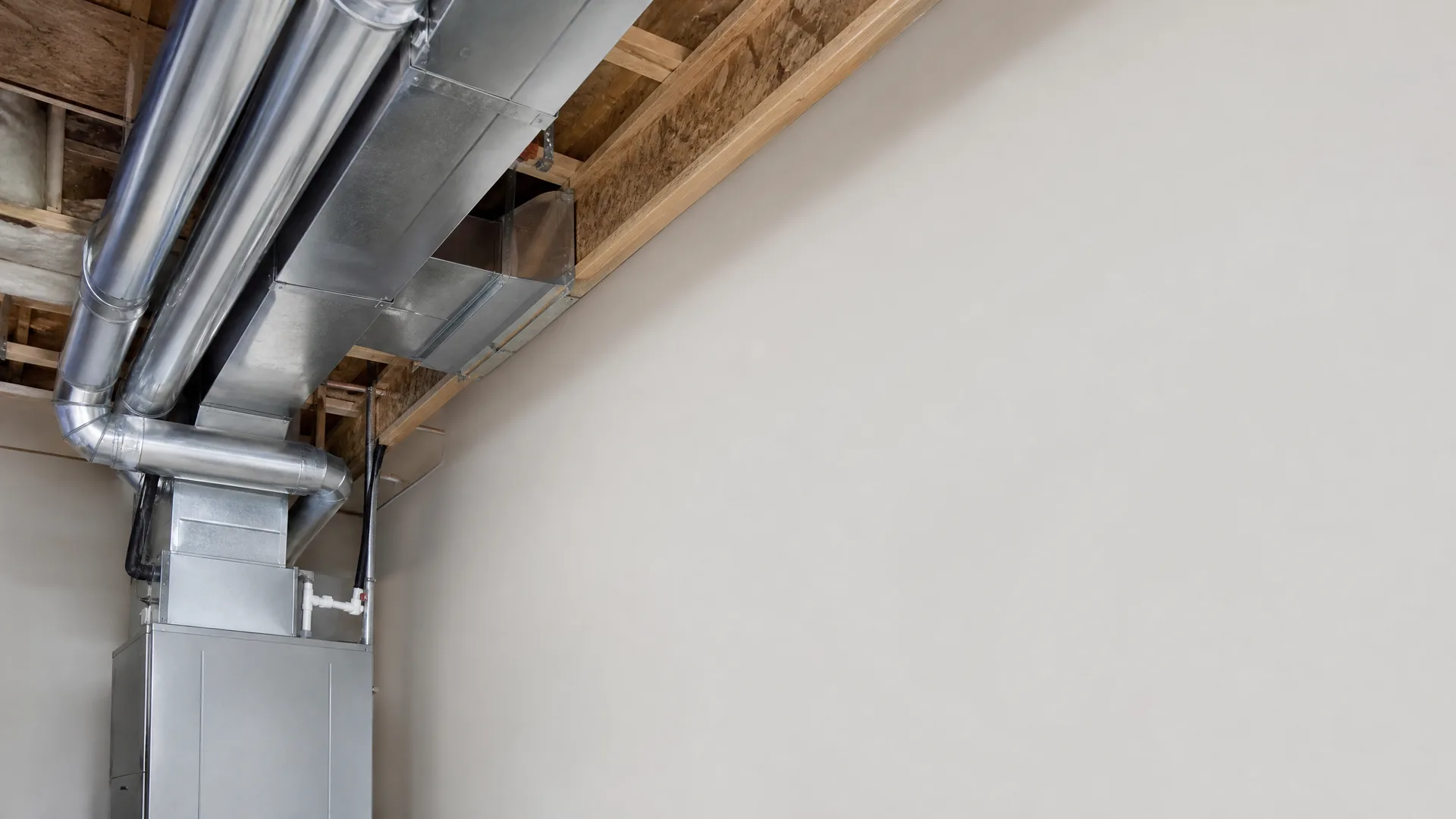
Your furnace pulls return air from the house, pushes it across the heat exchanger, and sends it back out through the same runs all winter. Nine months of that, the ductwork doesn't get a break. Any dust already sitting in the runs gets stirred and redistributed every time the blower kicks on. It doesn't create new dirt. It just keeps circulating whatever is already in there.
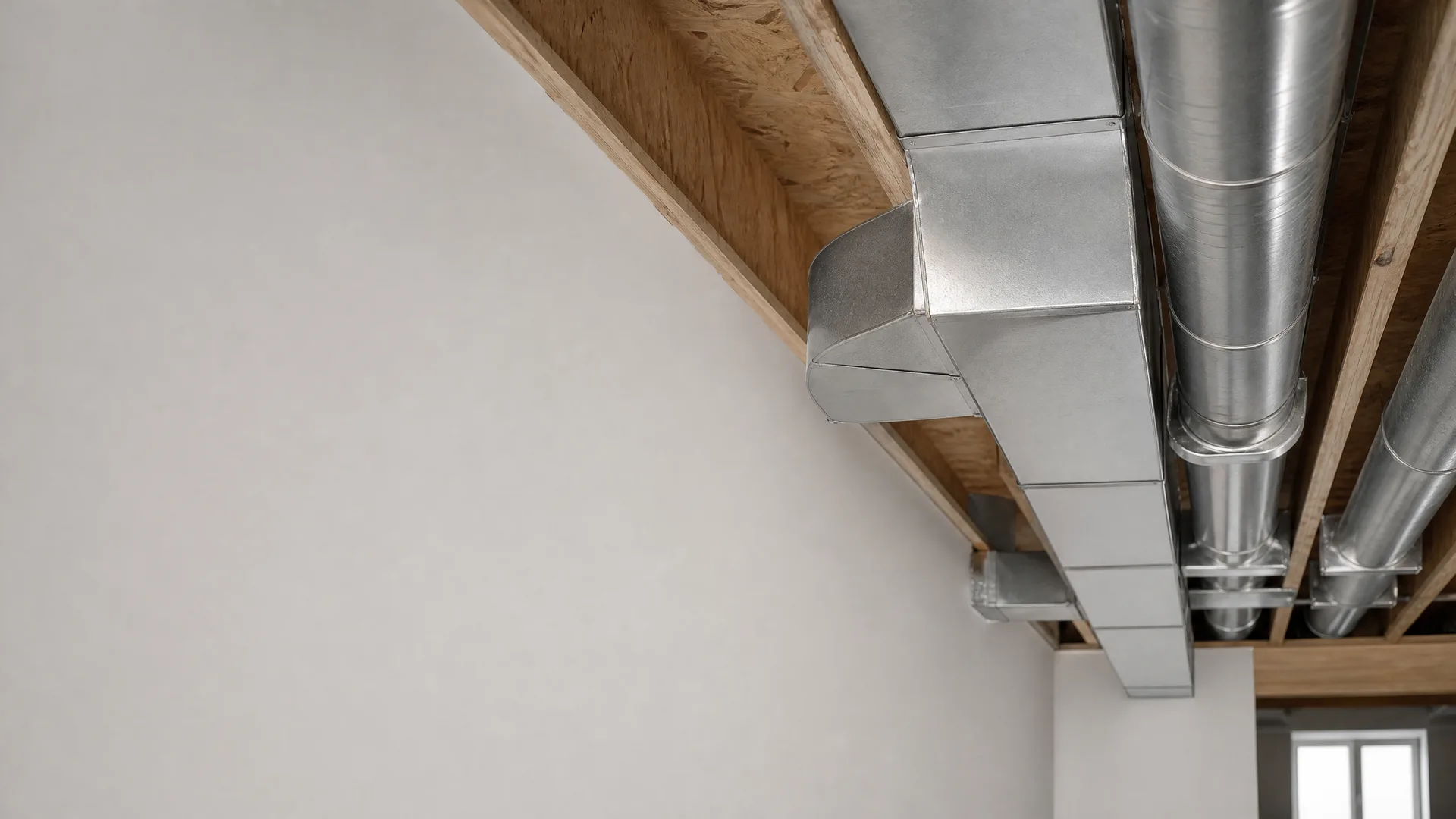
Gas furnaces draw combustion air separately from the air they heat, so a dirty duct isn't a safety problem on its own. The real cost shows up as resistance. A duct run packed with debris makes the blower work harder to push the same amount of air, and with power rates what they are in Vermont, a furnace fighting its own ductwork all winter is not where you want that cost landing.
Clogged or leaky ductwork makes your furnace blower and any air handler work harder to move the same air, and at 22.61 cents per kilowatt-hour that extra runtime shows up fast on your bill. Clean, sealed ducts let the system move air with less effort.
EIA-861 2025

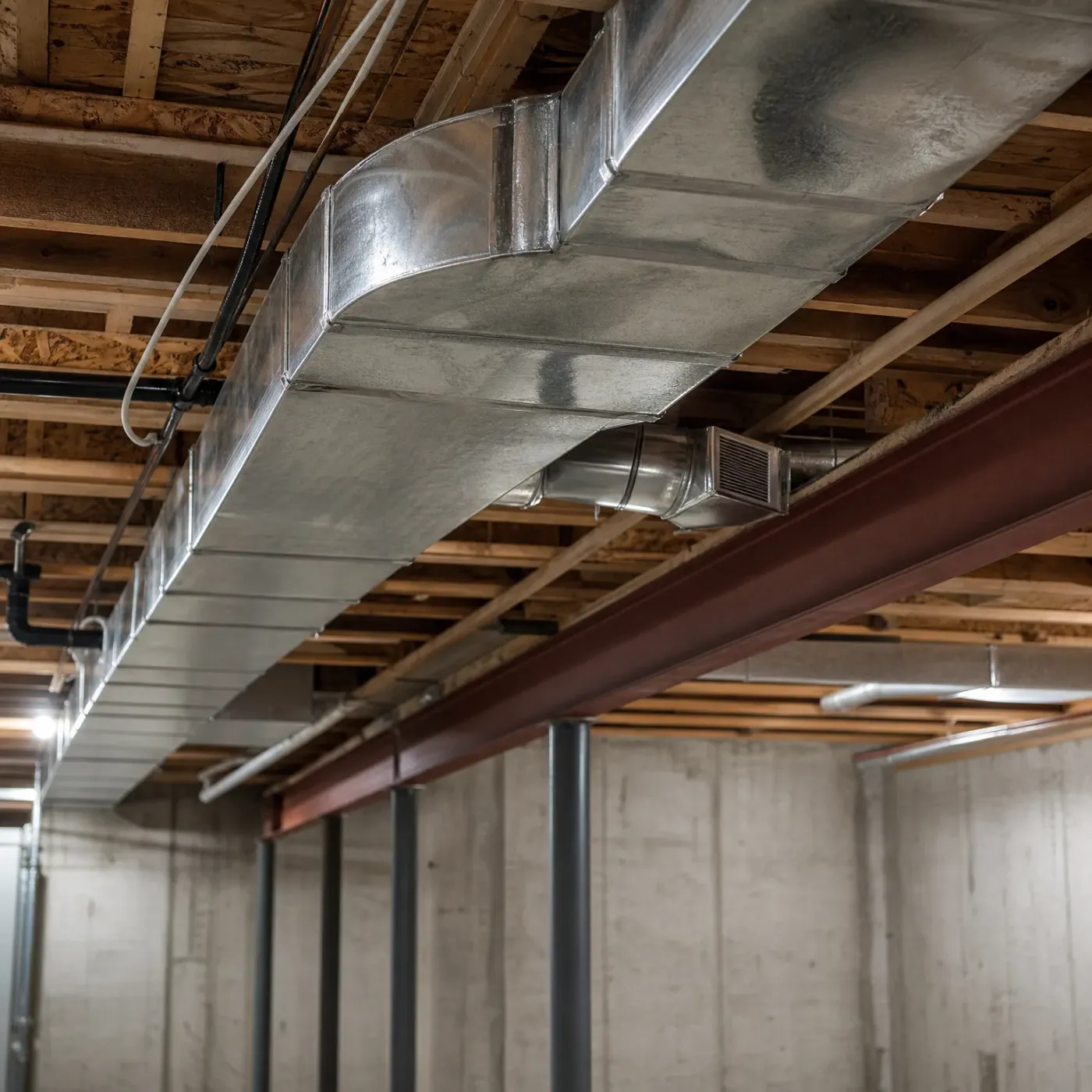
This is what a duct run looks like when it's just doing its job. Sheet-metal trunks and flex runs stretch across the joists, carrying warm air through the house all winter and cool air back through come summer, without anything slowing the airflow down.

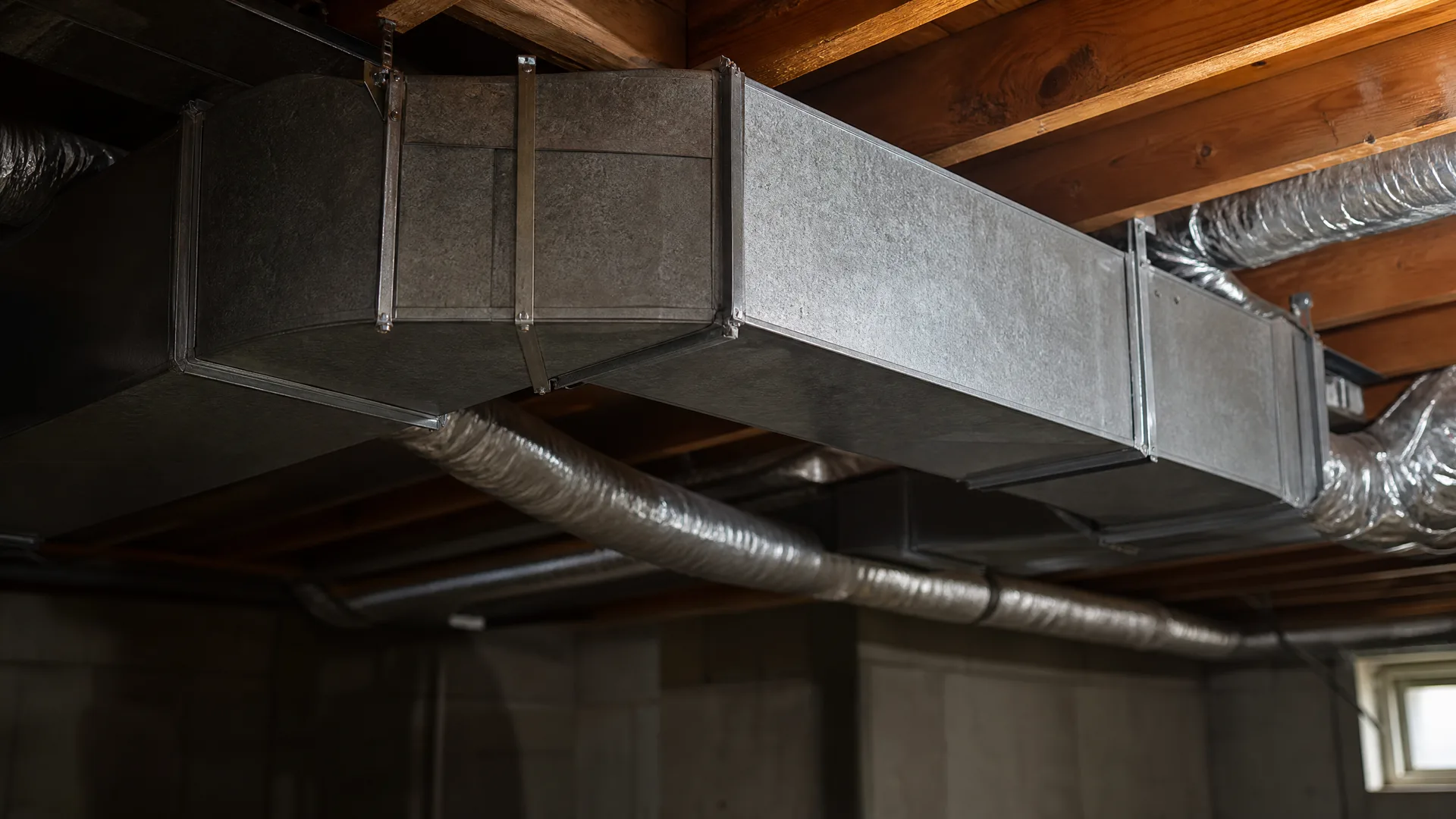
Same joists, same metal and flex runs, but this is the view that makes you stop and look twice. Dust built up along a seam, a gap where a run pulls loose, a smell that wasn't there last year. Any of that is a reason to have it checked before you decide cleaning is or isn't the answer.




Your duct cleaning request goes to one local pro.
Answer a few questions instead of calling shop after shop.
You only hire the pro if you want to.


A crew doesn't just run a hose through your vents and call it done. They work the system in sections, closing off each supply and return run so what gets knocked loose in one spot doesn't just drift down and settle in the next. A truck-mounted vacuum holds negative pressure on the line while a tech works the inside walls with brushes or air whips to break the dust free. The furnace blower and the coil get handled on their own, separate from the ductwork, since dust sitting on a coil cuts airflow in a way dust sitting in a duct doesn't. Registers and grilles come off and get cleaned apart too, since those are the parts you've actually seen dust collect on. A good tech checks the return side as hard as the supply side, because a leaky return is pulling in air from the attic or crawlspace and sending it right back through the house. If there are gaps at the trunk lines or the boots, sealing those comes last, after the cleaning, so the sealant isn't just locking dust into the seam.


A dusty duct run isn't an emergency, but it stacks the odds against you all winter. Every time the furnace cycles on, that dust and whatever is riding with it, pet hair, insulation fibers, a mouse dropping if there's a nest somewhere upstream, gets pushed back into the rooms you're sitting in. If you've been calling around to different companies for quotes, you already know how much time that eats up, explaining the same thing three times, waiting on callbacks that don't come. Getting matched with one local contractor, someone who works on ductwork in homes like yours every winter, skips that part. They'll want to know how old the house is, whether the ducts are original, and what you're actually seeing before they tell you what it needs.
Once the runs are cleared out, the furnace is just moving air again, not air plus whatever had settled into the metal. You won't see it happening behind the walls, but you'll notice it less: less dust resettling on the same shelf a week after you wiped it down, less of that stale smell when the heat first kicks on in October. If there was a nest or mold in there, that's gone too, not just covered over. The ductwork itself doesn't get younger or stronger from a cleaning. It's the same metal and flex runs as before. What changes is what's moving through them, and for a system that runs nine months a year here, that's most of what you were dealing with in the first place.


A local crew that cleans ductwork every winter knows what Chittenden County systems run into, so you explain the problem once and get someone who's seen it before.
Searching, calling several companies, explaining the same thing more than once, then comparing quotes that aren't describing the same job.
So is it worth it? If there's a rodent nest, visible mold, or debris you can see and smell every time the furnace kicks on, yes, and waiting only means breathing it longer. If your ductwork is original to a house built in 1981 or earlier and nobody's looked at it since, it's worth a look even if nothing seems wrong. If it's just some dust on the register and the system runs fine, you likely don't need to do anything yet. A local contractor who deals with Chittenden County ductwork every winter has seen what nine months of hard heating does to a duct run, and what doesn't need touching. You explain the situation once, to one crew who already knows what they're looking at, instead of walking several companies through the same story and sorting out which one to believe.
Skip calling around