Your request goes to a Washington County pro who takes ductwork jobs.
You're dusting the same shelf again, three days after the last time. Furniture that should stay clean for a week is gray by Thursday. In Barre, that usually isn't a cleaning problem. It's a duct problem.
Winters here are hard, and most houses in Washington County heat with oil. An oil furnace draws air through the house all winter, and whatever is sitting in the ducts, the return, the furnace cabinet, rides along with it. Loose fittings and gaps at the joints pull in attic or crawlspace air too, and that air carries its own dust. Run that system for months and it spreads through every room, not just the one near the thermostat.
A new filter helps for a week and then you're back where you started, because the filter was never the source. The buildup is further back in the system, in sections you can't see and can't reach. That's a job for someone who can open the ductwork and clean it properly, not a job for a better filter or a more frequent vacuum.
This is also where it stops being something you have to chase down yourself. Once you send the form, you're not the one calling around Washington County trying to find someone who answers the phone and shows up. A contractor who works on duct systems in this area gets your information and reaches out to you. You've handed off the search, not just the job.
What they find when they look at your ducts, and what that cleaning involves, is specific to your house. The rest of this page gets into why a duct system collects this much, and what changes once it's cleaned out.
Most of the dust settling on your furniture is coming through the ducts, not off your floors. An oil furnace burns cleaner than it used to, but the system that moves the heat around your house is also moving whatever is loose inside it. Leaky duct joints pull air from your attic, basement or crawlspace, the dustiest parts of the house, and push it straight into your living room. A dirty filter makes this worse, because once it's clogged the system starts pulling air around it instead of through it, carrying more dust with it, not less. With Washington County winters running the furnace hard for months at a stretch, that air gets recirculated constantly, so whatever's built up in the ducts ends up back on your shelves within days. Cleaning the ducts out addresses where the dust is actually coming from.
Half the homes here were built by 1973
A duct system installed in 1973 has had fifty years to collect dust, loose insulation, and gaps at every joint. If your house dates to around then and the ducts were never replaced, that's decades of buildup riding the air into every room.
ACS 2020-2024
Running the furnace all winter
Oil heat means long burn cycles once the cold sets in, and every cycle pushes air through the same ducts. If there's a gap at a joint or a tear in the flex line, that air picks up dust each time it passes and carries it straight into the room. The more the furnace runs, the more trips that dust makes. By February, with the furnace cycling most of the day, you're seeing the result on every flat surface in the house.
Mild weeks with the furnace off
Come May, the oil furnace shuts down and stays off for months. Without air moving through the ducts, dust stops getting pushed into the house and starts settling inside the system instead. It sits in the joints, the boot, the trunk line, wherever the airflow was weak to begin with. That's not dust gone, it's dust waiting. The first cold snap in the fall stirs all of it loose again, often worse than the week before the furnace shut off.
Why does dust come back so fast after I vacuum?
You're dusting the same shelf again, three days after the last time. Furniture that should stay clean for a week is gray by Thursday. In Barre, that usually isn't a cleaning problem. It's a duct problem. Winters here are hard, and most houses in Washington County heat with oil, so the furnace runs long and often once it gets cold.
Your ducts are resupplying the dust as fast as you clear it
Vacuuming clears what's sitting on the surface. It does nothing about what's still inside the supply ducts. Every time the furnace kicks on, that air moves through the same sheet metal and flex line, and any dust sitting in there rides along with it, straight back onto the shelf you just wiped down. A return line pulling air through a gap in the basement or attic adds to the supply, since it's drawing in dust and insulation fibers along with the air it's supposed to be moving. Until the ducts themselves are cleaned, vacuuming is only ever catching what already landed, not what's still coming through the vents.
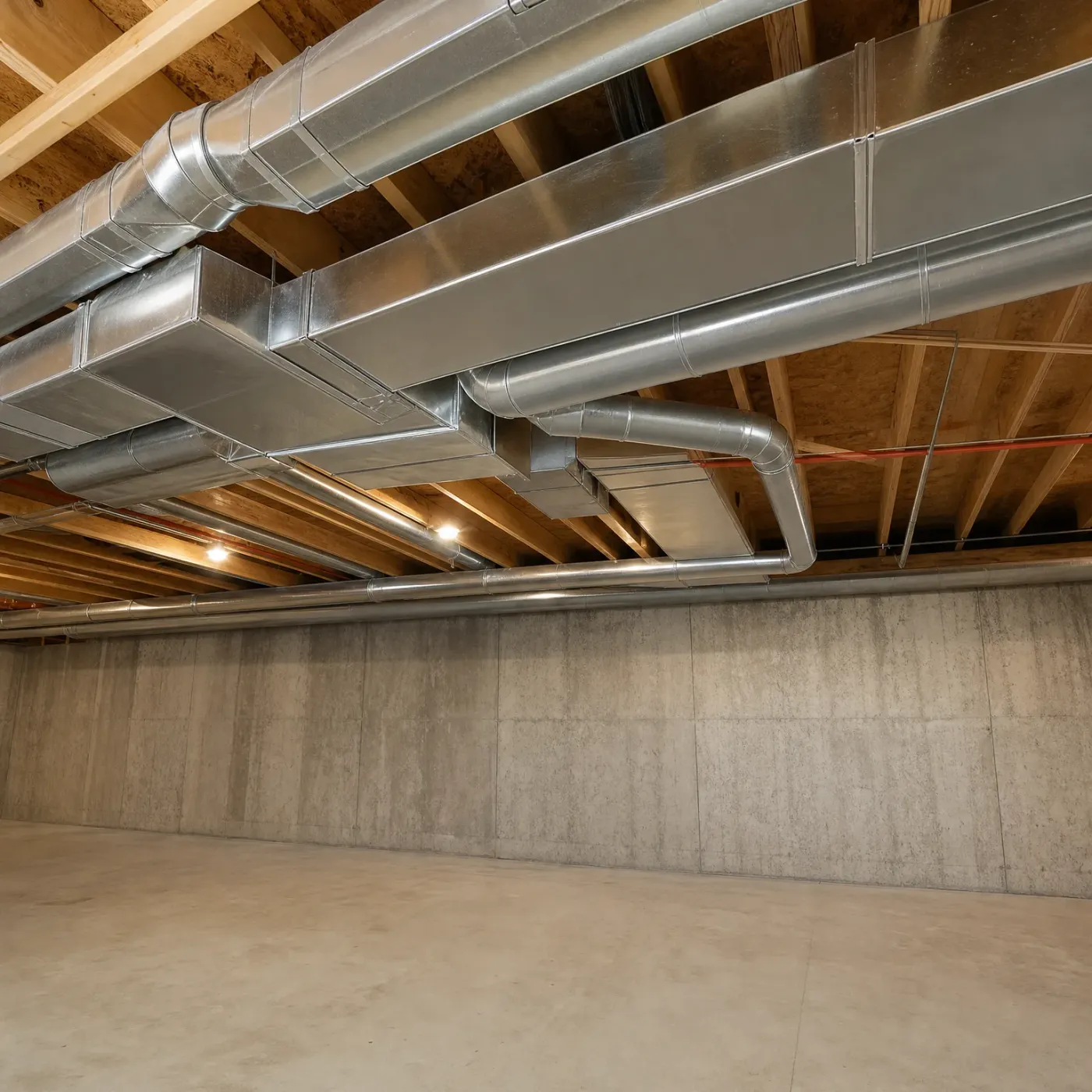
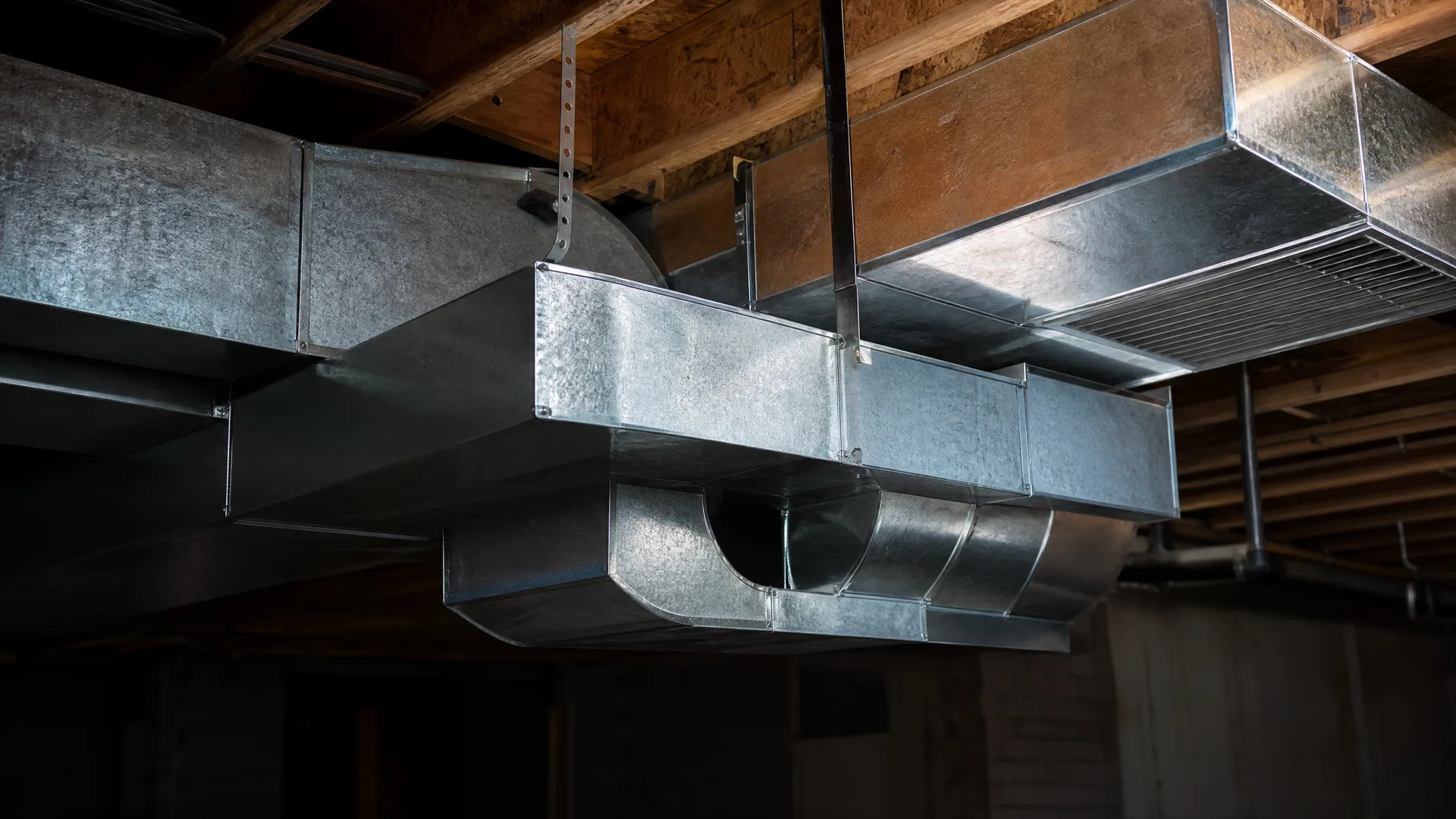
Sealed and running clean
These ducts sit tight against the joists with no gaps at the seams. Air moves from the furnace to the room without picking up anything along the way, so what comes out of the vent is just heated air, not whatever has settled inside the metal.
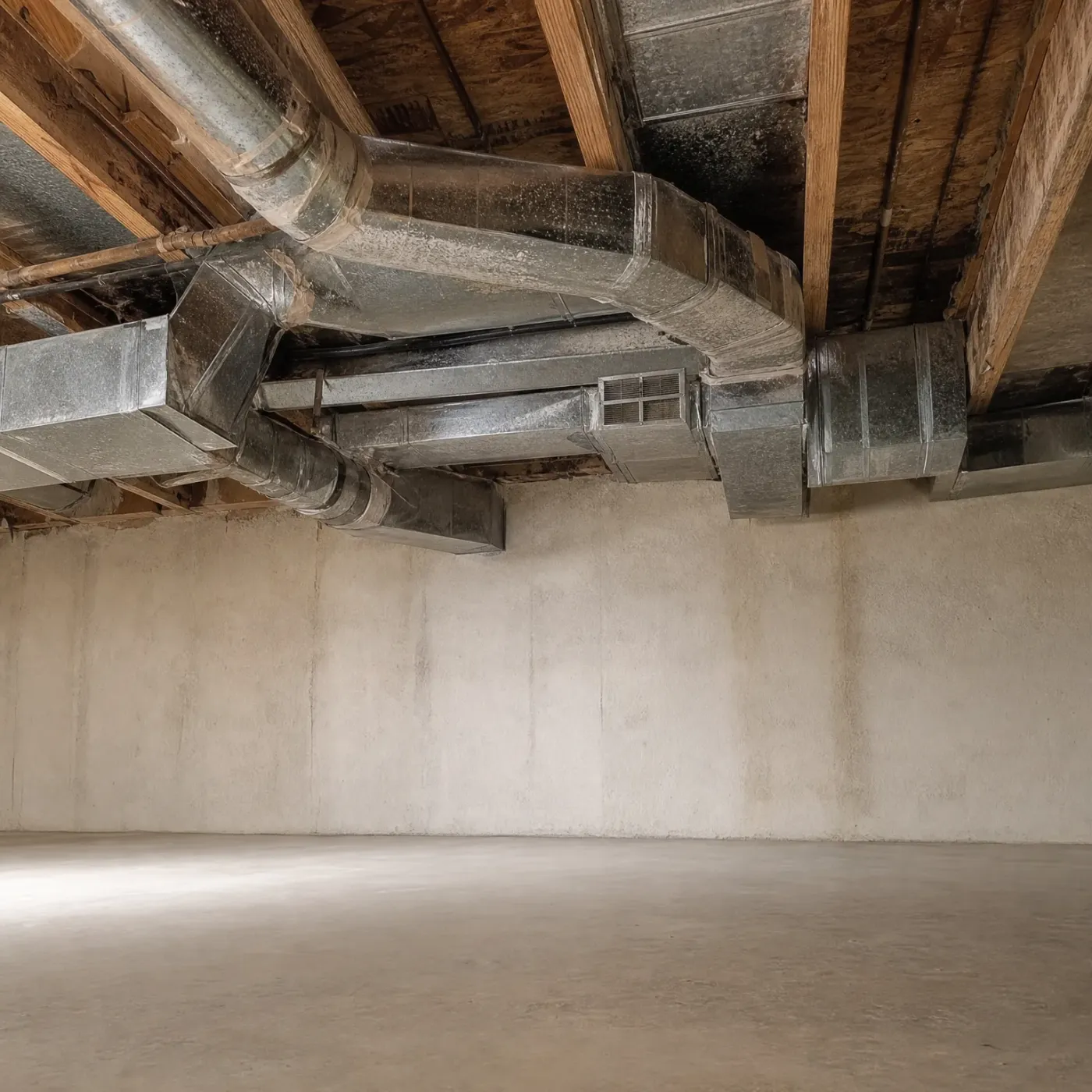
Carrying years of buildup
The dark staining along these seams is dust working its way out under pressure every time the furnace runs. Once it cakes on like this, vacuuming the house only clears what already made it out. The rest is still in there, waiting for the next cycle.
What makes an old duct system in Barre keep dumping dust into the air?
Half the homes here were built by 1973
Half the houses in the county were built in 1973 or earlier, so a lot of ducts have never been swapped out or cleaned.
Heat runs September through May
Heat runs September through May here, nine months of cycles pushing air through those same joints and seams.
Power here costs 23.23 cents per kilowatt-hour
At 23.23 cents a kilowatt-hour, a duct system working harder to push air through buildup costs more every month it goes unaddressed.
You've vacuumed, dusted, maybe even changed the furnace filter twice this winter, and the shelf is gray again by the weekend. That's the ductwork talking, not your housekeeping. Nine months of oil heat cycling through Barre winters pushes air through every joint and seam in that system, and if it's never been cleaned, it's carrying more than warm air into your rooms. A technician can get into the ducts themselves, not just the parts you can reach with a vacuum hose, and clear out what's actually feeding the dust on your furniture. With power rates here among the highest around, a system clogged with debris is also working harder than it needs to just to heat the house. You don't have to track down who handles duct cleaning in Washington County or wait on hold to find out if they're taking new customers. Send the request and let someone qualified take it from here.
What the dust is doing to your house
A dusty duct system means the furnace filter is catching only part of what's circulating through your house.
Surfaces near supply vents and return grilles collect dust faster than the rest of the room.
Dust riding the air settles into bedding and upholstery, not just the shelves you can see.
A gap at a duct joint under the floor or in the attic pulls in insulation fibers along with everyday dust.
Running the furnace longer on cold nights means more air cycles, and more chances for loose material to travel through the house.
Dust buildup inside the ducts can also settle around the furnace's blower and coil, where it's harder to reach.
A furnace filter is built to catch what passes through the return, not what's already loose inside the ducts themselves. So the filter does its job and the house still grays over. Look at the wall near a supply vent or return grille. That surface collects faster than anywhere else in the room, because that's where the air is moving the most. The same air reaches your bedroom and your couch, which is why bedding and upholstery hold dust that never shows up as a visible layer until you actually run a hand over the fabric. Underneath the house or up in the attic, a torn flex line or a gap at a joint does more than let heated air escape. It pulls in whatever is sitting around it, insulation fibers included, and carries that straight into the supply air. Cold nights make this worse, not because the dust multiplies, but because the furnace runs longer to hold the house at temperature, and every extra cycle is another pass of air through the same gaps. Inside the system itself, the blower wheel and the coil collect their own buildup, sitting in a spot nobody checks between service calls. None of this is about how often you clean. It's about how much is riding the air before it ever reaches your rag or your vacuum.
Metal ducts fit tight at every joint, with the flex line intact where it meets the vent.
Air leaves the furnace and reaches the room without picking up anything along the way.
1
Dust and debris settle inside the ducts between heating cycles.
2
The furnace fires and pushes air through the supply lines.
3
Air passing a gap or tear picks up loose dust.
4
That air carries the dust out through the vent.
The dust is coming from the ducts, not your housekeeping
Nine months of oil heat moving through ductwork that's never been cleaned or sealed explains the gray shelf by Thursday. That's the answer. It's not a new vacuum or a better dust cloth. It's what's riding the air every time the furnace fires.
Knowing the cause doesn't fix it. Someone still has to get into the ducts, find where the gaps are, and clean out what's built up inside. A contractor who services Barre and the rest of Washington County can look at your specific system and tell you what's actually going on in your ducts, not just what's common in houses like yours. Send the details once and that part of the job, finding the right person for it, is off your plate.