
Clean duct run
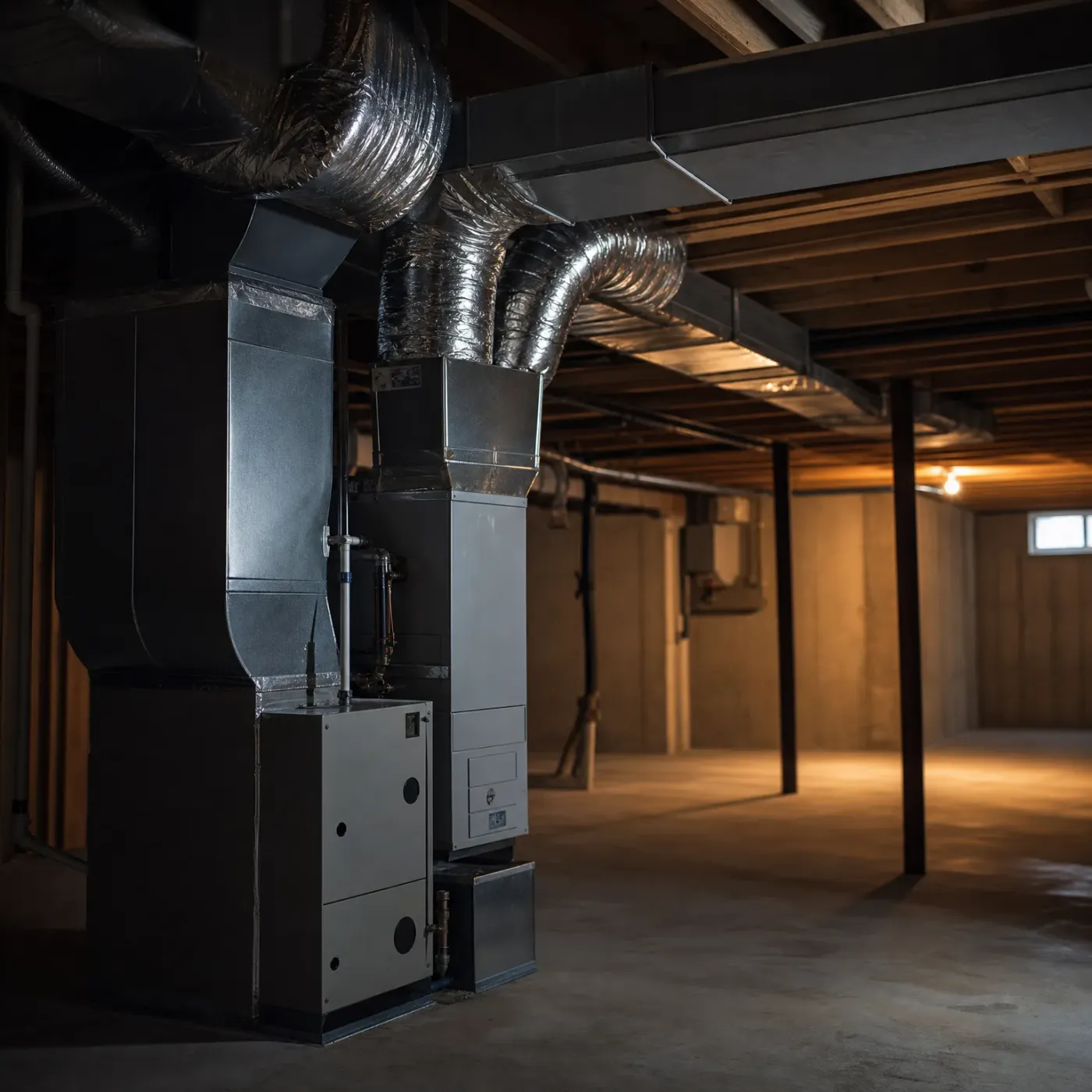
This is what a dry system looks like. The metal ducts above the furnace are tight at the seams, and the basement around them stays dry year round. Air moving through them picks up nothing but what the filter missed.
Let someone else find the pro
Musty air when the furnace or the AC kicks on usually means something is growing in the ductwork, not just dust sitting in it. This page walks through what causes it in a Burlington-area house and what cleaning the ducts actually involves. Send the form and skip the part where you call around Chittenden County looking for someone who'll take the job.
Hand it offMold in your air ducts usually means moisture got in where it shouldn't have. Condensation forms on the inside of the ductwork when humid air meets a cold surface, often around the AC coil or in a duct run that passes through a damp basement or crawl space. With winters here as cold and long as they are, ducts in unconditioned spaces go through a lot of temperature swings, and any duct that's leaking or poorly sealed can draw in moist air and hold onto it. Once mold takes hold on the dust and debris inside the duct, running the furnace or the AC pushes that air, and the smell that comes with it, through the whole house. A musty smell when the system kicks on, dust that looks dark or speckled, or anyone in the house with worsening allergies are the signs to take seriously. Cleaning the ducts removes what's growing in there, but if there's a leak or a condensation problem feeding it, the mold comes back unless that gets fixed too.
This is what a dry system looks like. The metal ducts above the furnace are tight at the seams, and the basement around them stays dry year round. Air moving through them picks up nothing but what the filter missed.

Here the ducts sit over bare concrete with nothing drawing the damp out of the basement air. A duct that runs cold through a space like this can sweat on the outside and hold moisture inside, which is enough for mold to take hold in the seams.
Half the homes here were built by 1981
Half the homes in the county went up by 1981, old enough that duct seams and vapor barriers have had decades to work loose.
Heat runs September through May
Heat runs September through May here, nine months of warm air moving through ducts that may be holding damp from spring and fall.
Cooling runs July through August
Cooling only runs July and August, so the coil that drips condensate sits unused most of the year, enough time for whatever grew on it to spread.
ACS 2020-2024 · NOAA nClimDiv 1991-2020
A proper cleaning starts by sealing the system and hooking a vacuum collector to one end, usually near the furnace, so everything knocked loose has somewhere to go instead of landing back in the ducts or blowing into the house. From there a crew works the metal with brushes or air whips, since mold doesn't just vacuum off a duct wall on its own. It has to be agitated first. That part matters more than people expect: a vacuum alone pulls settled dust, but it won't touch what's grown onto the surface.
Both sides of the system need attention. Mold in the return ducts can seed the supply side once the blower kicks on, and the reverse is true too, so cleaning one half and skipping the other usually means it comes back within a season. The AC coil and the drain pan underneath it are worth checking separately, since that's the coldest, wettest point in the whole system and often where the problem started in the first place.
Most of a duct run is sealed behind walls, floors or ceiling, so a crew cuts access ports into the trunk line at set points rather than trying to reach everything through the vent covers. Those ports get sealed back up when the work is done. A camera run through afterward is the way to confirm the job reached bare metal and not just the parts within arm's reach of a vent.
At 22.61 cents per kilowatt-hour, running a blower or an AC coil harder than it needs to shows up fast on your bill. A duct system clear of mold moves air the way it was designed to, so the furnace and the AC aren't working against buildup inside the metal.
EIA-861 2025


Fill out one short form instead of calling around.
There's no charge for the request.
Air from a moldy duct run reaches every room the system serves. Open a supply register near the furnace and you may catch the musty smell directly, but it spreads just as easily to a bedroom two floors up. Anyone in the house with allergies or asthma tends to notice first, especially after the furnace has run all night or the AC has been on for a few hours straight. A basement that stays damp through a Vermont spring gives mold in the ducts a steady source of moisture to keep growing on, so the smell doesn't fade on its own once the weather turns.
A duct system fighting mold and buildup on its walls has to push harder to move the same amount of air, and at 22.61 cents per kilowatt-hour, that shows up on the electric bill before you see any other sign. The furnace and the AC both end up working against the ducts instead of with them. Left alone through another Vermont winter, moisture that got in once tends to get in again, especially if the damp basement or crawl space that caused it the first time hasn't changed. Cleaning the ducts addresses what's already there. It doesn't change where the moisture is coming from.


You're running the furnace or the AC through a system that's been growing mold, calling around for someone who does this work, and explaining the musty smell more than once.
The ducts are clear, the air moving through them doesn't carry that smell anymore, and finding the crew to do it wasn't a job you had to manage yourself.

A musty smell from the vents, moisture around the coil, duct seams that have loosened over the decades since the house was built. All of it points the same way. The ducts need to be cleaned out, the moisture source dealt with, and the system checked so it isn't growing the same problem back by next winter.
Getting there from here usually means finding a crew that does duct cleaning, calling around to see who's available, and explaining the same musty smell and the same furnace or AC trouble to each one before you get a quote worth comparing. Send the form and that part is off your plate. You still have a duct system to deal with, but you're not the one tracking down who can deal with it.





It's off your list after this
Skip searching for a duct system pro and answer a few questions instead.

