Signs of leaky ductwork in Rutland, VT

A galvanized steel round duct with a 90-degree elbow and a circular louvered vent grille at one end, photographed against a plain light gray background.
Get matched

A room that won't warm up in January while others feel fine is the clearest sign your ducts are leaking. Check the attic or basement where ducts run for loose joints, disconnected sections, or metal tape that's peeled away, and feel for warm air leaking out when the furnace is running. Leaky ducts lose heated or cooled air into spaces you don't live in, so your furnace or AC runs longer to make up for it. With most homes in Rutland County heating on oil through a hard winter, air that never makes it past the basement is oil burned for nothing. You might also notice more dust than usual, since leaks on the return side pull in attic or crawlspace air and carry it through the house. A duct system that whistles or rattles at the joints points the same direction. None of this fixes itself, and a system working harder every day wears out sooner than it should.

An older man with gray hair, a dark coat and scarf dusted with snow stands in a warmly lit entryway with an open wooden door, a table lamp, framed pictures, and a plant in a vase.
An older man with gray hair and a beard wearing a dark snow-dusted coat stands in a home entryway, with a lamp-lit living room and a wooden staircase behind him.
An older man with gray hair and a beard, wearing a dark snow-dusted coat, stands in a warmly lit home entryway with a hallway, console table with lamp, patterned rug, and living room visible behind him.
A gray-haired bearded man in a dark snow-dusted coat and scarf stands inside a dimly lit home entryway, with a hallway, framed picture, lit table lamp and staircase behind him.

Why does duct loss cost so much in your house

  • Half the homes here were built by 1969

    Half the homes in Rutland County were built in 1969 or earlier, and ductwork that old has had decades to work its joints loose.

  • Heat runs September through May

    Heat runs here from September through May, nine months out of twelve, so a leaky run keeps wasting air almost all year.

  • Power here costs 23.29 cents per kilowatt-hour

    Power here runs 23.29 cents per kilowatt-hour, so the warm air leaking into your attic or basement is pricier here than in most of the country.

ACS 2020-2024 · NOAA nClimDiv 1991-2020 · EIA-861 2025

Unfinished basement interior with exposed wooden floor joists, galvanized rectangular and round sheet-metal ducts, a gray furnace unit at left, and a large blank light-colored wall at right.

The duct run that's still sound

A duct system without leaks holds pressure. Push your hand along a joint near the furnace or air handler and you feel nothing moving past it. The basement or crawlspace stays close to the same temperature as the rest of the house instead of running warmer than the living space above it. Your oil furnace cycles on, runs its course, and shuts off without you hearing air hiss or whistle anywhere along the trunk line. Rooms at the far end of the house, upstairs and down, warm up close to the same rate.

Galvanized sheet metal ductwork with elbows and a vent grille running beneath an exposed wood joist and OSB ceiling, next to a blank white wall.

The duct run that's losing air

A leaking joint pushes heated air into a basement or attic where nobody needs it, so the furnace runs longer to make up the difference. You may notice dust settling heavier near a floor register, a sign air is drawing through a gap instead of moving clean through the duct. Rooms farthest from the furnace lag behind the rest of the house by several degrees. Oil use climbs over a winter without any one thing changing, because the heat is leaving the system before it reaches where you live.

Seal the Ducts or Replace Them

Seal the ducts

  • A contractor can access the leak directly if it's in the basement or attic, sealing joints with mastic rather than tape that will peel again.
  • Sealing costs less than replacing a furnace or boiler that's been working harder than it should to cover for lost air.
  • If the ductwork itself is in good shape, sound metal with no rust or crushed sections, sealing solves the actual problem.
  • Rooms that run cold in January often even out once the leaks feeding warm air into the basement or attic are closed.
  • Sealing won't fix a duct system that was undersized or badly routed when it went in.

Replace the ducts

  • If sections are crushed, disconnected, or rusted through, sealing a few joints won't do much for a system that's failing throughout.
  • New ductwork lets a contractor correct routing that was never right, long runs with too many turns, or sections sized too small for the rooms they feed.
  • Replacement makes sense alongside a new furnace or boiler, since ducts get fitted to the equipment that will run through them.
  • A full replacement costs more upfront than sealing and takes longer, since sections have to come out before new ones go in.
  • Old ducts sometimes carry asbestos insulation on the wrap, which a contractor has to handle before removal can start.
Empty unfinished basement with bare concrete floor, insulated walls with vapor barrier between wood studs, exposed wood joists, galvanized sheet-metal ductwork, a recessed light, and a steel support column.

Ducts holding tight

This is what a duct run looks like when the joints are still sealed. The metal tape sits flat, the joints are square to each other, and nothing has come apart from the vibration of the blower kicking on and off since the house was built.

Empty basement room with bare concrete walls and floor, exposed wooden floor joists overhead, large galvanized sheet-metal ducts with a vent grille, colored pipes, and a single lit bulb.

Ducts losing air

Bare concrete walls like these hold the cold hard in a Rutland winter, so any duct running through a space like this is already working against the room. If a joint lets go here, the air it's carrying heats the basement instead of your living room.

Basement ceiling with large galvanized sheet-metal ductwork, round metal pipes and plumbing lines running beneath wood joists, above a bare concrete wall and floor.
Before you get your ductwork cleaning
Unfinished basement with bare concrete floor and walls, exposed wood joists, large galvanized sheet-metal ductwork, PVC and copper piping, and a gray furnace unit beside wood stud framing.
After you get your ductwork cleaning
  1. Air leaves the furnace or air handler under pressure through the supply trunk.

  2. At a loose joint or seam, part of that pressurized air escapes before reaching a vent.

  3. Lost air heats the basement or attic instead of the room it was sent to.

  4. The blower runs longer to make up for the air that never arrived.

Empty basement with bare concrete walls and floor, a small window at left, and exposed wood joists with galvanized sheet metal ductwork and pipes overhead.
Clean metal, tight seams, and the ducts stay free of the dust that signals air leaking in and out along the way.
Dusty sheet-metal HVAC ducts with a rectangular vent register run beneath wooden floor joists above an empty concrete-walled basement.
Grime like this builds where leaking air pulls dust through every loose joint it passes on its way to the room.
A dim room interior with a beige wall, a ceiling vent, a curtained window showing green trees outside, a beige sofa with a dark cushion, and a dark side table at left.

The sun's been up long enough to cross the living room floor. You're on the couch with coffee, and you notice the vent grille in the ceiling has a gray collar of dust ringed around it, thicker than anywhere else up there. You run a finger along the coffee table underneath and it comes back coated. Nothing's run hard in weeks, the worst of the heat is behind you now, but the dust keeps showing up in the same two spots. A contractor who works on duct systems around Rutland County all winter would know right away what that pattern around a vent usually means, and where else in the house to look for it.


Get matched with a duct system pro in Rutland County

A furnace pushing air through joints that leak isn't moving the heat it burns oil for. That shows up as a bill that doesn't match the mild stretch of weather you just had, and it shows up as dust ringing a vent that a clean duct wouldn't leave. Someone who services ducts in Rutland County sees the same thing in house after house built the same decades ago: tape gone brittle, joints worked loose by a blower cycling on and off for years. That's a different job than cleaning a duct that's still sealed tight, and it's worth having someone look who can tell the difference on sight rather than guess at it. One contractor, local to this county and used to its winters, is the one who gets your request. You're not explaining your situation five times over to five different companies while the room that won't warm up stays cold.

What oil use alone can tell you

Most furnaces and boilers in Rutland County run on oil, and oil use is one of the few numbers a homeowner can track without a tool. If your tank is lasting fewer weeks than it did last winter, and you haven't changed your thermostat habits, the furnace is making more heat than is reaching the rooms. Leaking ducts are a common reason for that gap. The oil burns the same whether the heat gets delivered or lost in the basement, so the delivery truck becomes a rough gauge of duct loss that a thermostat reading alone won't show you.

Where the leak shows up on the meter

Electric bills tell a second part of the story, because the blower motor runs longer to push the same amount of heat through a duct system that's losing air along the way. Power here costs more than in most of the country, so a blower running extra minutes on every cycle adds up faster in Rutland than it would somewhere with cheaper electricity. If your electric bill has climbed alongside your oil use, with no new appliance or added square footage to explain it, the ductwork is a reasonable place to look before the furnace itself.

Half the homes here were built by 1969

If your house went up around 1969, the ducts running through it are original about as often as not. Nobody's resealed those joints since, and decades of the blower cycling on and off is what shakes tape loose and opens seams in the first place.

ACS 2020-2024

Leaks you can feel

Put your hand along a duct seam in the basement while the furnace runs and you can feel warm air pushing past the joint. This works best near the furnace or air handler, where pressure is highest and a bad seam loses the most. A loose joint also tends to buzz or hiss faintly once you know to listen for it. If you can find two or three of these by hand, there are likely more you can't reach, further along the run where the ducts run tight against joists or behind insulation.

Leaks you can only infer

Some duct losses never show themselves directly. A room that stays cold no matter how long the furnace runs, a bill that climbs past what the weather explains, an oil tank that empties faster than last winter. None of these point to one exact joint. They tell you air is escaping somewhere between the furnace and the vent, without saying where. Finding the actual seam at that point means opening up the space where the ducts run and checking each joint by hand or with a pressure test.

A woman wrapped in a thick cream knit blanket sits in an armchair beside a lit table lamp, with an open book in the foreground and a frost-covered window behind her.
A woman in a cream knit sweater sits in an armchair with her eyes closed near a window showing yellow autumn foliage, with a mug on a round wooden side table beside her.
A woman stands in the open black front door of a white-sided house with a dark shingled roof while a man in a navy jacket approaches along the walkway, with lantern wall lights, a potted shrub, and flowering garden beds nearby.

A cold room and a short tank are telling you the same thing

If one room stays cold in January while the rest of the house is fine, and your oil tank is running out faster than it used to, that's leaking ductwork. You don't need both signs to act on it. Either one, on its own, means air is escaping before it reaches the rooms it was meant to heat.

A contractor who services ductwork around Rutland County sees this pattern every winter, in houses built the same decades as yours, with the same joints worked loose by years of the blower cycling on and off. Getting matched with one means someone who already knows where that duct run is likely to fail looks at yours directly, rather than you starting from scratch with a company that doesn't know the area's houses.

A gray upholstered sofa with a beige cushion and knit blanket beside a curtained window, with a white mug and a book on a dark wooden table in the foreground and a lit lamp in the background.
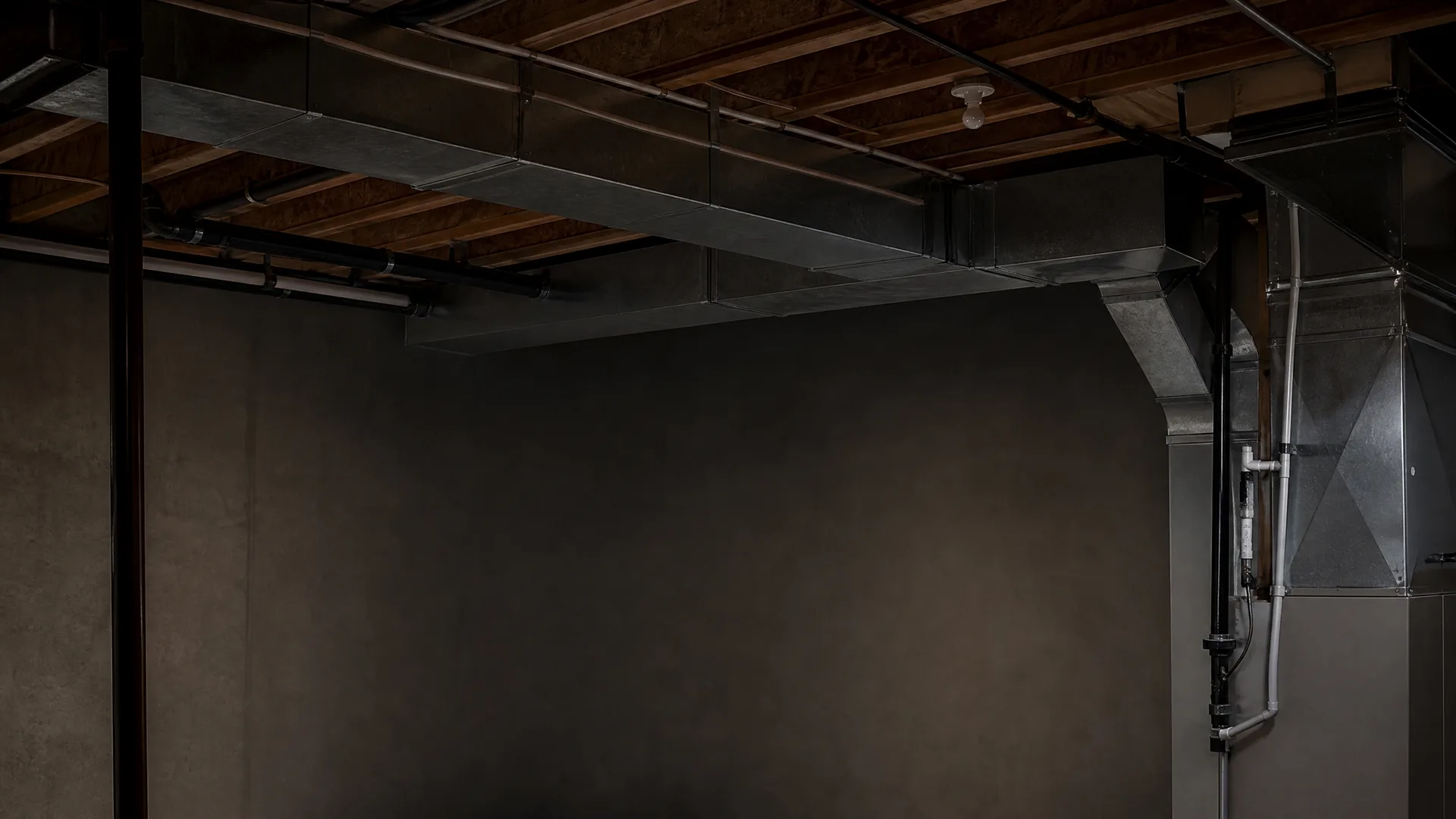
Dim interior with a dark gray wall, exposed wood joist ceiling, sheet-metal ductwork, conduit, pipes and a sprinkler head.

Get your ductwork to the right pro

A licensed pro who works in Rutland County gets your request.

Duct and vent cleaningDucts or ventsRutland County, VT
Step 1 of 2

What ZIP code is the job in?