









Why your furnace keeps tripping the breaker in Vermont

Once you send the form, finding a pro is off your list.

Hand it off

A furnace that trips its breaker is usually drawing more current than the circuit allows, and the most common cause is the blower motor. As it wears, it pulls harder to spin, and that extra draw trips the breaker, often when the furnace first kicks on or when it shifts to a higher fan speed. A failing igniter or control board can do the same thing by sending the motor or another component bad power. Sometimes the problem isn't the furnace at all. A breaker that trips on its own after years of use will let go at a lower load than it used to, so a furnace that ran fine on it for seasons starts tripping it now. Either way, a furnace shouldn't keep cutting power to itself. Running it on a breaker that keeps tripping risks the motor and the circuit both, and with most Vermont homes heating through oil furnaces, losing that heat on a cold night is not something to leave alone.

A dark interior hallway with a dim window at the end, a wooden floor, a stair railing on the right, and a bench or rug in the foreground.

You wake up because the house feels wrong before you know why. It's past two and the hallway floor is cold under your feet. No air moving at the vent, no hum from downstairs. You check the thermostat and it's still set where you left it. Outside the window the frost has crept up from the corner, and somewhere down in Vermont's dark the oil truck won't come for this. You flip the hallway light, head for the basement, and already you're guessing which breaker it'll be, because this isn't the first time this winter the furnace has kicked itself off in the middle of the night.

A closed laptop and a cream mug of coffee on a coaster sit on a dark wooden table, with a potted plant at left and a kitchen counter, tiled backsplash and shelf of ceramics in the background.

What's actually happening when the breaker trips

A furnace cycles through stages when it starts: the igniter glows, the gas valve opens, and the blower kicks on to push warm air through the ducts. Each stage draws power, but the blower draws the most, especially right at startup when the motor has to overcome its own resistance to start spinning. If the motor windings are breaking down or the bearings are binding, that startup draw climbs past what the circuit is rated for, and the breaker does its job. A dirty flame sensor or a failing igniter won't trip a breaker. A blower motor working too hard will.

Oil furnaces add the cad cell and the primary control to that sequence, and either one can force the burner to retry ignition over and over, which asks more of the circuit each time. Finding someone who works on oil systems and can get to a Vermont furnace on a cold night isn't always straightforward. Once you send the details through, you're done hunting for who's licensed, who's available, and who actually answers the phone.

A gray upholstered sofa with a textured cushion sits beside a dark round side table holding a vase of green foliage, with a table lamp and sheer-curtained window behind.
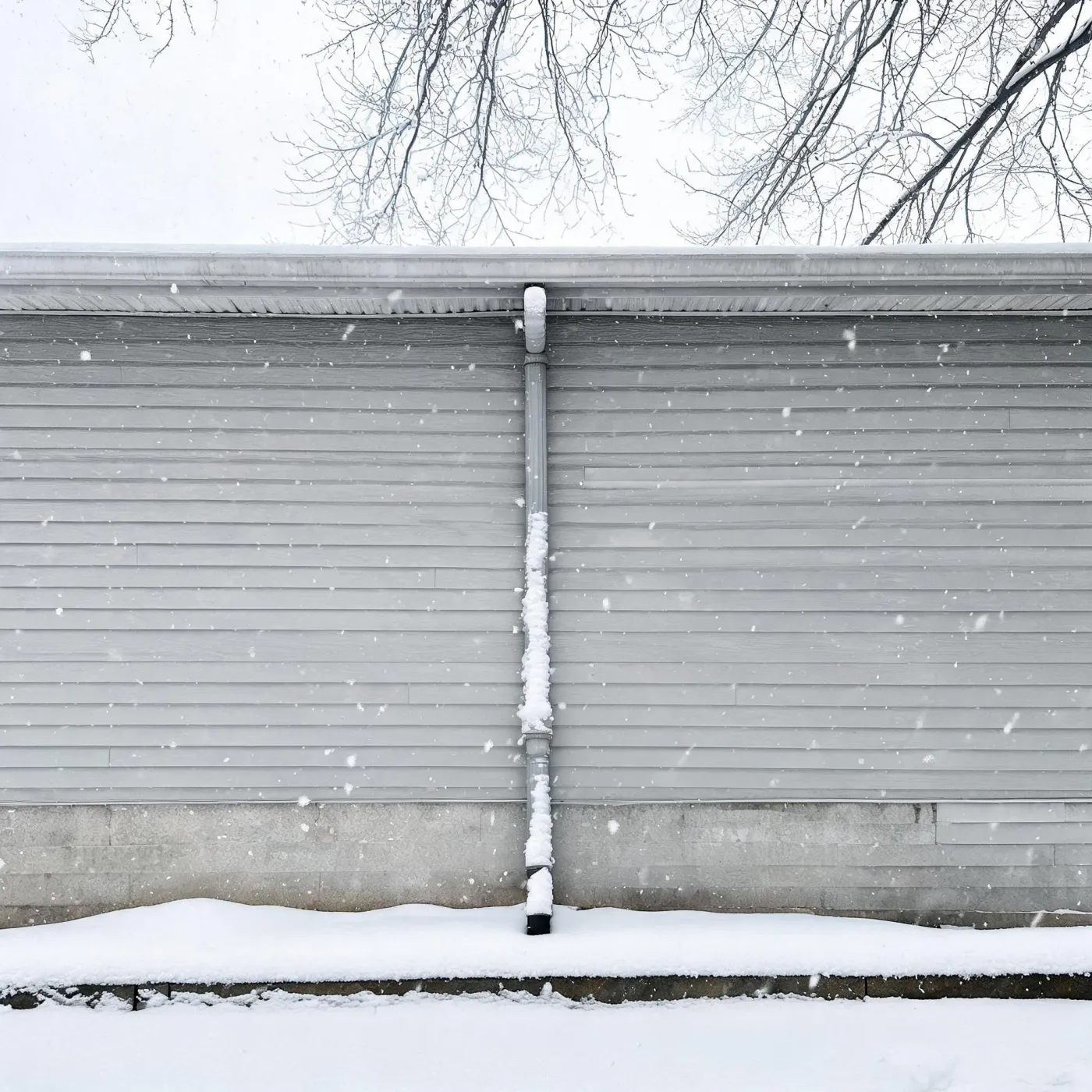
Gray horizontal lap siding on a building above a concrete block foundation, with a central downspout partly coated in snow, falling snowflakes, snow-covered ground, and bare tree branches against a white sky.

On a night when it's 12°F outside, which is about an average winter night in Vermont, your furnace isn't cycling on and off a few times an hour. It's running close to nonstop, and the blower motor is working at its hardest the whole time, pulling the most current it ever will. That's exactly when a motor that's already wearing out tends to trip the breaker, right when you need the heat most. If yours keeps tripping on the coldest nights and seems fine on milder ones, that's not a coincidence. It's the motor telling you it can't keep up with the load. (Source: National Weather Service average winter lows for Vermont.)

NOAA nClimDiv 1991-2020 county normals weighted by homes

What you're probably noticing right now

You reset the breaker and it holds for a while, then trips again, usually not long after the furnace kicks on. Maybe you hear a click or a hum from the basement right before it cuts out. The house loses ground slowly, a room at a time, and by morning it's noticeably colder than you set it for. If you're resetting that same breaker more than once a night, the furnace is still trying to run and still drawing too much to do it. Left alone, that pattern tends to get worse, not better, and on a cold night in Vermont a furnace that won't stay on is more than an inconvenience. It's worth having someone look before the breaker trips and stays off for good.

A smiling man in a dark navy sweater sits on a light sofa in a living room, with a glass bowl of popcorn on a wooden coffee table and bookshelves behind him.
A smiling man in a dark green sweater sits on a tan leather sofa in a dimly lit living room, with a bowl of popcorn in the foreground and a kitchen area blurred behind him.
A smiling middle-aged man in a dark shirt sits on a gray sofa in a living room, with a bowl of popcorn on a side table and shelves, a window and kitchen area behind him.
A smiling bearded man in a dark gray t-shirt sits on a gray couch in a living room, with a large glass bowl of popcorn on a wooden table in the foreground.

Hand off the furnace problem

A breaker that keeps tripping on a cold night isn't something to keep resetting and hoping it holds. Each time it trips, the furnace stops partway through its cycle, and the house loses ground again. You could start calling oil companies and furnace repair outfits around Vermont, explaining the same thing to each one, waiting to hear who can even get to a diagnosis this week, then sorting through who quoted what. Or you could send this request once and let that part stop being your problem tonight. With power priced the way it is here, a blower motor pulling more than it should isn't just a breaker going dark in the basement, it's drawing extra current every time it runs. The furnace needs a contractor's hands on it either way. What doesn't need to be yours anymore is the finding.

A beige furnace with a louvered front panel and metal ductwork stands on a concrete basement floor beside pipes and a white cylindrical water heater.
Before you get your furnace repair
A gray high-efficiency furnace in a basement with PVC venting pipes, a yellow gas line, metal ductwork, concrete walls and floor, and a wood-framed stairway at left.
After you get your furnace repair

Why the blower draws so much

A blower motor has to push air through every duct, elbow and vent in the house, and a furnace that's run for years has bearings that no longer turn as freely as they did new. The motor doesn't know that. It just pulls more current to spin at the speed it's set to. A 15-amp breaker that handled that motor for a decade can start tripping on the exact same setting, because the motor crossed a line somewhere along the way, not because the breaker changed.


Why it happens on the coldest nights

Oil furnaces size their blower to a worst case, a night in the teens or single digits when the house is losing heat fast and the burner runs close to nonstop. That's the moment a weak motor gets asked to do the most work for the longest stretch. On a 40-degree night in October the same motor might never draw enough to trip anything. A breaker that holds fine most of the fall and trips in January is pointing at the motor, not the wiring.

A woman with dark hair in a bun reclines on a sofa with her eyes closed, wrapped in a cream fleece blanket, a closed blue hardcover book resting in front of her, with a lit lamp and a vase of dried flowers in the background.
A smiling bearded man in a navy sweater sits at a candlelit dinner table with a glass of red wine, a bowl of salad, and plates of food in the foreground.

A breaker is sized for a certain amperage, and it trips the moment the blower motor pulls past that number. It isn't guessing or going bad on its own. Starting a motor from a dead stop takes more current than running it, so the trip usually lands right when the furnace kicks on, not in the middle of a cycle. Sometimes it holds for a while after you reset it, then trips again once the motor has been working long enough to strain harder. That strain usually comes from worn bearings that no longer spin freely, or a capacitor that's starting to fail, either one making the motor work harder just to turn. A motor packed with dust runs hotter, and a hot motor draws more current than one that can shed that heat. None of this is random. If the circuit is rated for 15 amps and the motor is pulling 16 or 17 to do its job, it will trip at that same point every time, because that's exactly what the breaker is built to do.

Why the breaker trips when it does

  • A breaker is rated for a set amperage, and a blower motor drawing beyond that limit is what trips it, not a faulty breaker.
  • Starting a motor takes more current than keeping it running, which is why the trip often comes right as the furnace kicks on.
  • A breaker that trips once and holds after resetting can still trip again once the motor has worked for a while and drawn harder.
  • Worn bearings or a failing capacitor make the motor work to spin at all, and that extra effort shows up as extra amps.
  • A breaker tripping on a 15 amp circuit with a motor drawing 16 or 17 amps will trip every time that draw is reached, not randomly.
  • Dust packed into the motor housing traps heat, and a hot motor draws more current than a motor that can shed heat normally.
A gray high-efficiency furnace stands on a concrete basement floor beside galvanized sheet-metal ductwork, with white PVC vent pipes, gas and water lines, and unfinished wood framing behind it.
The blower starts smooth, runs quiet, and the breaker holds through a full cycle, cold start to shutoff.
A beige furnace with two louvered front panels stands on a concrete basement floor beside galvanized ductwork, metal pipes, and a wooden post.
The breaker trips again as the blower kicks on, and the ductwork above sits dead quiet once the power cuts.
  1. Thermostat calls for heat and the control board starts the cycle.

  2. Igniter glows and the gas valve opens to light the burners.

  3. Blower motor spins up, drawing its highest current on startup.

  4. Worn bearings make the motor pull more current than the breaker allows.

Winter nights average 12°F statewide

Twelve degrees is a typical night here, not a cold snap, which means your furnace sees that load for most of the winter. The blower runs at its hardest almost every night from December through February, and a strained motor gets no break to recover.

NOAA nClimDiv 1991-2020 county normals weighted by homes

What's tripping the breaker, and what's next

  • A breaker that trips as the blower starts almost always points to a motor drawing more current than it should.
  • Worn bearings are the usual reason, and they only get worse the longer the furnace keeps running that way.
  • Resetting the breaker gets heat back for a while, but it does nothing for the motor causing the trip.
  • A contractor can test the blower's draw against the breaker's rating and confirm where the overload is coming from.
  • Left alone, the same cold nights that strain the motor now will keep tripping the breaker through the rest of winter.
  • Sending the form means someone else takes on calling around and comparing oil companies and repair outfits in Vermont.

A furnace breaker that trips when the blower starts is telling you something specific: the motor is pulling more current than the circuit can carry. Worn bearings are almost always behind it, and a motor working harder than it used to doesn't fix itself by running more. Every cold night asks it to spin up again, and every cold night it strains a little more. Resetting the breaker buys you heat for a while, but the motor causing the trip is still the motor causing the trip. Nothing about flipping that switch back changes what's happening inside the blower housing. A contractor can check the actual draw against what the breaker is rated for and tell you whether the motor itself is the problem or something else is pulling it off balance. That's a measurement, not a guess, and it's the difference between replacing a part and replacing the wrong part. Winter in Vermont doesn't let up on this. The nights that strain the motor now are the same nights you'll get through December, January and February, and a furnace that trips tonight will likely trip again before the season's out. What changes once you send the form isn't the repair, it's everything before the repair: no calling oil companies one by one, no explaining the same tripped breaker over and over to whoever picks up, no sorting through quotes trying to guess who actually knows blower motors. That part of it is no longer yours to do.

A gray high-efficiency furnace with two access panels stands on a concrete basement floor, connected to sheet-metal ductwork and white PVC vent pipes, with wood framing and a gas line nearby.

Send one request and you're done looking

RepairFurnace or heatingVermont
Step 1 of 2

What ZIP code is the job in?