 Get matched
Is it time to replace an oil furnace in Vermont
A local installer who puts in furnaces gets your project.
Most houses in Vermont run on oil heat, and that furnace in the basement is the thing standing between you and January. When it starts acting up, you need to know whether you're looking at a repair or the end of the road.
Age is the first thing to check. If the furnace came with the house and nobody's touched it since, look for a tag or plate with an install date. Oil furnaces don't last forever, and one running past its expected life is more likely to fail on the coldest night of the year than a mild one in October.
Listen to what it's telling you. Short cycling, soot around the access panel, a burner that won't stay lit, or oil use that's crept up for no clear reason are all signs the furnace is working harder to do the same job. With oil prices what they are, and electric rates in Vermont already among the highest in the country, an inefficient furnace costs you twice: once to run it, once in the repairs it keeps needing.
Repeated service calls are the clearest signal. One breakdown is a repair. A furnace that needs attention every heating season, or one where the technician starts talking about the heat exchanger or the cost of parts, is telling you it's done absorbing fixes.
None of this is a decision to make alone from a search result. A contractor who works on oil systems in your area can look at the actual unit, tell you what shape it's in, and lay out what replacing it would involve for a house like yours. Once you've answered the question below, that's what happens next: you get matched with someone who handles oil furnace installation near you, and they reach out to go over it with you.
You don't have to figure out the right system or the right size on your own. That part becomes someone else's job once you send the form.
A Vermont oil furnace past 20 years old is worth replacing even if it still runs. Oil furnaces lose efficiency as they age, and the heat exchanger and burner wear in ways a tune-up can't fully fix. Yours has to work hard here, often from October into April, and an aging unit burns more oil to do the same job. If yours is breaking down more than once a season, or the repair bills are starting to add up, that's usually a sign the furnace is on its way out rather than having a bad year. A newer furnace won't change what fuel it runs on, but it will run more efficiently and hold up better through a Vermont winter. If your furnace is still under 15 years old and running fine, there's no reason to replace it yet.




Get the right pro for your furnace
Once you send the form, finding a pro is off your list.
Get in touch with a local installer about a new furnace.
Asking costs nothing, and the choice to hire stays yours.


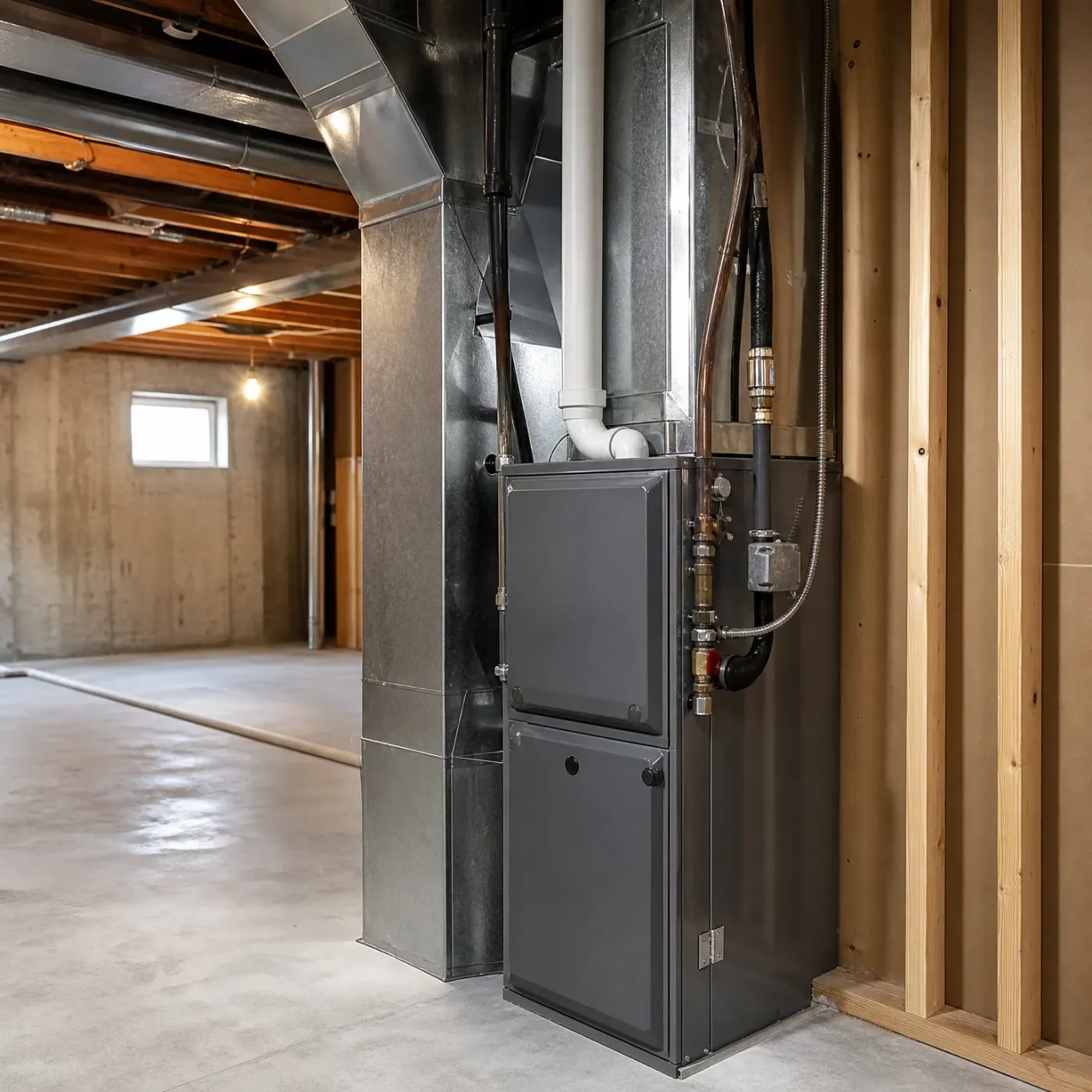
An oil furnace works by sparking a mix of oil and air at the burner and pushing that flame into the heat exchanger, a sealed metal chamber that passes the heat to the air moving through your ductwork. The exchanger only works if it stays sealed. Once it cracks or pits, exhaust gets into the air headed through the house instead of staying in the flue. The burner wears too. Its nozzle and electrodes fire the same spray thousands of times a winter, and a worn nozzle stops throwing a clean, even cone of oil. Soot collects inside the exchanger over the years, and it acts like insulation, so the furnace has to burn more oil to push the same heat through. The flue pipe carrying exhaust outside corrodes on a similar timeline. None of this happens overnight. It happens a little more every winter, until the furnace that used to run clean is working harder to do less.
How an oil furnace wears out
- An oil furnace lights by sparking the oil and air mix at the burner, then pushes the flame into the heat exchanger.
- The heat exchanger is a sealed metal chamber that transfers heat to the air without letting combustion gases mix into it.
- A cracked or pitted heat exchanger lets exhaust leak into the air your ductwork sends through the house.
- The burner's nozzle and electrodes wear down over years of firing, and a worn nozzle sprays oil unevenly instead of in a clean cone.
- Soot building up inside the heat exchanger acts like a blanket, so the furnace burns more oil to push the same heat through it.
- The flue pipe carries exhaust out of the house, and corrosion there often shows up around the same age as wear inside the furnace itself.


Winter nights average 12°F statewide
At 12 below freezing on an average winter night, your furnace is running most of the night just to hold the house steady, not cycling on and off like it would in milder weather. An older unit spends more of that time working at its limit.
NOAA nClimDiv 1991-2020 county normals weighted by homes

So where does that leave your furnace
If yours is past 20 years old, or it's struggling to keep the house steady on the coldest nights, replacing it is the right call. A furnace that age is costing you more in oil than a new one would, and Vermont winters don't give it an easy season to coast through. If it's younger than that and heating evenly, a repair and a tune-up is probably all it needs.
Either way, you don't have to work out which one it is on your own. Once you send the form, the job of finding the right person for your furnace isn't yours anymore. A contractor who knows oil systems in Vermont will look at yours and reach out to you directly, so you're not guessing at the answer or chasing down someone to ask.


A pro who works on furnaces
After you send the request, you're done searching.