

Why your furnace whistles in Vermont

Send the request today and let a furnace pro reach out to you.

Hand off my repair

Why does my furnace whistle?

A whistle from your furnace usually shows up on the coldest nights, right when you're running it hardest to keep the house warm. It's not a sound that belongs there, and it's easy to wonder if it means the system is about to fail on you or if it's something smaller. Most of the time it points to one thing: air trying to squeeze through a space that's too tight for it.

A whistle almost always means air is being forced through a gap that's too narrow

Most whistling comes from a dirty air filter choking off airflow, or a return vent that's partly closed or blocked by furniture. Air still has to move through the system, so it gets forced through whatever opening is left, and that's the sound you're hearing. A loose duct seam or a gap around the furnace cabinet can do the same thing. With an oil furnace, which is what most homes in Vermont run, the blower still has to push a set amount of air through the ductwork no matter how cold it gets outside, so a restriction that's minor in October can whistle louder once the furnace is running long stretches in January.

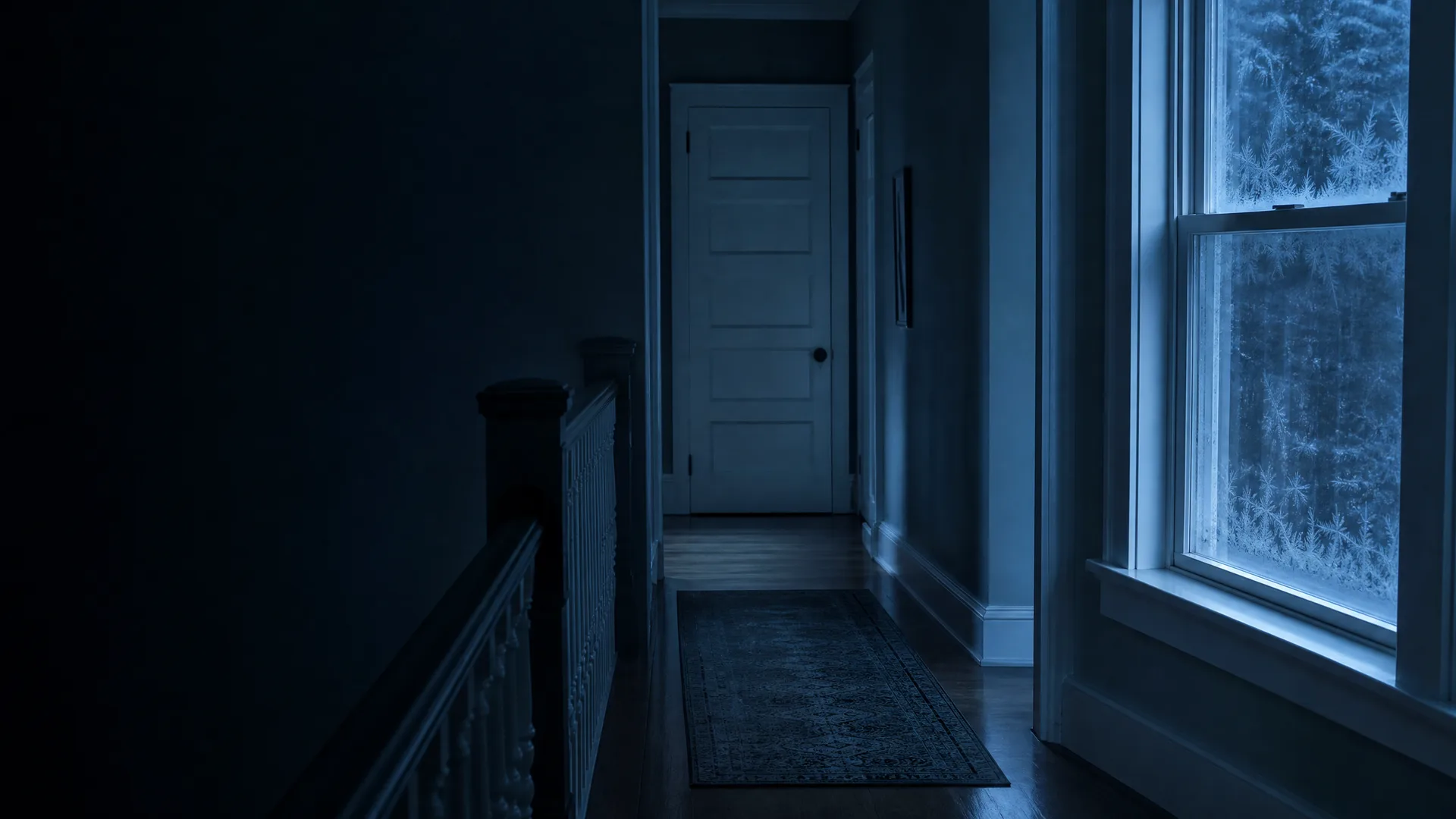
Dimly lit interior hallway at night with a closed white paneled door at the end, a long runner rug on a wood floor, a stair railing at left, and a frost-covered window admitting blue light at right.

You wake at 2 a.m. because the house has gone quiet in a way that doesn't feel right. No whistle, no hum from the vents, just the furnace off when it should be working hardest. You check the hallway. Frost has crept up the edges of the window, and the floor vent nearby isn't pushing any air at all. Outside, Vermont is holding steady in the single digits, the kind of night oil furnaces are built for. You stand there in the blue dark, waiting to hear it kick back on. It doesn't. Down the hall, the thermostat reads three degrees lower than you set it, and still falling.

Is this whistle something you'd actually notice at home

You'd likely hear it first in the evening, when the furnace is running longest and the house has gone quiet otherwise. It can sound thin and steady, almost like air being forced through a narrow gap, and it tends to get louder as the burner keeps firing through a cold night. Some people notice it near the furnace itself, others hear it through the vents in a bedroom or hallway. A dirty filter is often behind it, and a filter that's been ignored long enough can choke off airflow enough to strain the blower or crack the heat exchanger. Left alone through a Vermont winter, that's a furnace working harder than it should, on oil that already isn't cheap to run.

A gray high-efficiency furnace with white PVC vent pipes stands on a concrete pad in a basement, beside sheet-metal ductwork, copper piping and a poured concrete wall with wood framing at left.

Furnace running clean

Air moves through the ducts without any extra sound behind it. The furnace cycles on, the blower comes up to speed, and the only thing you hear is warm air reaching the rooms. Nothing is pinched, nothing is clogged, and the furnace isn't straining to push air past something in its way.


A beige gas furnace in a basement with a metal flue pipe, galvanized sheet-metal ductwork to its left, and gas and water pipes along the concrete wall to its right.

Furnace losing ground

This is the same kind of basement setup, but something inside is restricting the airflow or struggling at the burner. That's often where a whistle starts. Left alone through a Vermont winter, a furnace working against a restriction can wear parts faster and still leave rooms colder than they should be.

Call Now or Wait It Out

Call now

  • A whistle that shows up on the coldest nights tends to get worse, not better, the longer you run the furnace to keep up.
  • A pinched or clogged filter forcing air through a narrow gap can push the blower motor harder than it's built for.
  • Oil furnaces here work through long Vermont winters, and a restriction that's ignored gives the burner less margin on the nights it matters most.
  • Vermont power costs are among the highest in the country, so a furnace working harder than it should against a restriction shows up on that bill.
  • A local contractor who services furnaces all winter here knows the handful of things that usually cause this exact sound and checks those first.
  • Sending one request means one contractor calls, not several companies competing for your attention while you're trying to keep the house warm.

Wait and watch

  • A whistle that only happens on the very coldest nights can be easy to write off as the furnace just working hard.
  • If the sound doesn't change night to night, it may be weeks before you have a clear sense of whether it's getting worse.
  • Vermont winters give you long stretches to notice a pattern, but also long stretches where the furnace is running hardest and least able to spare the strain.
  • Waiting costs nothing right away, but a restriction that's doing the whistling doesn't fix itself with time.
  • If it's tied to the filter or a narrowed duct, the sound usually stays until something physically changes, not because the furnace adjusts to it.
A gray high-efficiency furnace stands on a concrete basement floor beside sheet-metal ductwork, with white PVC vent pipes and a black flexible line running up to exposed wood floor joists, next to a wood-framed post against a concrete wall.

Air moving the way it should

This is a furnace running the way it's built to. Air pulls in clean and pushes out through the ducts without catching on anything. The flue and condensate lines sit clear above the cabinet, and nothing around the unit is forcing air through a gap it shouldn't have to.

A beige metal furnace with a louvered front panel stands on a concrete floor against a concrete wall, connected to galvanized sheet-metal ductwork and a metal pipe.

Air forcing its way through

This is where a whistle starts. Someplace between the return and the blower, something narrow is making the air work harder than it should, and that strain is what you're hearing upstairs. On an older furnace like this, that gap tends to only get worse.

An older beige furnace with louvered front panels stands on a concrete basement floor beside galvanized ductwork, metal and plastic pipes, exposed wood framing, and a cylindrical water heater at right.
Before you get your furnace repair
A gray high-efficiency furnace in a basement with PVC vent pipes, sheet-metal ductwork, copper and insulated pipes, a water heater at left, and an unfinished wood-stud wall at right.
After you get your furnace repair

Done looking for a furnace pro

Your request goes to one pro, not a list of companies.

It costs nothing to send, and you don't have to hire anyone.

A furnace built for an oil-heat Vermont winter is sized to push air hard for months at a time, so a restriction that would barely register in the fall becomes loud in January.

The whistle is air finding a gap it shouldn't have, and the colder it gets, the harder the blower works to make up for it, which is why the sound tends to climb as the temperature drops.

Winter nights average 12°F statewide

Weather station data puts the average overnight low across December, January and February at 12°F here. That's the range where your furnace is running close to nonstop to hold the house steady, so any restriction in the airflow has the most air pushing against it, and the whistle gets loudest right when you need the heat most.

NOAA nClimDiv 1991-2020 county normals weighted by homes

The whistle comes from air moving fast through a space too small for it, the same way air whistles past a cracked window. Your furnace pulls return air through the filter, across the blower wheel, and pushes it out through the supply ducts to every room. Each of those has an opening sized for a certain amount of air. When a filter clogs with dust, that opening narrows, and the blower doesn't slow down to match it. It keeps pulling at the same speed, so the air left squeezes through faster to make up the difference. Fast air through a narrow gap makes noise. The same thing happens if a supply register is mostly closed, or if a duct seam has pulled loose and is drawing air from somewhere it shouldn't. The pitch you hear depends on how narrow the gap is and how hard the blower is working to push air past it, which is why it gets louder on the coldest nights, when the blower runs longest and hardest to keep up.

A gray high-efficiency furnace with white PVC venting pipes stands on blocks in a basement next to sheet-metal ductwork, with exposed wood framing on the left and a concrete wall and floor.
Here, air moves through clean metal ductwork with nothing pinched or blocked along the way.
An older gas furnace with two white PVC vent pipes stands on a concrete basement floor beside galvanized sheet-metal ductwork, flexible conduit, and piping along a wall.
Here, an older cabinet and narrowed ducting give the air less room, and that's where the whistle starts.
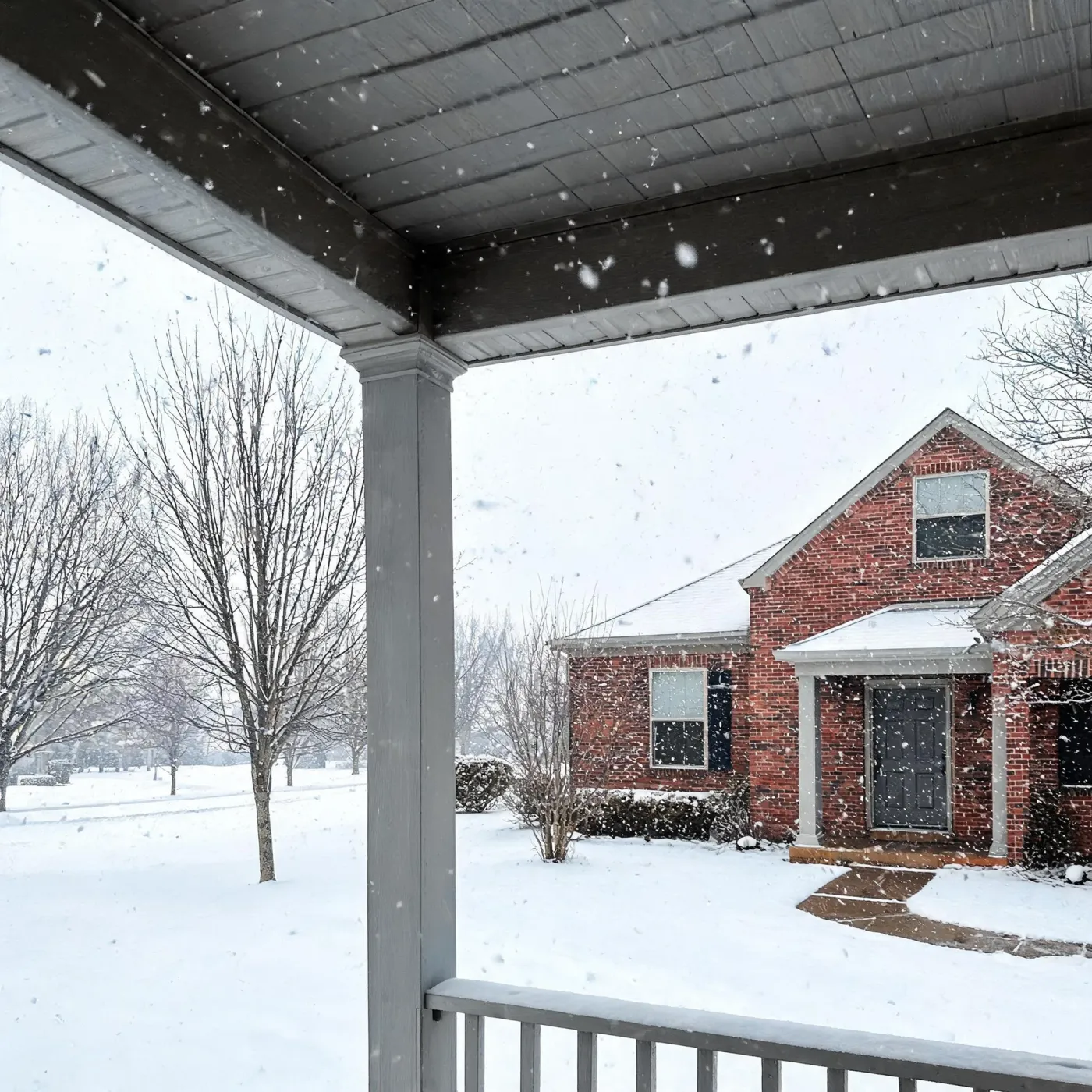
View from a covered porch with a white post and railing toward a red brick house across a snow-covered yard, with falling snow and bare trees.

Statewide, winter nights average 12°F, per weather station data. That's cold enough that your furnace is rarely cycling off for long between December and February. It's pulling return air and pushing it back out for hours at a stretch, not in short bursts like it does in October or March. A whistle that's faint on a 30-degree evening gets sharper and more constant once the nights sit near 12, because the air moving through the ducts barely lets up. If you notice the sound lasting longer into the morning as the cold deepens, that's the same restriction, just with more air forced through it for more hours of the day.

NOAA nClimDiv 1991-2020 county normals weighted by homes

A woman with long light-brown hair in a gray knit sweater sits in a living room looking off to the side, with a sectional sofa, houseplant, lamp, wooden table and large windows behind her.
A woman in a chunky gray turtleneck sweater sits indoors looking off to the side, with a blurred dining table, chairs, pendant lamp and window behind her.
A woman in a cream knit sweater with her hair in a bun stands near a window, looking off to the side, with a gray sofa, houseplant and open kitchen with pendant lights blurred behind her.
A woman with long brown hair in a cream knit sweater stands near a window, looking to the side, with a white sofa, shelving, and a hallway visible behind her.

What the whistle tells you

  • A furnace whistle means air is being forced through a gap smaller than it should be, usually at the filter or a loose duct joint.
  • It shows up loudest on the coldest nights because that's when your furnace runs longest to hold the house steady.
  • Left alone, the restriction makes the blower work harder, and the sound tends to get worse rather than fade on its own.
  • A licensed local contractor can trace the sound to its source, whether that's the filter, the blower wheel, or the ductwork.
  • Getting it checked now means one visit instead of a bigger repair once the coldest stretch of winter sets in.

A whistle is air squeezing through a space that's narrower than it should be. That's the whole story. It might be a filter due for a change, a duct joint that's worked loose, or a blower wheel that's picking up dust and losing clearance. None of those are dramatic on their own, but your furnace doesn't get a light month to recover in. Vermont winters keep it running long stretches at a time, and a gap that would barely make a sound in October gets loud by January because so much more air is moving through it, so much more often. The sound doesn't fix itself. Left alone, the blower keeps working against that restriction, pulling harder than it's built for, and the whistle tends to climb rather than settle down. What started as a thin, steady note on one cold night can turn into something sharper, and the part causing it keeps wearing under that extra strain. A local contractor who works on oil furnaces through a Vermont winter has heard this before and knows where to check first. Finding the source usually takes one visit. Waiting until the coldest stretch of the season, when the furnace is running hardest and least able to spare the strain, is what turns a small fix into a bigger one. The sound is worth paying attention to now, while it's still just a sound.

A woman with her hair in a bun holds a sleeping young child against her chest, both wrapped in a textured beige knit blanket on a sofa in a dimly lit room with a lamp, framed picture, and bookshelf behind them.
A smiling older woman with gray hair in a cream knit sweater stands in a dimly lit kitchen beside a window showing snow outside, with a round loaf of bread on the counter in the foreground.

Furnace Repair

It's off your list after this

The pro who reaches out is licensed in Vermont.

A black-framed smartphone standing upright against a plain white background, its screen filled with solid green.
RepairFurnace or heatingVermont
Step 1 of 2

What ZIP code is the job in?