Profile view of a bearded man wearing a dark green baseball cap and a dark gray T-shirt against a plain light background.

What size generator runs a furnace in Vermont

New system or replacementFurnace or heatingVermont
Step 1 of 2

What ZIP code is the job in?

What size generator do I need to run my furnace in Vermont?

Most furnaces in Vermont run on oil, but the burner, blower and ignition still need electricity to work. When the power goes out in a winter storm, that furnace goes dark too, even with a full oil tank. You want to know what size generator actually keeps it running so you're not guessing at the showroom or buying more than you need.

A 5,000 to 7,500 watt generator is enough for most oil furnaces

Your furnace itself doesn't draw much power. The blower motor and the oil burner's igniter and pump are what pull the load, and that's usually a few hundred watts running, with a brief surge when the motor starts. A 5,000 to 7,500 watt generator covers that with room to spare, and still leaves enough capacity to run a sump pump or a well pump alongside it. If you want the furnace to come back on by itself during an outage, without you out at the generator in the cold, that takes a transfer switch wired in by someone licensed to do it, matched to your panel and your furnace's actual draw.

A man with grey hair and stubble in a dark sweater sits on a grey sofa indoors, looking off to the side, with a potted plant and a sunlit window behind him.
A man with gray hair, a beard and glasses, wearing a dark green sweater, sits on a gray sofa in a sunlit living room with a potted plant, table lamp and wooden sideboard behind him.
A middle-aged man with graying hair and a short beard sits on a blue sofa in a living room, looking toward a window, with a bookshelf, lamp and framed picture in the background.
A man with graying curly hair and a dark green sweater sits on a gray sofa in a sunlit living room, looking off to the side, with a framed picture, shelving, an armchair and a window with sheer curtains behind him.

What happens to the house when the power goes out

The oil burner sits there full of fuel and does nothing. No hum from the blower, no click of the igniter starting up. Within a few hours a Vermont house starts losing heat, and by morning in a hard January cold snap the inside temperature can drop fast enough to worry about. Pipes along outside walls or in a crawlspace are the first at risk once the house gets that cold. If anyone in the home depends on heat for health reasons, a dark furnace during a multi-day outage is more than an inconvenience. A generator sized to run the furnace keeps the blower moving warm air and the burner firing, so the house holds its temperature the way it would on any normal winter night.

A gray high-efficiency furnace with two PVC vent pipes stands in an unfinished basement beside sheet-metal ductwork, a framed and plastic-covered wall, and a bare concrete wall with vertical pipes.

Furnace running on a generator

The blower moves air through the ductwork, the flue pipes draw exhaust out, and the gas line keeps feeding the burner. Set up correctly, a generator carries that load the same way utility power does, and the house holds its heat through the storm.


A gray furnace cabinet in a basement, connected to galvanized sheet-metal ductwork and white PVC pipes, against a concrete wall with exposed metal piping and insulation overhead.

Furnace sitting dark

The burner and blower have power to call on and nothing answers. Oil or gas waits in the line unused, the ducts carry no air, and the basement goes quiet except for the cold working in through the concrete block and the floor joists above it.

Portable or standby: which fits your house

Portable generator

  • Costs less to buy and you can move it or store it in the garage when it's not running.
  • You have to be home to start it, fuel it and run the cord to a transfer switch or inlet.
  • Running on gasoline means you need enough stored to get through a multi-day outage, and gasoline goes stale if it sits too long.
  • If you're not there when the power drops, the furnace stays off until you get back and start it up.
  • Most portable units need a transfer switch installed to feed the furnace safely instead of running extension cords through a window.

Standby generator

  • Starts on its own within seconds of an outage, so the furnace keeps running whether you're home or away.
  • Runs on natural gas or propane, so there's no gas can to refill or gasoline to rotate through the year.
  • Sits outside on a pad year-round and needs a dedicated gas line and electrical hookup to the house.
  • Costs more upfront than a portable, since it includes the transfer switch and permanent wiring as part of the install.
  • Handles a multi-day Vermont outage the same on day four as it does on hour one, as long as the fuel line keeps supplying it.
A gas furnace with two gray access panels stands against a plain wall in a basement, connected to sheet-metal ductwork, white PVC vent pipes, and a yellow gas line.

What actually draws the power

A furnace burner doesn't need much to run. The blower motor is the real draw, especially at the moment it starts. That startup pull is why a generator sized only for the furnace's running watts can stall out when the blower kicks on. An electrician or generator installer sizes for that startup surge, not just the steady hum once it's moving air.

A gray high-efficiency furnace in a basement corner with white PVC vent pipes, copper and black gas piping, and sheet-metal ductwork beside a plain white wall and wooden stair framing.

Why oil heat still needs wiring checked

An oil furnace burns fuel for heat, but the ignition transformer, the burner motor and the blower all run on household current. None of that changes because the tank outside is full. A generator installer in Vermont will check the furnace's nameplate and the panel it's wired to before picking a unit, since a furnace built for a smaller home draws less than one built to heat a larger one through a Vermont winter.

Winter nights average 12°F statewide

A 12°F night doesn't give a dark furnace much time. Once the blower stops, a Vermont house starts shedding the heat it has within a few hours, and a generator sized to start that blower is what gets the burner firing again before the rooms go cold.

NOAA nClimDiv 1991-2020 county normals weighted by homes

Sizing it for just the furnace

If the generator only has to carry the furnace, you don't need much. Most oil furnace circuits draw somewhere in the range of a 5,000 to 7,500 watt generator once you account for the blower's startup pull. That's enough to keep the burner firing, the blower moving air and the flue drafting properly all night. A unit sized this way is usually portable, cheaper to buy, and easier to fit into a garage or shed. The tradeoff is that it won't run anything else. No well pump, no refrigerator, no lights beyond what you run off a cord. For a lot of Vermont households that's a fair trade during a storm, since keeping the house from losing heat matters more than keeping the kitchen lights on.

Sizing it for the whole house

If you want the furnace running alongside a well pump, refrigerator and some lights, the math changes. You're now adding up the running watts of everything you want on at once, plus the startup pull of whichever motor draws hardest, usually the furnace blower or the pump. That often lands in the 10,000 to 15,000 watt range, sometimes more depending on what else is on the circuit. A generator sized for the whole house is usually a standby unit tied into a transfer switch, wired by an electrician who can look at your panel and tell you what's actually drawing power, rather than guessing from a chart.

A woman with shoulder-length brown hair wearing a beige knit cardigan sits in a gray upholstered armchair near a window, looking off to the side with a slight smile, with bookshelves blurred in the background.
A woman and a sleeping child wrapped together in a cream knitted blanket on a couch, with a potted plant, framed photo and lit lamp in the background.

No phone calls to make

Getting the generator sized and installed right means finding someone who deals with Vermont oil furnace wiring often enough to know where these hookups usually go wrong, whether that's the transfer switch, the circuit the burner runs on, or the startup load the blower pulls. That's not the kind of job you want to learn by trial and error during a January outage, and it's not one you want to spend an evening on, calling a handful of electricians, explaining the furnace and the panel setup over and over, then sitting on quotes trying to compare apples to apples. Submit the request once and it goes to one local contractor who already knows this equipment, not a string of callbacks from companies competing for the job. You get someone who can look at your oil furnace, your panel and your house and tell you what size the job actually calls for, instead of guessing from a chart. With winters here and power costs what they are, the sooner that's sorted out, the sooner a storm knocking out the lines stops meaning a cold house by morning.

Sizing it to cover the whole house

A bigger standby unit can carry the furnace along with the well pump, the fridge, some lights and an outlet or two. That matters in a Vermont storm that drops power for two or three days, not just overnight. You're not rationing which rooms stay warm or running out to the garage to swap a load. The tradeoff is cost and the size of the install. A unit that size needs a larger propane or natural gas line and a permanent spot outside, and that's a bigger job than one sized just to start a blower motor.

Sizing it to just the furnace

A smaller generator built around the furnace's startup pull keeps the house heated and not much else. The burner fires, the blower runs, the rooms hold their temperature through the night. You lose the fridge, the well pump, most outlets. For a lot of Vermont homes that's an acceptable trade during a storm, especially if the furnace is oil and the real risk is frozen pipes, not spoiled food. It also costs less and takes less to install, since the circuit and transfer switch only have to carry what the furnace needs.

A gray metal furnace with two white PVC vent pipes stands on a concrete floor beside galvanized sheet-metal ductwork in a basement or utility space with wood framing.
Before you get your furnace installation
A gray furnace cabinet in a basement with sheet-metal ductwork, white PVC vent pipes, and black gas piping against a concrete wall and wood-framed partition on a bare concrete floor.
After you get your furnace installation
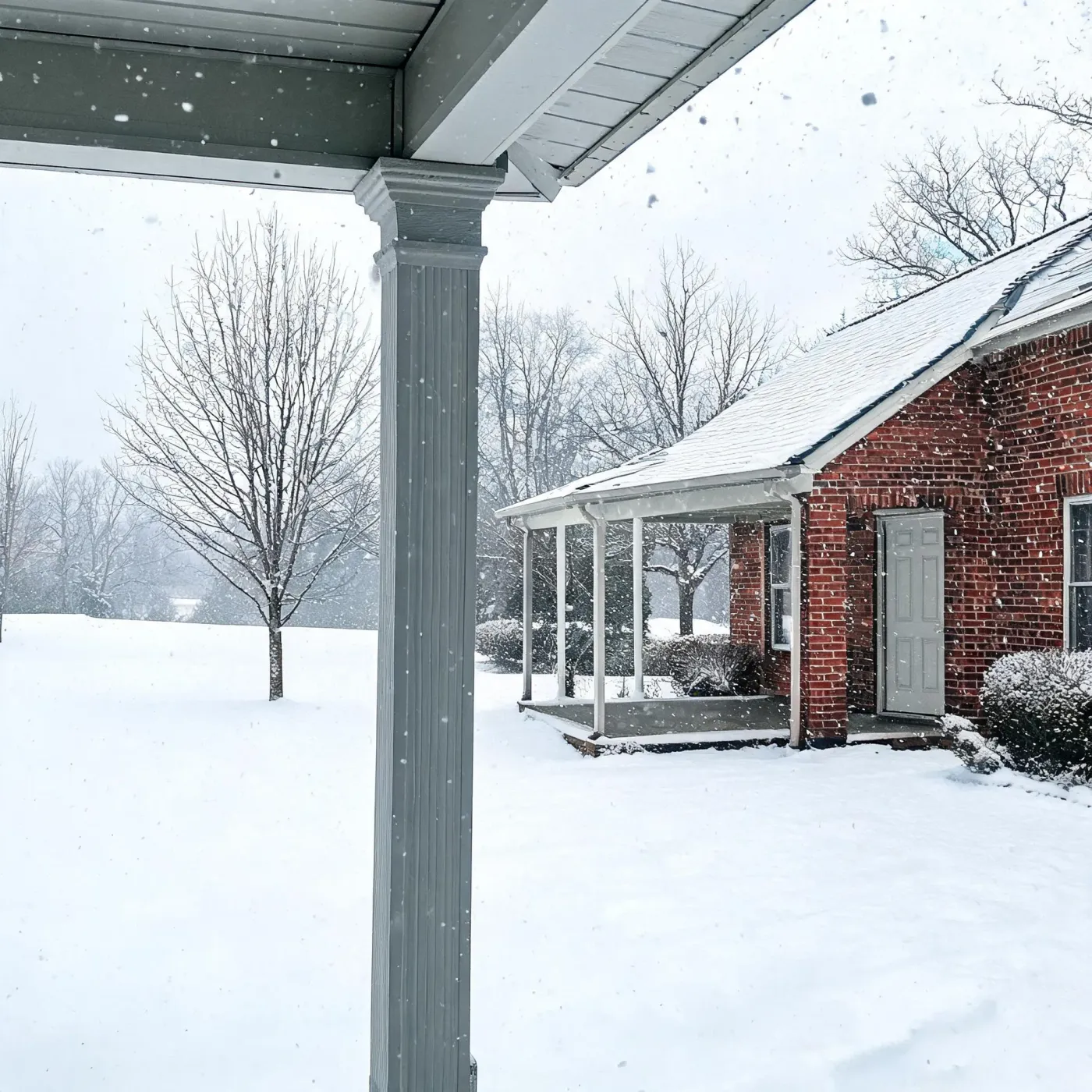
View from under a covered porch with a gray square column toward a red brick house with a white-columned porch and gray door, with falling snow covering the yard, roof, and bare trees.

Winter nights in Vermont average 12°F statewide, according to NOAA climate data. At that temperature, a furnace that loses power doesn't just sit quiet for a few minutes while you check the breaker. The house starts giving up heat right away, and pipes near outside walls are at risk within hours, not days. A generator sized to start the blower on the first try is what keeps that cold from ever getting a foothold, firing the burner back up before the thermostat has dropped more than a degree or two.

NOAA nClimDiv 1991-2020 county normals weighted by homes

A beige high-efficiency furnace stands on a concrete basement floor beside sheet-metal ductwork, with white PVC vent pipes and a gas line running along an insulated wood-framed wall.
Furnace wired to a properly sized generator, running the way it would on a normal winter day.
An older metal furnace with a louvered front panel stands against a concrete basement wall, connected to sheet-metal ductwork and a flue pipe, with copper and steel pipes running alongside.
Furnace with no power behind it, waiting on a transfer switch and a generator picked without the startup load in mind.

Getting the size right

  • A furnace circuit alone needs roughly 5,000 to 7,500 watts to cover the blower's startup pull.
  • Covering the well pump, fridge and a few outlets along with the furnace calls for a larger standby unit.
  • The right size depends on the furnace's actual startup load, not a guess off a sales chart.
  • A contractor who wires Vermont oil furnaces regularly already knows where transfer switches and burner circuits tend to go wrong.
  • One local contractor handles the sizing and installation, so you aren't fielding calls from several companies.
  • Get the size wrong and the generator either stalls under the blower's draw or costs more to run than the house needs.

The furnace runs on oil, but it needs power to fire, and that comes down to a generator sized for what the blower actually pulls when it starts. A unit sized just for the furnace circuit is a different job than one meant to carry the well pump and the fridge through a multi-day outage, and guessing between the two usually ends with a generator that either stalls when the blower kicks on or burns more fuel than the house needs. The number that matters is the startup load of your furnace, not a figure off a sales chart.

That's the kind of detail a contractor who wires oil furnaces around Vermont every winter already has a feel for. They've seen which transfer switches hold up, which burner circuits get wired wrong the first time, and what actually trips a generator that looked fine on paper. Working with one contractor who knows this equipment means you explain the situation once, and the sizing and installation happen as one job instead of getting pieced together from advice off a spec sheet.

You don't need to land on an exact number before you ask for help. The point of bringing in someone local is that they measure your furnace's actual draw and size the generator to it, rather than you trying to match wattage to a guess. Get that part right and the furnace keeps running the next time the power drops on a cold night, without you standing over a breaker panel wondering if the unit outside can carry the load.

Kitchen corner with cream upper cabinets, oak lower cabinets, white marble-look countertop, beige tile backsplash, a ceramic vase of greenery, a wooden cutting board and bowl, and a black-framed window at right.
Interior corner of a room with a white-framed window and wide sill, beige walls with panel molding, a wooden cabinet holding a ceramic vase with a green leafy plant, and blurred shrubs and trees outside.
A wood-framed armchair with beige cushions and a woven lumbar pillow sits in a corner beside a large window overlooking green trees, with a tall ceramic vase holding leafy branches on the left and plaster walls and wood flooring.
Interior corner with a white-framed window above a sill, beige walls with baseboard molding, a greige shaker-style cabinet with brass knobs and a potted plant on top, light wood flooring and a woven jute rug.
A dark-framed six-pane window with white trim and sill set in gray horizontal lap siding, with hydrangea shrubs below and a white column and shingled roof section at left.

One form, no calling around

Your request stays with one local pro.

Fill out one form

You're not committing to anything by asking.