A dark gray furnace with two access panels stands in a basement, connected to galvanized sheet-metal ductwork and PVC pipes, with exposed wood framing and a bare bulb light in the background.

Finding a pro stops being your job

Oil furnace or heat pump for a Vermont home

Oil keeps most Vermont homes warm, and a heat pump is a different question than swapping one furnace for another. This page gets into what a heat pump does in a Vermont winter, what it means for your oil use, and whether it fits your house at all. Send the form and a local contractor who installs these year-round takes it from there.

Let a pro reach out

A heat pump in Vermont won't replace your oil furnace. It works alongside it. Below freezing, a cold-climate heat pump still pulls heat from outside air, but as temperatures keep dropping, it has to work harder to do it, and at some point on the coldest nights it makes more sense to let the furnace carry the load. Most homeowners here use the heat pump for the shoulder months, fall and spring, and keep the oil furnace for the deep cold. The payoff shows up in summer, since the same equipment cools the house without the heavy humidity Vermont doesn't really have to begin with, so you're not paying for cooling you don't need. The furnace stays as backup heat, not as something you're replacing. What changes is how much oil you burn and when the furnace actually runs.

A man in a blue sweatshirt reclines with closed eyes in a brown leather armchair in a living room with a bookshelf, houseplant, sofa, window, and a side table holding newspapers and a dark mug.
A bearded man in a gray pullover reclines with closed eyes on a brown leather sofa in a sunlit room with a window, framed picture, potted plant, and a wooden cabinet holding papers and a dark mug.
A man in a gray sweater leans back with closed eyes in a brown leather armchair beside a wooden side table holding a dark mug and a folded newspaper, with bookshelves and a window seat behind him.
A man in a green sweater reclines in an armchair with his eyes closed and a slight smile, beside a window with plants, a small table holding a mug and folded newspaper, and bookshelves behind him.
A gray gas furnace stands on a concrete basement floor, connected to sheet-metal ductwork, white PVC vent pipes, and a yellow gas line, with plastic sheeting covering the walls.
Keep the oil furnace as the only heat source and it runs every cold month, with no other system sharing the load on the coldest nights.
A metal furnace with louvered panels stands against a concrete basement wall, connected to sheet-metal ductwork and a round flue pipe, with wooden framing posts and a pipe nearby.
An older oil furnace working alone shows its age faster, and a breakdown in January leaves you without backup heat.
A dimly lit interior with wood plank flooring where a small portable heater with a glowing orange element sits near an open doorway, with a stove at left, kitchen cabinets and a potted plant at right, and a wooden table and chair in the foreground.

You're up before the rest of the house, and the kitchen is cold enough that you can see your breath near the window. The space heater is running by the table, its coil glowing orange, because the furnace hasn't caught up yet. The basement door is open behind it, the way it's been since the cold snap started, so you can hear the burner kick on and off down there. You stand close to the space heater with your coffee, waiting for the kitchen to feel like a kitchen again. Outside, the thermometer on the porch post hasn't moved off single digits since Tuesday. You do the math on the oil tank in your head, not for the first time this week.


How does a heat pump actually keep working when it's below freezing outside?

You've heard a heat pump pulls heat from outside air, and that sounds fine in October. What you want to know is what's actually happening inside the unit on a January morning in Vermont, when the air outside is well below freezing and there's nothing warm left to grab. It's a fair question. The answer isn't obvious unless someone explains what the refrigerant is doing.

It compresses refrigerant to make cold outside air give up its heat

The refrigerant inside a cold-climate heat pump runs colder than the outside air, even at zero degrees. Because it's colder, the outside air still has heat to give up to it, and the refrigerant absorbs that heat and turns to gas. The compressor then squeezes that gas, which raises its temperature well above room temperature, and that heat gets carried inside and released through the indoor unit. The outside air gets colder as the refrigerant pulls heat from it, then gets sent back out. The colder it gets outside, the harder the compressor has to work to pull the same heat, which is why output drops as temperatures fall and why the oil furnace is still doing real work on the coldest nights.

A beige residential gas furnace with white PVC vent pipes, copper and yellow gas lines, and adjacent sheet-metal ductwork stands on a concrete floor beside a plain white wall.

What the cold rating actually tells you

A cold-climate heat pump is rated to keep producing heat at temperatures well below zero, but the output drops as it gets colder. At 5 degrees it might still put out most of its rated capacity. At minus 10, it's putting out much less, and that's the point where your oil furnace needs to carry the house on its own. The rating on the box isn't a promise of comfort at that temperature, it's a cutoff for whether the unit runs at all.

A gray high-efficiency furnace with white PVC vent pipes and metal ductwork stands on a concrete floor beside a plain off-white wall in a basement.

Why the furnace still earns its keep

Oil burns hot. A furnace can push air into the house at a temperature a heat pump can't match once it's deep into a Vermont cold snap. That's not a flaw in the heat pump, it's just two different ways of making heat, and one of them doesn't lose ground as the mercury falls. Pairing them means the heat pump handles the months it can do the job efficiently, and the furnace takes over for the stretch where it can't.

Stay on oil or add a heat pump

Oil furnace only

  • Your furnace already carries the whole house, so there's no second system to install, wire, or learn.
  • It runs on one fuel, so you're only watching one price, even though that price moves and oil here isn't cheap.
  • Every room gets heated the same way it does now, through the same ducts or baseboards, with no new equipment to place.
  • If the furnace is old, it's carrying 100 percent of the load with nothing to pick up slack if it falters mid-winter.
  • You avoid the cost of an outdoor unit and an electrician, but you also keep paying oil prices for every degree of heat.

Heat pump alongside it

  • It takes over on the milder days and shoulder months, so the furnace burns less oil over a full winter.
  • Electricity costs here are high, but a heat pump still produces more heat per dollar than oil on the days it can run.
  • The furnace stays in place as backup, so you're not betting the whole winter on one system you haven't lived with yet.
  • It also gives you air conditioning for summer, which matters less here than in muggier states but still means one less window unit.
  • Installing it means an outdoor unit, indoor coil or head, and an electrician's work alongside whatever the heating contractor does.
  • On the coldest nights the furnace still does the heavy lifting, so you're running two systems instead of simplifying to one.
A gray high-efficiency furnace in a basement with sheet-metal ductwork, white PVC vent pipes, metal plumbing lines, a condensate pump on the floor, and a window showing green trees outside.

Furnace holding up

This is what a furnace looks like when it's kept up with. The burner fires clean, the flue and condensate lines are tight, and it's not straining to make it through a Vermont January. A furnace in this shape can carry the house on its own or share the load with a heat pump without issue.

An older metal furnace with PVC and metal pipes stands on a concrete basement floor beside galvanized ductwork, with wooden stairs and a water tank in the background.

Furnace on its last run

Dust like this on the burner means it's not burning as clean as it should. Flexible gas lines and aging connections add risk a newer install wouldn't have. A furnace in this shape is closer to a breakdown than a tune-up, and that's a bad position to be in when it's the only heat you've got.

A gray metal furnace with louvered vent panels stands on a concrete basement floor beside galvanized ductwork, gas and plastic pipes, and foil-faced insulation along the ceiling and wall.
Before you get your furnace installation
A basement utility area with a gray furnace, sheet-metal ductwork, pipes, plastic-covered walls, a concrete floor, and a black shelving unit holding storage bins.
After you get your furnace installation
A gray high-efficiency furnace with two white PVC vent pipes stands against sheet-metal ductwork in an unfinished basement with concrete floor and walls and exposed wood joists.

Let someone else find the pro

One installer gets your project, so there's no bidding war over it.

Send the form and the search for an installer is over.

Find a licensed pro

You're not committing to anything by asking.

Winter nights average 12°F statewide

A 12°F night is routine here, not a cold snap. That's the range where a heat pump's output keeps shrinking, so your oil furnace is doing most of the work by the time you wake up to it.

NOAA nClimDiv 1991-2020 county normals weighted by homes

  1. The thermostat calls for heat and the heat pump answers first

  2. Its outdoor coil pulls heat out of the cold air itself

  3. A refrigerant line carries that heat into your house

  4. An indoor coil releases the heat into the air moving through

What's telling you your furnace is carrying too much

You'll notice it in the oil bill first, the tank going down faster than it used to, and a delivery truck showing up more often than it did a few winters back. The furnace itself might be running longer stretches to hold the same temperature, or short-cycling on the coldest nights, kicking on and off instead of settling into a steady run. Some rooms stay colder than others no matter what the thermostat says. None of that means the furnace is failing. It means it's doing all the work alone, with nothing sharing the load when it's below freezing outside. If it's getting older and running this hard every winter, a breakdown during a cold stretch leaves the house with no backup heat until it's fixed.

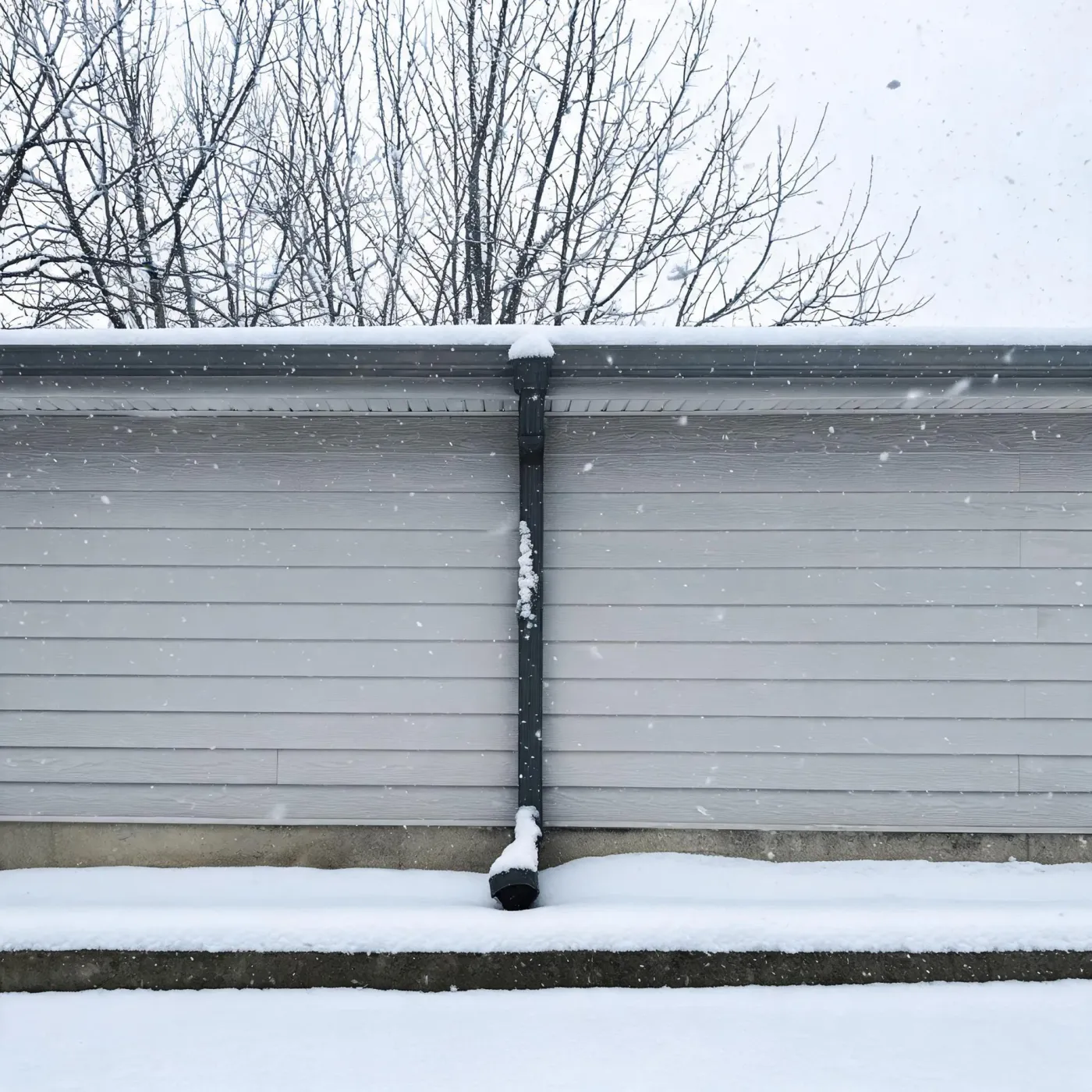
Exterior wall of a building with light gray horizontal siding and a dark downspout running to the ground, with snow on the roofline, steps, and ground, and bare trees behind during falling snow.

Statewide, winter nights average 12°F. Your furnace doesn't get a break at that temperature, it just runs. The burner cycles on, holds the house warm for a while, then fires again once the air near the windows and the floor starts pulling heat back out. You'll feel it most in the rooms farthest from the furnace, where the air never quite catches up overnight. That's also the range where a heat pump outside loses most of what it can offer, so if one's paired with your furnace, the furnace is carrying the load on nights like this, not sharing it.

Source: NOAA climate normals.

NOAA nClimDiv 1991-2020 county normals weighted by homes

An older man with gray hair and a beard leans back on a beige sofa with his eyes closed, in a sunlit room with potted plants, a wicker chair and large windows behind him.
A woman in a cream knit sweater sits in an armchair with her eyes closed and a slight smile, beside an open window showing orange autumn foliage, with a mug, books and a lit candle on a small side table.

Where this leaves you

  • An oil furnace stays your main heat source in Vermont, with a heat pump taking over the shoulder months when it's not below freezing.
  • That pairing cuts the hours your furnace runs without leaving you short on the coldest nights when it still carries the load.
  • A contractor who installs heat pumps in Vermont every winter knows which models hold their output at 12°F and which ones fall off.
  • Your request goes to one licensed local installer, not a batch of companies competing for the job.
  • Whether a heat pump makes sense for your house depends on its layout and what your furnace is already doing, which is worth a look before you decide.

Your oil furnace keeps its job in a Vermont winter. A heat pump doesn't replace it, it takes the hours off the shoulder months when the temperature isn't fighting it, and hands the coldest nights back to the furnace where they belong. That's the whole answer. What changes is how often the furnace fires, not whether you need it.

Getting that pairing right is less about the idea and more about the equipment and the house. Some cold-climate heat pumps hold their rated output down into single digits, others fall off well before that, and the difference matters once you're at 12°F on a normal Tuesday night, not some rare cold snap. A furnace that's already straining to carry the whole house changes the sizing question too. That's the kind of thing a local installer sorts out by having done it on other houses nearby, not by reading a spec sheet once.

Sending the request through this page puts it in front of one licensed contractor working in Vermont, someone who installs these systems every winter and has seen which ones hold up and which ones don't once the thermometer drops. You're not fielding calls from a handful of companies trying to win the job. You're hearing from the one who already knows what a Vermont winter does to this equipment, and what your house would need to make the pairing work.

At dusk, a dark board-and-batten house with a standing-seam metal roof and lit entry walkway of stone pavers, with two large outdoor heat pump units on a stone-walled pad at right and trees and hills in the background.

Furnace Installation

One request and it's handed off

New system or replacementFurnace or heatingVermont
Step 1 of 2

What ZIP code is the job in?

  • A brown leather and wood armchair with a cream knit throw sits in a corner beside a woven basket holding a dark cushion, under a framed mountain photograph, with a wood-trimmed window showing yellow and green foliage.
    • A local installer who puts in furnaces gets your project.
    • Get in touch with a local installer about a new furnace.
  • A dark wood dresser against a pale wall holds a ceramic vase of eucalyptus branches, a stack of books with a wooden bowl, and a woven basket, with a framed landscape painting above and a woven basket holding a knit blanket on the floor beside a window.
    • Send the form and stop researching installers for the new furnace.
    • One request ends the search for a furnace installer.
  • A window seat with beige linen and brown textured cushions, a chunky knit blanket, and an open book, beside a window showing blurred yellow autumn foliage.
    • Skip collecting and comparing quotes for the new furnace.
    • Skip the round of in-home estimates for a new furnace.
  • A cream upholstered armchair with a rust-colored pillow and knit fringed throw sits beside a window with a ceramic vase of orange-leafed branches on the sill, overlooking autumn trees and leaf-covered ground.
    • Your request stays with one local pro.
    • Your request goes to one pro, not a list of companies.