Mini Split Installation in Rutland, VT
Tell us about the house, and a licensed contractor who covers Rutland County will get in touch.
Tell us about the job
It takes about a minute.
Rutland asks a mini-split to hold heat, not shed it
Nine months a year, September through May, your mini-split is the thing keeping the house warm. Winter nights average 12°F here, and that's the temperature the outdoor unit has to pull heat from, not just push against. Cooling barely enters into it. Summer afternoons average 77°F, so the load on a new system is almost entirely on the heating side.
A unit built for this climate needs to hold its output as the outdoor temperature drops toward that 12°F average, not just run well on a mild fall day. Any mini-split installed new has to meet the federal minimum for split-system heat pumps, 14.3 SEER2 for cooling and 7.5 HSPF2 for heating. Sizing it for the cold nights, not the mild afternoons, is what determines whether it keeps up in January.
- 9 months
- September through May, your system heats
- 12°F
- the average winter night it heats against
- 77°F
- the average summer afternoon it cools against
Vermont has no state license for HVAC contractors.
There is no state record to check here, no license number and no registration on file. Vermont leaves HVAC work between the homeowner and whoever they hire, so whatever confidence you have in a contractor has to come from somewhere other than a state license.
For a mini-split install, that somewhere is the local building office. In most cities and counties, this kind of installation needs a permit and an inspection once the work is done, so someone outside the contractor still checks the job even without a state license behind it.
Source: Vermont Department of Public Safety, Division of Fire Safety
- Is a mini split worth it?
- For most of Rutland's heating season, yes, though at 12°F on the coldest winter nights a cold-climate model is the safer bet, not a standard one. Homes here need heat or cooling nine months of the year, and a mini split handles both jobs with one system. It also gives you cooling for summer afternoons that average 77°F, something a furnace alone can't do.
- How many rooms can a mini split cover?
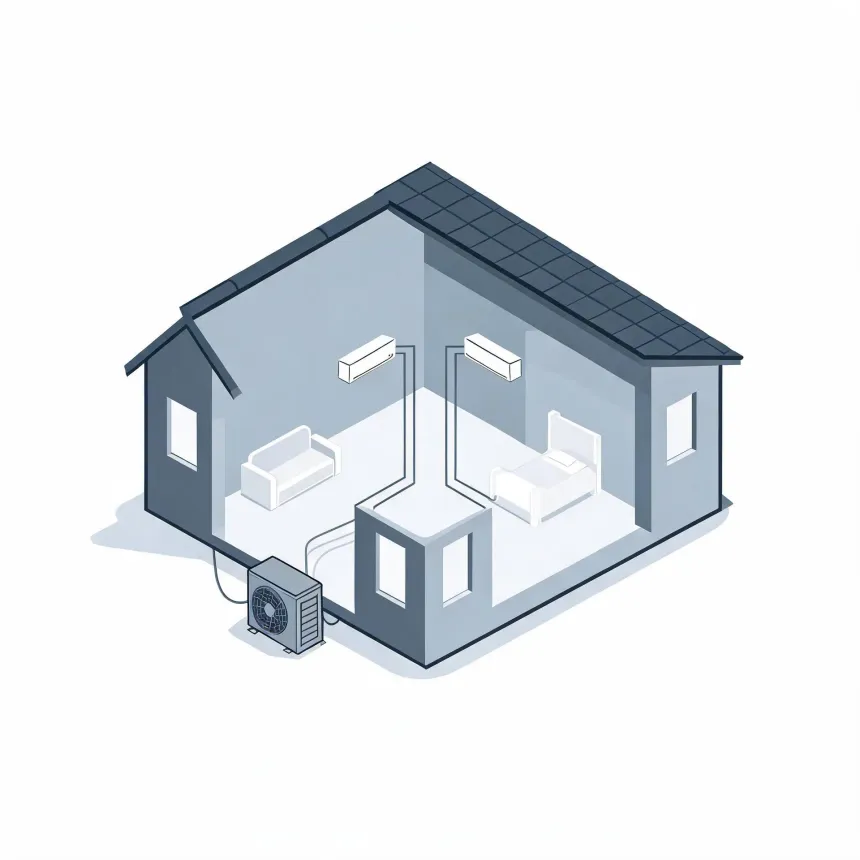
- A single indoor head heats and cools one room or an open area well. If you need more rooms covered, a multi-zone system lets one outdoor unit run several indoor heads, each with its own thermostat. How many zones make sense depends on the layout of the house, so a contractor will walk the rooms before pricing anything out.
- Can a mini split heat a whole house?
- It can, but it takes the right equipment and enough heads placed in the right rooms. Rutland winters average 12°F from December through February, so the system needs to be a cold-climate model rated to keep producing heat at those temperatures. A contractor can size a whole-house setup room by room based on how the house is laid out.