
Mini Split Installation in North Bennington, VT
Tell us about the house, and a licensed contractor who covers Bennington County will get in touch.
Tell us about the job
It takes about a minute.
A North Bennington mini-split works nine months a year
Winter nights here average 13°F from December through February, and homes need heat from September through May. That's nine months a year the system is running, most of it against real cold, not just taking the edge off a cool morning.
A mini-split installed new has to meet the federal minimum of 14.3 SEER2 for cooling and 7.5 HSPF2 for heating. Summers stay mild, averaging 75°F, so cooling is not what this system has to be built for. It's the long, cold heating season that decides whether it can keep the house warm through January and February nights at 13°F.
- 9 months
- September through May, your system heats
- 13°F
- the average winter night it heats against
- 75°F
- the average summer afternoon it cools against
Vermont has no state license for HVAC contractors.
There is no state board behind this job and no state record of who did the work. Nothing was tested or filed with the state before this contractor went into business. That is true for every HVAC contractor in Vermont, not just this one.
The check on this job happens at the local level instead. In most Vermont cities and towns, installing a mini-split needs a permit from the local building office. It gets inspected once the work is finished.
Source: Vermont Department of Public Safety, Division of Fire Safety
- Is a mini split worth it?
- For most homes here, yes, especially if you're heating with fuel oil now. A mini split is a heat pump, so it moves heat instead of burning fuel to make it, and it keeps working that way down to real winter temperatures. With lows averaging 13°F here, look for a cold-climate model, since that's what keeps delivering heat on the coldest nights instead of falling back on backup heat. Whether it makes sense for your house depends on your current heating setup and what rooms you need covered, and a contractor can walk through that with you.
- How many rooms can a mini split cover?
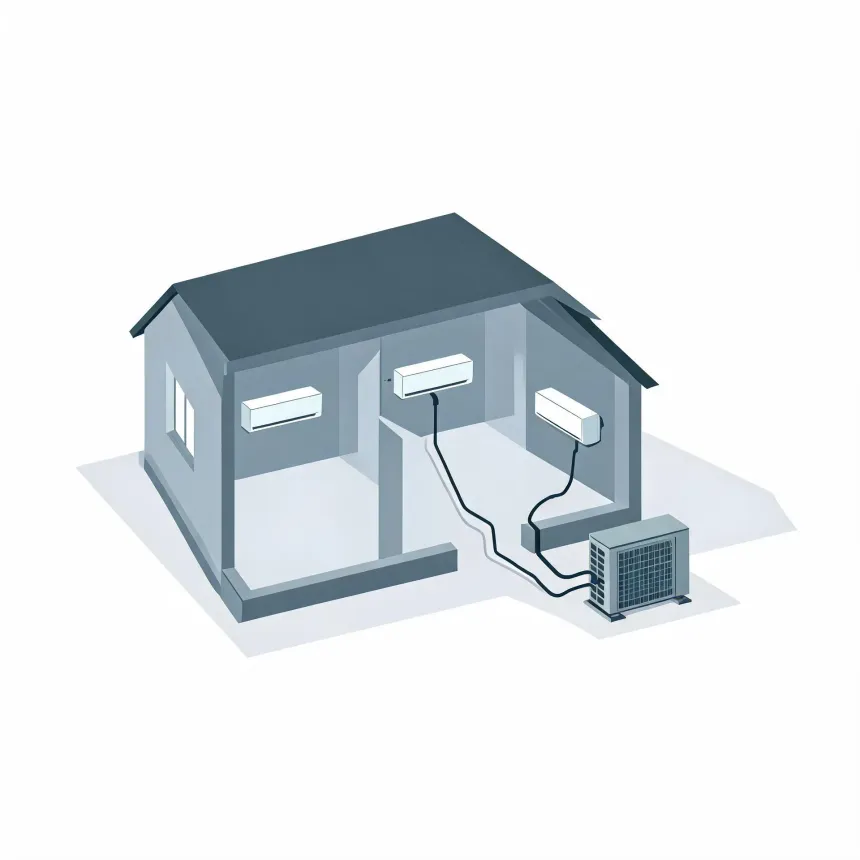
- A single outdoor unit can run one indoor head or several, depending on the system. Single-zone systems cover one room or open area. Multi-zone systems connect several indoor heads to one outdoor unit, each with its own thermostat, so you can heat or cool different rooms at different temperatures. How many zones your house needs comes down to the layout, and that's something a contractor sizes room by room.
- Can a mini split heat a whole house?
- It can, if it's sized and placed for that. Whole-house coverage usually means a multi-zone system with an indoor head in each main area, chosen and placed so heat reaches every room. Since homes here need heat nine months a year, from September through May, and winter nights average 13°F, the system has to be sized for those low temperatures, not just for the mild months. A contractor can look at your floor plan and tell you what it would take to heat the whole house this way.