Mini Split Installation in Vergennes, VT
A new system here will heat from September through May and cool from July through July every year. Tell us about the house, and a licensed contractor who covers Addison County will get in touch.
Tell us about the job
It takes about a minute.
What a mini-split in Vergennes has to handle
Winter nights here average 12°F, December through February. A mini-split has to keep making heat at those temperatures, not just hold steady on a mild day. Come summer, afternoons average 77°F, which is a modest load by comparison, but the unit needs to switch and cover it.
Homes here need heat from September through May, nine months, and cooling in July. That is ten months a year where the mini-split is doing one job or the other, so it has to hold up under steady use. Any unit installed new has to meet the federal minimum for split-system heat pumps, 14.3 SEER2 for cooling and 7.5 HSPF2 for heating. That is the floor, not a feature, so it is worth asking what a contractor is installing above it.
- 9 months
- September through May, your system heats
- 1 months
- July through July, it cools
- 12°F
- the average winter night it heats against
- 77°F
- the average summer afternoon it cools against
NOAA nClimDiv, 1991–2020 normals
Vermont has no state license for HVAC contractors.
There is no state list to check and no registration on file. Any contractor can take on this installation without a state credential behind their name, and Vermont keeps no record either way. Whatever confidence you have in the person doing this job comes from what you learn about them directly.
A mini-split installation still runs through the local building office. Most cities and counties require a permit for this kind of work and send someone out to inspect it once it is done. That inspection is not a license, but it is a check on the work itself, done by someone other than the contractor.
Source: Vermont Department of Public Safety, Division of Fire Safety
- Is a mini split worth it?
- For most homes here, yes, because a mini split handles both the nine months of heat and the summer cooling with one system. Winter nights average 12°F, and cold-climate mini splits are built to keep producing heat at those temperatures, unlike older heat pump designs. A large share of homes here still heat with fuel oil, and a mini split gives you a way to cut back on oil use or replace it, room by room, without ductwork. A contractor can look at your house and tell you what size and how many units it would take.
- How many rooms can a mini split cover?
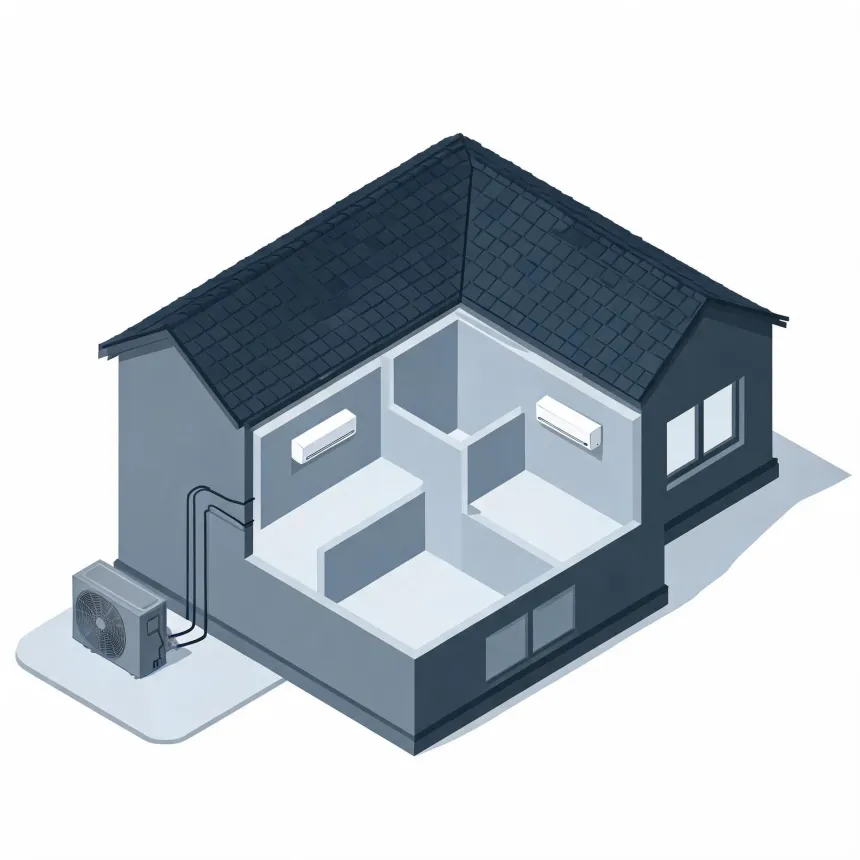
- A single outdoor unit can run more than one indoor head, so it can cover more than one room. Each indoor head is sized to the room it heats and cools, so a small bedroom and a large living room need different capacities. The more rooms you connect to one outdoor unit, the more a contractor has to balance capacity against how much the compressor can actually deliver. For a whole house, that usually means walking through each room with a contractor to size it correctly.
- Can a mini split heat a whole house?
- Yes, if it is sized and placed to reach every room. That matters here, since homes need heat from September through May, nine months of the year, and winter nights average 12°F. A single indoor head only heats the space it is in and what air can reach from an open doorway, so a whole house usually needs one head per room or per zone, not one unit for the whole place. A contractor can walk the house and lay out how many heads it takes to cover it.