Mini Split Installation in Bellows Falls, VT
A new system here will heat from September through May and cool from July through July every year. Tell us about the house, and a licensed contractor who covers Windham County will get in touch.
Tell us about the job
It takes about a minute.

A Bellows Falls mini-split works hard nine months a year
Winter nights here average 14°F, and heat is on somewhere in the house from September through May. That is nine months of run time, with the compressor working hardest on the coldest nights when it has to pull heat out of outside air near zero. A mini-split installed here needs to be sized and set up for those low temperatures, not just for a mild fall day.
Summer only asks for cooling in July, with afternoons averaging 77°F, so the bigger job for a new system is winter. Any split system manufactured now has to meet 14.3 SEER2 for cooling and 7.5 HSPF2 for heating, and in a place that leans on heat most of the year, that heating number matters as much as the cooling one. Over half the homes in this area still heat with fuel oil, and a mini-split installed to handle 14°F nights is what makes it a real alternative and not just a supplement.
- 9 months
- September through May, your system heats
- 1 months
- July through July, it cools
- 14°F
- the average winter night it heats against
- 77°F
- the average summer afternoon it cools against
NOAA nClimDiv, 1991–2020 normals
Vermont has no state license for HVAC contractors.
Vermont keeps no state record of who does this work. No test, no license number, no board to check a name against.
That leaves the local building office as the thing standing between you and a bad installation. In most Vermont towns, a mini-split installation needs a permit, and the finished work gets an inspection before it is signed off.
Source: Vermont Department of Public Safety, Division of Fire Safety
- Is a mini split worth it?
- For most homes here, yes, especially as a way to add heat and cooling to rooms that don't have it or to cut reliance on fuel oil. A cold climate heat pump keeps producing heat well below freezing, so it can carry a good share of the heating load even with winter nights averaging 14°F. More than half the homes in this area still heat with fuel oil, and a mini split in the rooms used most can lower how much that furnace runs. A contractor can size the system to the house and tell you what it will realistically cover.
- How many rooms can a mini split cover?
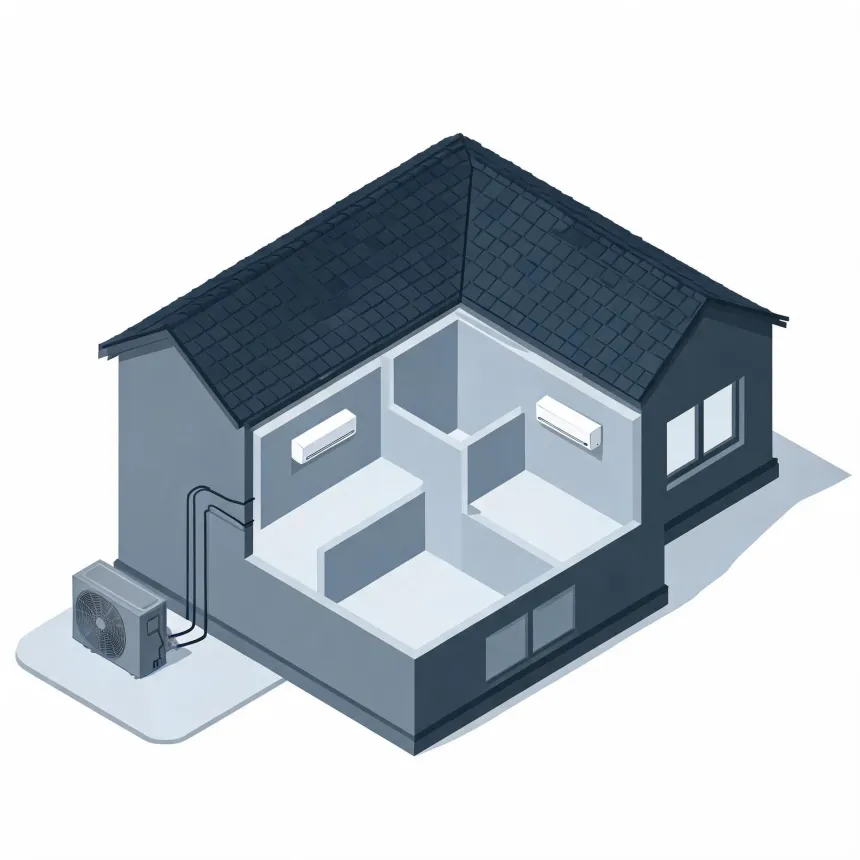
- A single outdoor unit can run one indoor head or several, depending on the model. Each indoor head heats and cools the room it's mounted in, so a multi-zone system covers as many rooms as it has heads, not the whole floor plan around them. Bedrooms, a living room, and an addition without ductwork are typical choices. A contractor will look at the layout and tell you how many zones the house needs.
- Can a mini split heat a whole house?
- It can, but only if it's sized and placed to do that job, with enough indoor heads to reach every room and a design built around this area's cold. Winter nights here average 14°F, and heat has to run from September through May, so undersizing leaves rooms short on the coldest nights. A contractor can do the heat loss calculation for the house and tell you whether a mini split alone will carry it.