


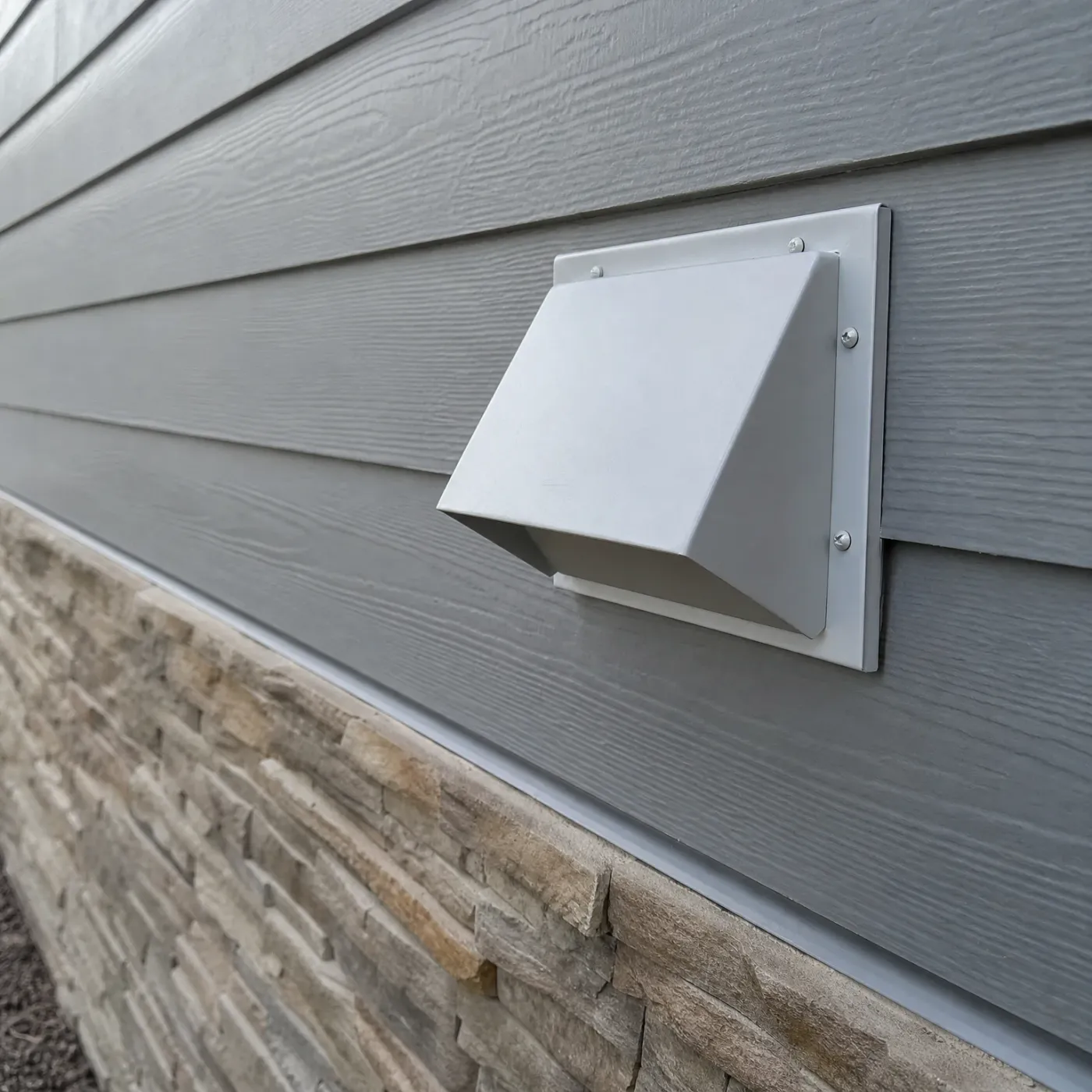
The vent hood working as it should
Four screws hold this hood flat against the siding, and the flap hangs loose enough to swing open the moment the dryer kicks on. Air pushes it out and away from the wall. Nothing cakes around the edge.
Send the form and the dryer vent cleaning stops sitting on your list.
Hand it offA clogged dryer vent shows up as clothes that take two or three cycles to dry, a dryer that runs hot to the touch, or a burnt smell when it's running. Check the outside vent hood while the dryer runs. If the flap barely moves or no air pushes out, lint is backed up somewhere in the duct. Lint builds up fastest in vents with long runs or tight bends, and it traps heat that would otherwise vent outside. That heat has nowhere to go but back into the drum and into the room around it. In Rutland, with power among the most expensive anywhere, a dryer fighting a clogged vent runs longer and costs more every time you use it. A blocked vent also means more lint sitting hot near a heat source, which is the reason this isn't something to let ride through another few loads of laundry.

Oil heat keeps Rutland basements and laundry rooms warm and dry most of the year, and that dry air pulls more lint loose from every load. A vent that would only need attention once a year somewhere else can pack tight with lint sooner here. The bends in the duct are where it catches first, especially if the run goes any distance to an outside wall.

Electricity here runs among the highest rates in the country, and a dryer fighting a clogged vent uses more of it to finish a load that should have taken one cycle. The heating element cycles on and off more trying to push air through a narrow opening, which is part of why the unit runs hot to the touch. Clearing the vent brings the dry time back down and the heat back to normal.
2.31 people per household on average
Most Rutland County households run 2.31 people, which means a dryer working through loads most days of the week, not once in a while.
Half the homes here were built by 1969
Half the homes in Rutland County were built in 1969 or earlier, old enough that the vent run may be longer or bent in ways a newer layout would avoid.
Power here costs 23.29 cents per kilowatt-hour
Electricity here runs 23.29 cents per kilowatt-hour, so a dryer fighting a clogged vent and running longer costs you more every time you use it.
ACS 2020-2024 · EIA-861 2025




You've probably started running every load twice. Towels come out damp on the first cycle, the dryer feels hot on top or along the front panel, and the laundry room holds onto a warm, stale smell long after the cycle ends. Some households notice the dryer shutting off on its own partway through, which is the unit protecting itself from heat that isn't escaping outside like it should. Left alone, that trapped heat is what starts lint fires, and a dryer straining through every load is pulling more power to do it, which matters with Rutland's electric rates already running high.

It's past seven on a Tuesday, the dishes done, one more load to finish before bed. You open the dryer expecting warm towels and get damp ones instead, heavy and still cool in the folds. You run it again. Outside, the Rutland County night has gone sharp and cold the way it does most of the year, and the laundry room is the warmest spot in the house, humid now, smelling faintly of hot dust. The towels sit piled on top of the dryer while it runs a second time, and you stand there a minute longer than you meant to, waiting to see if this cycle does any better than the last one did.
Lint collects inside the duct behind the dryer first.
Warm, moist air pushes through the narrowing duct with less force.
Trapped moisture lets lint stick and build instead of blowing clear.
Airflow drops, so the dryer runs hotter to finish each load.


Your dryer vent cleaning request goes to one local pro.
Send the request and finding a pro stops being your problem.
No charge to send it. You decide if you hire them.
At 2.31 people, most Rutland County houses are small households, but the dryer still runs a load most days, towels, work clothes, sheets. Lint builds up at that pace whether it's one person or four, and a vent nobody's checked keeps narrowing until a load that used to take forty minutes takes two tries.
ACS 2020-2024
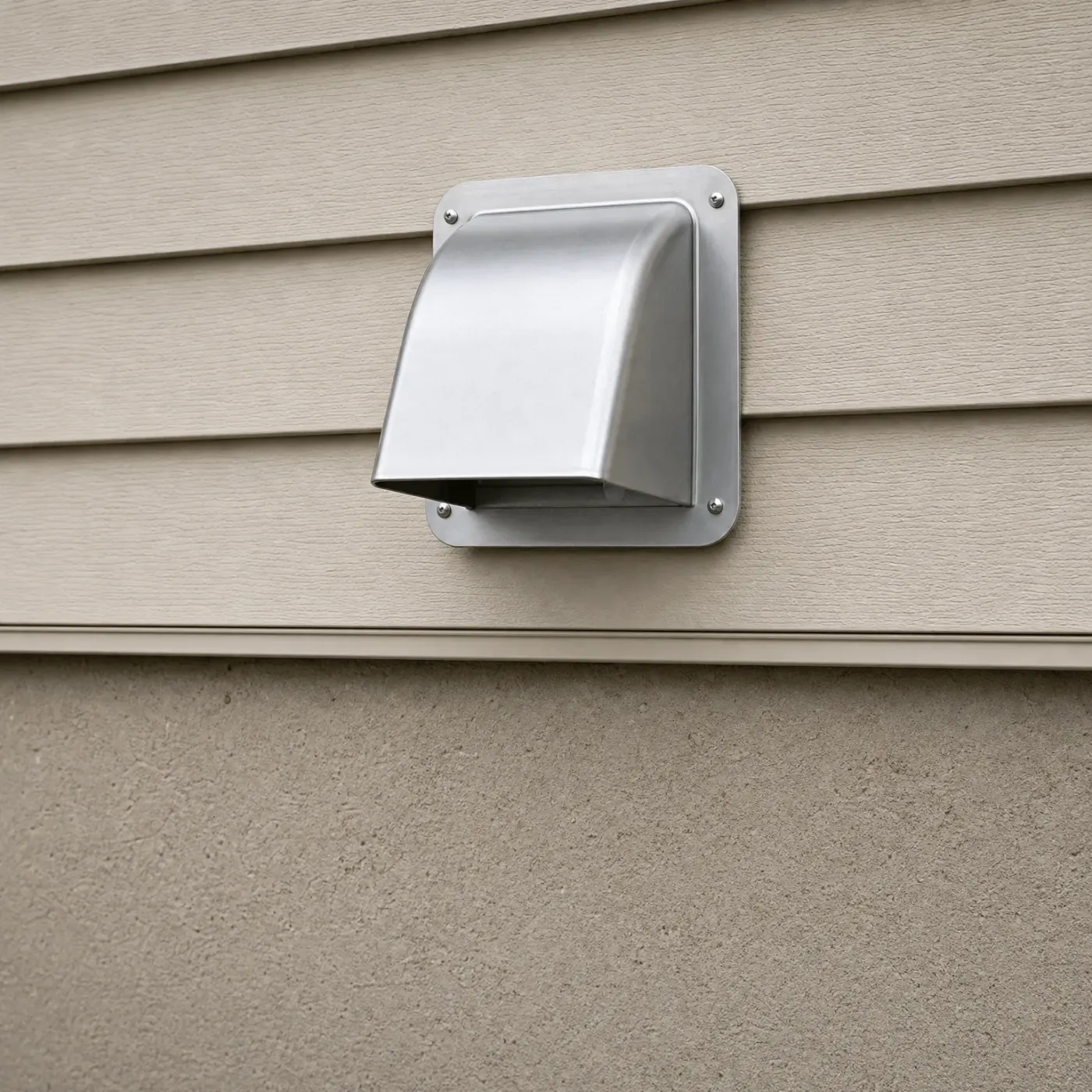
Four screws hold this hood flat against the siding, and the flap hangs loose enough to swing open the moment the dryer kicks on. Air pushes it out and away from the wall. Nothing cakes around the edge.
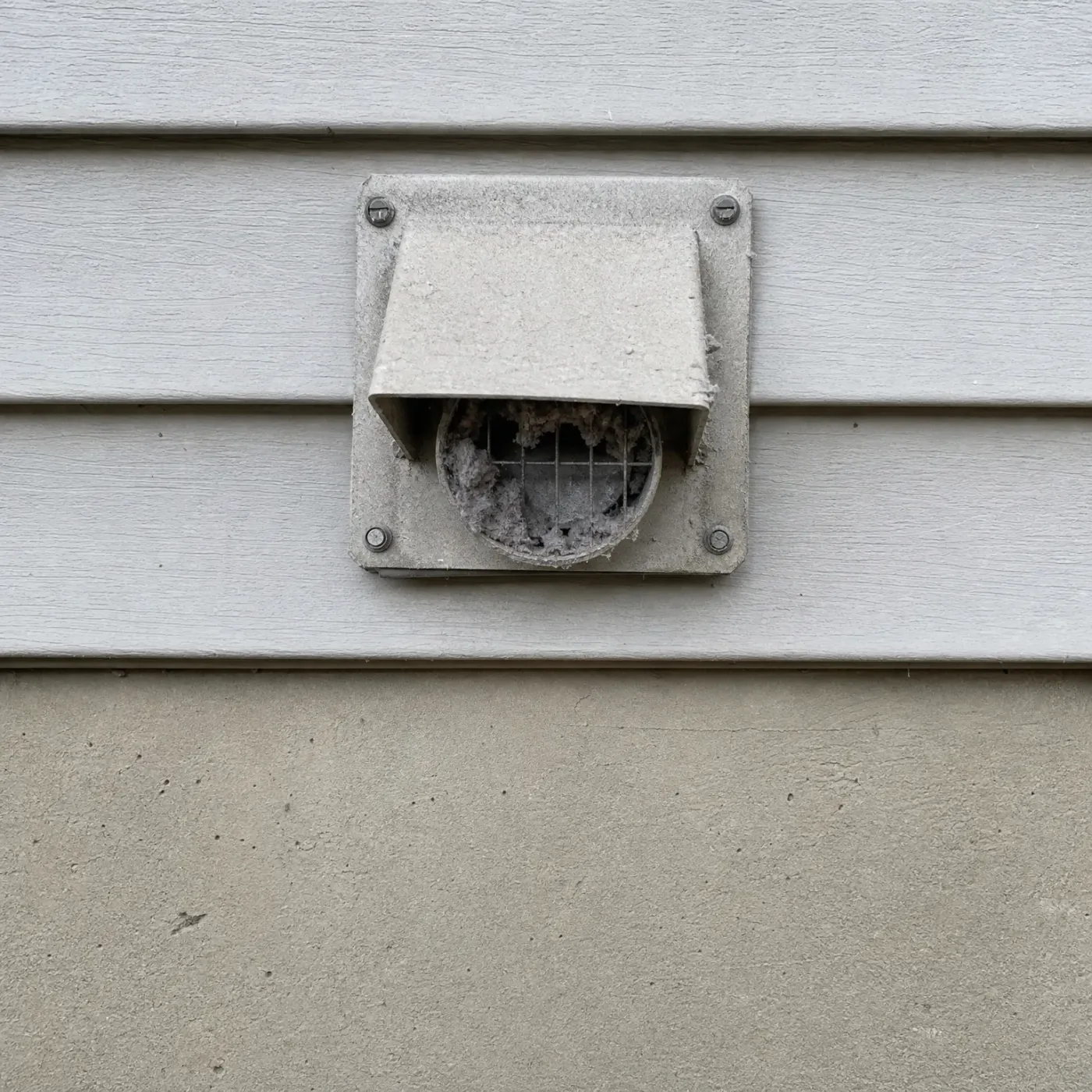
The mesh screen across this opening is thick with gray lint, layered over itself until barely any gap is left. Air has nowhere to go, so it backs up through the duct and into the dryer instead.
You've already pulled the dryer out and checked the first stretch of flexible duct, maybe even brushed it out, but the dryer still runs hot and the clothes still come out damp. That tells you the clog isn't where you looked. The question is whether the problem sits close to the dryer where you can reach it, or further down the line where it takes more than a quick brush to clear.
Lint collects first in the duct right behind the dryer, where warm air slows down as it enters the narrower run. If you clean that section and the dryer still runs hot or a load still takes two cycles, the blockage sits further down, often where the duct bends toward the outside wall or runs through a longer stretch to the vent hood. A short duct run from the dryer to an exterior wall clears easier than one that travels through a wall cavity or up through a floor. If your laundry room sits away from an outside wall, the duct has farther to go, and more places for lint to catch along the way.


Two cycles to dry a load, a dryer hot to the touch, a burnt smell in the laundry room, a vent hood flap that barely lifts. Any one of those points the same direction. Lint has built up somewhere between the drum and the outside wall, and the dryer is working harder to push air through a line that's narrowing. It won't clear on its own, and running more loads through it only packs the lint tighter.
Rutland County dryers run often, and a vent cleared last year can be tight again by next winter. That's not a sign something was done wrong. It's just how often the machine runs and how dry the air stays in a house heated by oil most of the year. Once you know what to check, the outside hood tells you in under a minute whether air is actually moving.
From here, the job is clearing the line, not guessing at it. A contractor who works on these vents all season has usually seen the exact run of duct common to houses built in this area, and knows where lint tends to sit first. You'll hear from one contractor, not a handful, so there's no pile of calls to sort through, just someone local who's cleared this exact kind of blockage before and knows where to start looking.

Done looking for a dryer vent pro



