











Is a clogged dryer vent a fire risk in Woodstock, VT

A white square plastic dryer vent hood with a hinged flap propped open, revealing a round duct opening, shown against a plain light gray background.
Skip the calls

Yes. A clogged dryer vent is one of the most common causes of house fires, and it happens because lint builds up inside the duct until hot air from the dryer can't escape. That trapped heat has nowhere to go, and lint itself is one of the easiest things in your house to catch fire. In Windsor County, a lot of dryers run harder in the winter when you're drying heavier loads and the air coming into the house is already cold and dry, so the dryer works longer to get clothes done. A longer run time means more heat built up against a blockage. If your dryer has been taking longer than it used to, or the top of it feels hot to the touch partway through a cycle, that's the vent telling you it's restricted. Clearing it isn't a once-and-done fix either. It's something that needs checking on a schedule, because lint keeps building the whole time the dryer keeps running.

How much does a clogged vent actually raise your risk at home?

  • 2.26 people per household on average

    Most households here run 2.26 people, which usually means loads most days of the week. A blocked vent gets more use before anyone notices the dryer running long.

  • Half the homes here were built by 1973

    Half the homes in Windsor County went up in 1973 or earlier. Vent runs from that era are often longer or metal duct that traps lint in the joints.

  • Power here costs 22.70 cents per kilowatt-hour

    Electricity here runs 22.70 cents per kilowatt-hour. A clogged vent makes the dryer run longer to dry the same load, and you pay that rate the whole time.

ACS 2020-2024 · EIA-861 2025

A vent that runs clear

A dryer that vents freely shuts off when the clothes are dry, because the moisture sensor or thermostat reads what it expects to read. The exhaust air moves out through the duct and outside, taking the heat with it. The lint trap catches most of what comes off the clothes, and what gets past it keeps moving through the duct instead of settling. A dryer working this way runs one cycle and stops. Through a Vermont winter, with the dryer running more often because everything comes in off the line, that matters more than it would somewhere mild. The motor and the heating element both run less over the life of the machine.

A vent that's packed with lint

A clogged vent holds the heat inside the duct instead of letting it out, so the dryer keeps heating to reach a temperature the sensor is waiting for. Cycles run long, sometimes twice, and the back of the dryer gets hot to the touch. Lint sitting in a duct that's run hot for an hour at a time is already most of what a fire needs. In a house that heats with oil, the dryer is often tucked near the furnace or in a small mechanical room with little airflow of its own, which gives trapped heat even less of a way out.

A woman in a cream sweater with her hair in a bun laughs while seated at a stone counter holding a glass of red wine, in a dimly lit interior with a sofa, houseplants and a large window at night.
A woman with long dark hair in a cream knit sweater laughs while looking off to the side, seated in front of a dimly lit kitchen with an island, stools, open shelving and a potted plant, with a glass of red wine in the foreground.
A smiling woman with long dark wavy hair in a light knit sweater sits at a marble counter with a glass of red wine, with a dimly lit living room and kitchen in the background.
A smiling woman with long wavy brown hair in a beige sweater sits at a white marble counter with a glass of red wine, with a living room, dining table and kitchen cabinets behind her.

A dryer heats air, pushes it through the duct, and shuts off once the thermostat senses the load is dry. When the duct is clogged, that hot air backs up instead of leaving, so the heating element keeps cycling longer than it should. Lint is what's piling up in there. The trap in the door catches most of it, but some always slips past and settles further down the line, usually at a bend or right where the duct meets the outside wall. That buildup is dry and loose, and it doesn't take much, a spark or a surface that's gotten too hot, to set it off. The duct material matters here too. Rigid metal holds up against heat better than vinyl or foil, which can soften or sag once airflow slows behind a clog. None of this shows up as a dramatic warning sign. It shows up as a dryer that runs a little longer than it used to, pulling more power to finish the same load, and in Windsor County that extra draw adds up on the bill before it ever turns into something worse.

How a clogged vent catches fire

  • The heating element or burner only cycles off when the thermostat senses the right temperature, so a blocked vent makes it run longer than it should.
  • Lint is dry, fine, and packed loosely, which is exactly the kind of material that catches from a small spark or a hot surface.
  • A clog usually builds at the point farthest from the dryer, often where the duct bends or where it exits the wall to the outside.
  • The lint trap in the door catches most fibers, but a portion rides the airflow past it and settles further down the duct every load.
  • Rigid metal duct resists heat better than vinyl or foil duct, which can soften or sag where lint has already slowed the airflow.
  • A dryer working against a clog pulls more power to finish the same load, and in Windsor County that extra draw costs more than most places.
A white hooded exterior dryer vent with a mesh screen, screwed to light gray horizontal lap siding above a concrete foundation.
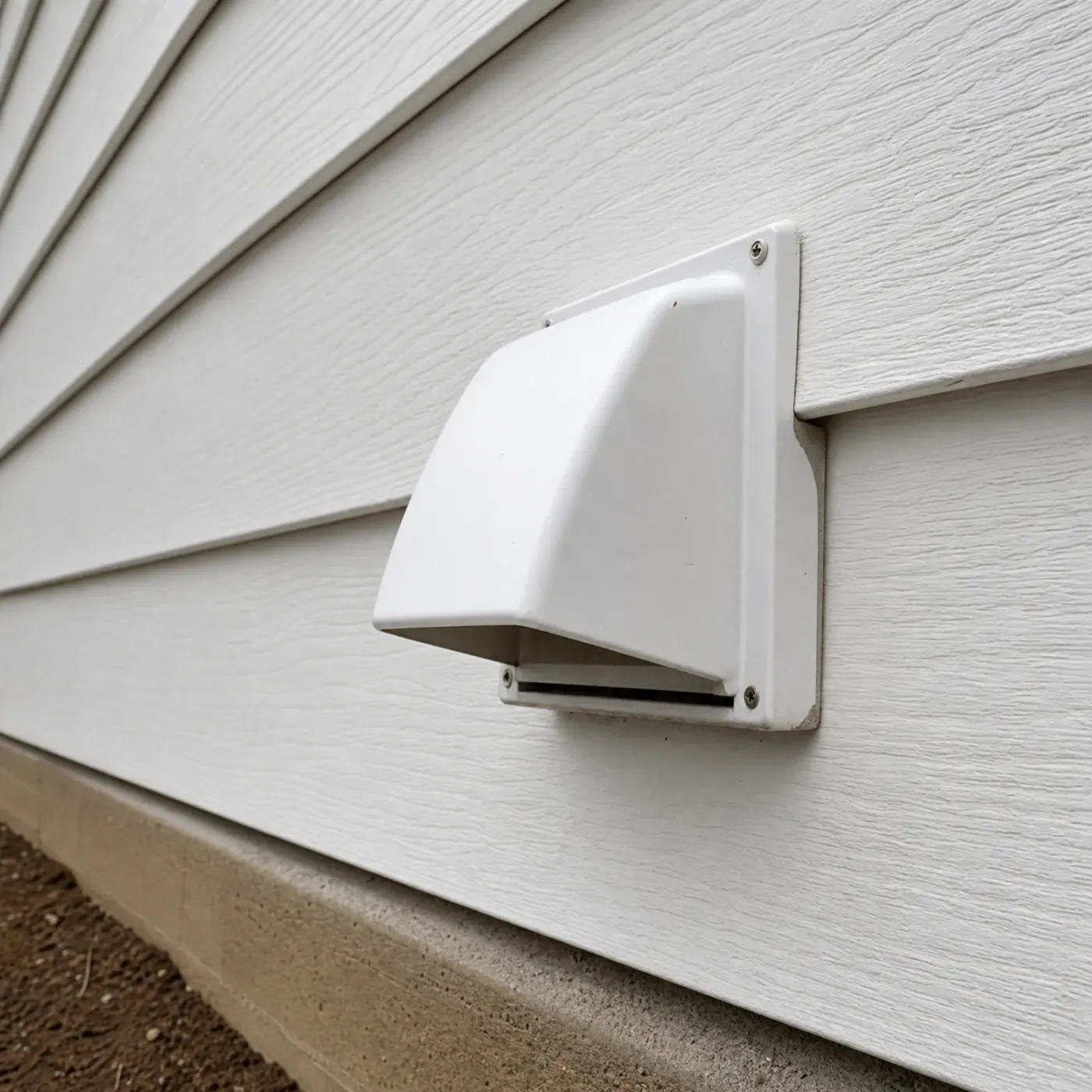
A dryer that vents freely sends the hot, damp air straight outside through a hood like this one, so the heat has nowhere to collect.
A metal dryer vent hood mounted on beige horizontal lap siding, with gray lint clogging its open flap, above a lighter textured foundation wall.
A hood clogged like this one is already holding lint the dryer couldn't push out, and more builds up behind it every load.

Why does a load of laundry take two tries to dry lately

You run a normal load and pull out clothes that are still warm and a little damp, so you run it again. The dryer feels hot to the touch partway through, and the room it sits in picks up a warm, stuffy smell that wasn't there before. Lint gathers around the lint trap housing or behind the machine faster than it used to, even though you clean the trap every load. Run your hand near the outside hood while the dryer is on. Weak airflow, or none at all, means the duct is holding heat and lint instead of pushing both outside, and that's the condition that lets a small spark become a house fire.

A bearded man in a dark navy sweater over a collared shirt smiles and looks off to the side while seated at a dinner table with a glass of red wine, a lit candle, and a plate of food in the foreground of a dimly lit room.
A woman in a dark gray sweater reclines on a couch with her eyes closed and a knit blanket over her lap, an open book resting face-down in front of her, with a lit table lamp and shelving blurred in the background.
A white hooded dryer vent cover screwed to white lap siding above a concrete foundation and bare soil.

No calling every shop in Windsor County

The pro who gets in touch is licensed in Vermont and works in Windsor County.

Skip calling around for someone who cleans dryer vents.

Answer a few questions

No charge to send it. You decide if you hire them.

Why does a dryer vent catch fire instead of just clogging up

You can picture lint building up and slowing the dryer down, but it's harder to picture how that turns into an actual fire. The dryer isn't plugged into anything that sparks on its own, so it's fair to wonder what has to go wrong inside the vent for lint to start burning instead of just piling up and making the dryer run longer than it should.

It catches because heat builds up with nowhere to go and lint is the easiest thing in the house to ignite

The heating element keeps cycling because the thermostat still reads cool air where it expects warm, dry air moving past it. With the vent blocked, that heat has nowhere to go but back into the duct and the dryer housing, so the temperature inside climbs well past what the dryer was built to run at. Lint sitting in that same duct is dry, loosely packed, and surrounded by growing heat. It doesn't take an open flame, just a hot enough surface or a spark from the motor nearby. Once it catches, the fire has a straight path of fuel running back through the duct toward the dryer itself, which is why these fires move fast once they start.

  1. Lint sheds off wet clothes and rides the exhaust air down the duct.

  2. A narrow spot in the duct lets lint catch instead of blowing through.

  3. Each load leaves more lint behind until airflow really starts to slow.

  4. The heating element keeps cycling longer because the dryer still reads damp air.

A beige plastic dryer vent hood mounted on horizontal vinyl siding, with clumps of gray lint protruding from the open flap.
Before you get your dryer vent cleaning
A white hooded exterior vent cover with a louvered underside, screwed to beige horizontal lap siding above a lighter stucco lower wall.
After you get your dryer vent cleaning

Checking it yourself

Step outside while the dryer runs and find the vent hood. Hold your hand near it. You should feel a strong, steady push of warm air. If what comes out is weak, or you see lint caught in the flap so it can't close all the way, air isn't getting out the way it should. Winter makes this harder to catch, since a weak flow of warm air outside can look like nothing at all once the temperature drops. Check on a day that isn't windy, so you can actually feel what the hood is putting out.

What a pro checks instead

A contractor who services vents runs a brush or rod the full length of the duct, not just the end you can reach at the hood. Lint catches at elbows, at the seam where two sections join, and anywhere the duct makes a tight turn, and none of that shows up from outside. They'll also check the hood flap moves freely and the duct run itself doesn't have a low spot where lint and moisture can sit. That's the part of the job a visual check from the yard can't tell you.

2.26 people per household on average

With 2.26 people in the average Windsor County household, most homes here aren't running one load a day, they're running several through the week. Every load that goes through a clogged vent adds more lint behind the blockage, so the risk doesn't sit still. It builds with the laundry.

ACS 2020-2024

A pile of gray and taupe towels sits on top of a white laundry appliance in a dim room beside a window with trees and sunlight outside.

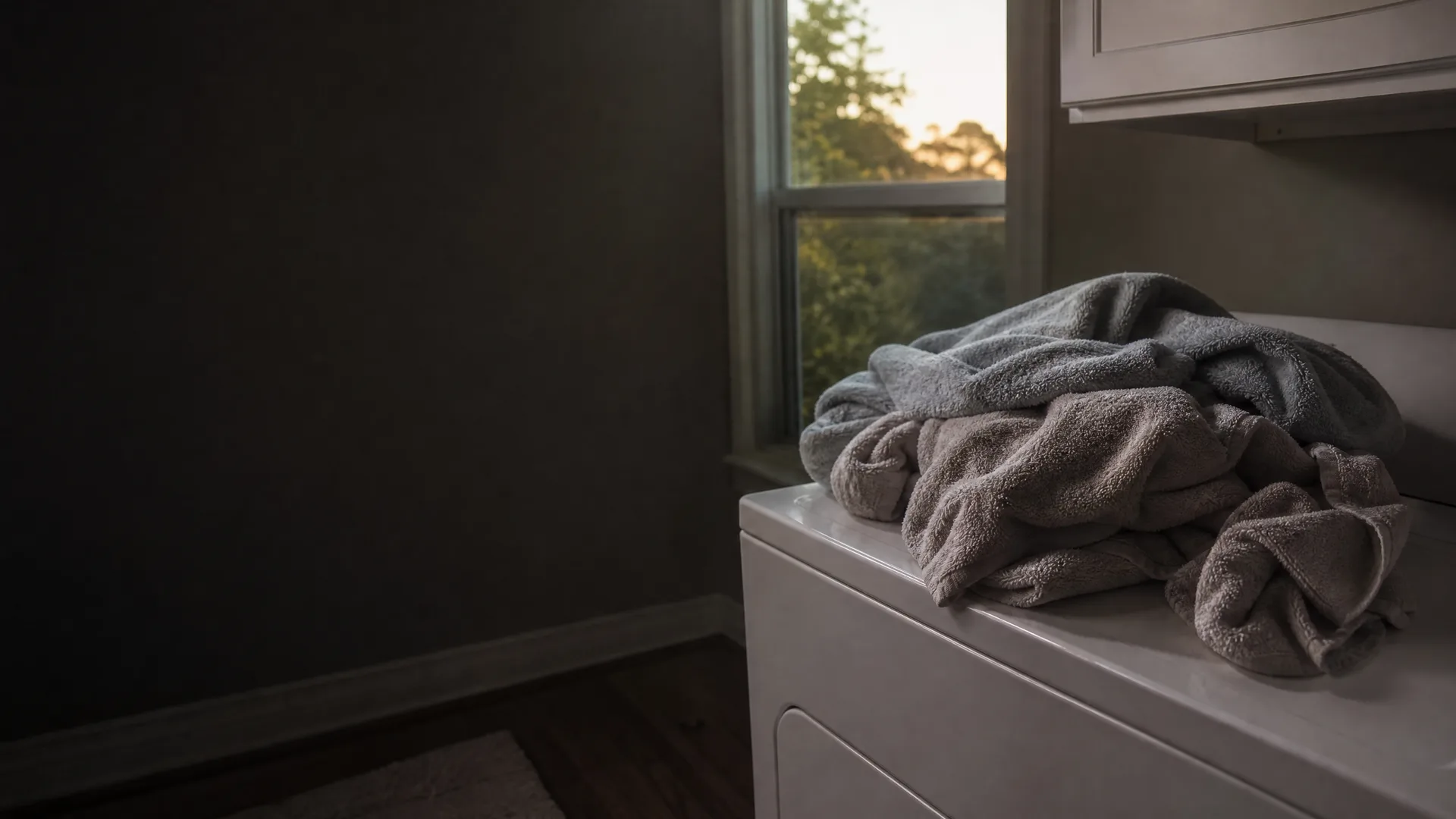
It's a little past seven on a weeknight, dark already outside, snow crusted on the window above the washer. You pull the dryer door open expecting warm, dry towels and instead get a damp, heavy armful, still cool in the folds. You pile them on top of the dryer and stand there a second, catching the smell of hot dust in the air. You start the load again anyway, because it's late and the towels need to be put away, and you've got a drawer of school clothes to get through after this. The dryer hums back to life behind you as you walk out, leaving the towels stacked there for the second try.

A closed silver laptop and a glazed ceramic mug on a wooden table, with a blurred kitchen counter, potted plant, cutting board and window in the background.

So yes, it's a real risk

A clogged dryer vent can start a house fire, and the longer it runs blocked, the more lint it has fed by the time anyone notices. The checks are simple: weak airflow at the hood, a dryer that runs hot, towels that take two cycles. If any of that sounds like your house, the vent is telling you something.

Finding someone to clear it shouldn't be its own chore on top of that. You don't need to call around Windsor County asking who does this, explain the same thing three times, or weigh quotes from people who don't know your setup. One local contractor who deals with vents like yours every winter, oil heat and all, can look at it and tell you where it's caught.

Interior corner of a dining room with a round wooden table, a ceramic vase holding olive branches, a dark spindle-back chair near a curtained window, and a sideboard with a lamp against beige walls.
A galvanized metal hooded dryer vent screwed to gray lap siding on an exterior wall.

Skip the search

Duct and vent cleaningWindsor County, VT
Step 1 of 3

What kind of equipment?

