Mini Split Installation in Burlington, VT
A new system here will heat from September through May and cool from July through August every year. Tell us about the house, and a licensed contractor who covers Chittenden County will get in touch.
Tell us about the job
It takes about a minute.
Burlington asks a mini-split to work almost all year
Winter nights here average 12°F, and homes need heat from September through May, nine months straight. Whatever you install has to hold up on the coldest nights, not just the mild ones in between. Summer only asks for two months of cooling, with afternoons around 77°F, so the same unit spends most of its life heating, not cooling.
Any mini-split made from 2023 on has to meet 14.3 SEER2 for cooling and 7.5 HSPF2 for heating, whether it has ducts or not. Vermont has logged 53 winter storms and 124 damaging wind events over the past ten years, and in 2024 about 21 percent of households here lost power for at least a day. A mini-split needs electricity to run, so what happens when the power goes out is worth asking about before it does.
- 9 months
- September through May, your system heats
- 2 months
- July through August, it cools
- 12°F
- the average winter night it heats against
- 77°F
- the average summer afternoon it cools against
NOAA nClimDiv, 1991–2020 normals
Vermont has no state license for HVAC contractors.
Vermont keeps no record of who installs mini-splits and no state agency tests or licenses them. That is different from a county that licenses locally, or a state that registers businesses without testing them. In Vermont neither exists.
What protection exists here comes from the local building office instead. In most cities and counties, installing a mini-split needs a permit and an inspection once the work is done. That inspection is what checks the job, not a license.
Source: Vermont Department of Public Safety, Division of Fire Safety
- Is a mini split worth it?
- For most homes it is, especially where a room or addition has no ductwork to tie into. A mini split heats and cools that space directly, and modern units are built to work down into very cold weather, which matters here with winter lows averaging 12°F. Whether it makes sense for your house depends on which rooms need coverage and what heat source you have now, so a contractor will need to look at the specific space before pricing it out.
- How many rooms can a mini split cover?
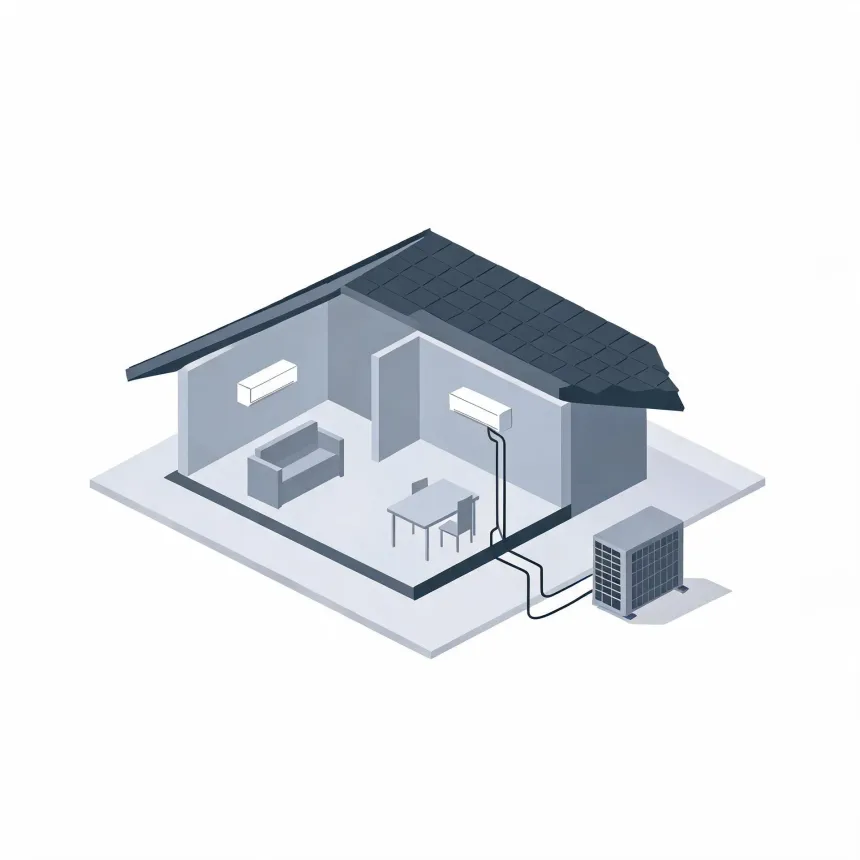
- A single outdoor unit can run one indoor head or several, depending on the system. Single-zone systems cover one room or open area. Multi-zone systems run several indoor heads off one outdoor unit, each with its own thermostat, so you can heat or cool only the rooms in use. How many zones a given house can support comes down to the layout and where the outdoor unit can go, which is something a contractor sizes for the house.
- Can a mini split heat a whole house?
- A multi-zone mini split can heat a whole house if there are enough indoor heads placed to cover every room, but it takes planning to get the coverage even. Homes here need heat from September through May, nine months of the year, with winter nights averaging 12°F, so the system has to be sized and placed to keep up on the coldest nights, not just the mild ones. A contractor can work out how many zones your house needs and where they should go.