

Profile view of a bearded man wearing a dark baseball cap and a dark gray T-shirt against a plain off-white background.

Birds nesting in a dryer vent in Barre, VT

Duct and vent cleaningWashington County, VT
Step 1 of 3

What kind of equipment?

A bird in your dryer vent usually means a flicker or a sparrow built a nest just inside the hood flap, often in spring when they're looking for a sheltered spot to raise a brood. The vent is warm, dark, and out of the wind, which makes it attractive once the flap is propped open even a little by lint buildup or a weak spring. Once a nest is in there, the vent can't push air outside anymore, so your dryer takes longer to dry a load and the motor runs hotter than it should. Lint packed in around a nest is a fire risk, since it's exactly the fuel a stray spark from the heating element needs. If you've noticed chirping near the vent, a smell when the dryer runs, or clothes coming out damp after a full cycle, that's the vent telling you it's blocked. It needs to be cleared out and the vent checked to make sure the flap closes properly again.

A white hooded louvered vent mounted on beige horizontal lap siding above a stucco foundation wall bordered by river rock gravel.
The flap sits flush and swings free, with clear plastic louvers and no twigs or feathers caught in the hinge.
A white plastic hooded dryer vent with a lint-covered screened opening mounted on beige horizontal vinyl siding above a concrete foundation.
Lint and grime cake the screen and the flap hangs loose, the kind of gap a bird can slip through.

How a Nest Blocks Your Vent

  • A dryer vent hood flap should hang closed by its own weight when the dryer is off, sealing the duct from outside.
  • Birds work fast in spring, often finishing a nest in a day or two once they find a gap in the flap or screen.
  • A nest packed against the damper blocks airflow long before you notice slower drying times, because exhaust still finds a way out around the edges.
  • Trapped lint mixed with nesting material ignites easier than lint alone, since twigs and feathers hold heat the way straw does.
  • The vent run from a Barre home often has one or more turns before reaching the hood, and a nest built past the first bend won't show from outside.
  • A dryer that cycles longer than it used to, or shuts off on its own mid-cycle, points to blocked exhaust before anyone checks the hood.

The hood flap on a dryer vent is supposed to do one job: swing open when the dryer runs and fall shut when it's off. That weight is what keeps birds out most of the year. In spring, a flicker or sparrow looking for a sheltered spot finds a flap that sticks or a screen with a gap, and once they're in, the nest can be built in a day or two. From outside, everything can look fine, especially if the vent run has a bend or two before it reaches the hood, which most vent runs around Barre do. A nest built past that first turn stays out of sight even when you check the hood yourself. What you'll notice instead is the dryer working harder. Cycles that run long, or a dryer that shuts off partway through, mean the exhaust isn't getting out the way it should. Air is still escaping somewhere, usually around the edges of the blockage, which is why the vent can seem to be venting even while it's mostly packed shut. The bigger risk is what that packed vent holds. Lint alone burns fast, but lint mixed with twigs and feathers holds heat longer, closer to the way straw does, and that combination sits right at the point where a dryer runs hottest. A nest in the vent isn't just a clog. It's fuel sitting in the one place heat is supposed to pass through and leave.

A woman in a cream cowl-neck sweater stands in a lamp-lit room looking out a window at a snow-covered yard with shrubs and bare trees at dusk.
A woman in a gray turtleneck sweater stands near a large window in a lamp-lit living room, looking out at falling snow and snow-covered conifers.
A woman in a chunky knit sweater stands by a large window looking out at snow-covered ground, with a dimly lit living room containing a gray sofa, framed artwork, shelves and table lamps behind her.
A woman in a gray turtleneck sweater stands in a dimly lit living room with a lamp and bookshelves, looking out a multi-pane window at falling snow.

A nest blocking the vent forces the dryer to push hot, damp air back up the duct instead of outside, and that moisture has nowhere to go but into the vent walls.

In a Washington County winter, that trapped moisture can freeze inside the duct, which blocks the vent further and makes the dryer work harder to push air through at all.

Why does this keep happening at your house and not the one next door?

  • 2.26 people per household on average

    A household of 2.26 people here runs a dryer often enough that a vent left unchecked rarely stays clear for long.

  • Half the homes here were built by 1973

    Half the homes in Washington County date to 1973 or earlier, old enough that the vent hood may be the original, worn flap a bird can push past.

  • Power here costs 23.23 cents per kilowatt-hour

    Power here runs 23.23 cents per kilowatt-hour, and a vent blocked by a nest makes the dryer run longer to do the same load.

ACS 2020-2024 · EIA-861 2025

  1. A bird finds the vent hood and tests the flap for a gap.

  2. It carries twigs and grass inside over a day or two.

  3. The nest packs against the damper, and the flap stops closing flush.

  4. Lint builds up behind the blockage every time the dryer runs.

A bearded man in a plaid flannel shirt stands indoors looking out a window at snow-covered conifers, with a ceramic mug on the wooden sill and wooden cabinets behind him.
A smiling bearded man in a green t-shirt sits on a gray sofa, looking down toward a device at the bottom of the frame, with a bookshelf and a green plant blurred behind him.

A local pro for your dryer vent cleaning

A nest in the vent does not clear itself, and running the dryer against it only packs the lint in tighter behind it. Reaching the hood flap on a Barre house usually means a ladder and pulling the duct apart at the wall, not something to work out between loads on a cold evening. Washington County winters do not leave much room for a vent that cannot push air outside, since the moisture that backs up has to go somewhere, and freezing in the duct is what happens next. Getting a contractor out to clear the nest, check the flap, and make sure the duct is sealed again settles the question instead of leaving you checking the vent hood every few days wondering if it is drying right. Send the request and that part is off your plate.

What you'll notice first

The dryer takes longer to finish a load than it used to, and the clothes come out warm but not fully dry. You may hear scratching or chirping from the wall when the house is quiet. Lint smell can back up into the laundry room instead of venting outside. If you open the hood from outside, you might see grass or twigs poking through the louvers before you see the bird itself. None of this announces itself loudly. It shows up as a dryer that seems to be working harder for a worse result, which is usually the first sign something is blocking the duct.


What it puts at risk

Lint is what burns, and a nest blocking the vent gives it a place to pile up right where heat and moisture collect. That combination is a known cause of dryer fires. Past that, the trapped moisture works into the duct and, once winter sets in, can freeze and crack it. A blocked vent also makes the dryer run longer per load, and with power costs in Washington County among the highest in the country, that adds up on the bill month after month until the nest is cleared out.

A square plastic dryer vent hood mounted on light-colored horizontal lap siding above a concrete foundation, with gray lint clogging its screened opening.
Before you get your dryer vent cleaning
A white hooded dryer vent cover mounted on beige horizontal vinyl siding above a concrete foundation wall with gravel at the base.
After you get your dryer vent cleaning
A white plastic hooded dryer vent with a screened opening mounted on gray horizontal lap siding above a concrete foundation and gravel bed.

Vent clear and sealed

The hood flap hangs flush against the siding and swings open only when the dryer pushes air out. No lint ring, no staining, nothing caught in the hinge. Air moves straight out and the flap falls shut on its own once the dryer stops.

A white plastic dryer vent hood mounted on horizontal lap siding, clogged with gray lint at its lower opening, above a concrete foundation and walkway.

Vent blocked by lint and nesting

Lint has packed around the opening and streaked down the foundation below it. The flap sits open instead of closed, held that way by what's built up behind it. That gap is exactly what a bird looks for in spring.

A woman in a long cream cardigan and jeans stands at an open wooden front door of a gray shingled house with stone-based porch columns, with a second person visible inside, and potted flowers and shrubs beside the entry.

A clear vent, checked and left alone

A bird in the vent is a flap that stopped closing and a nest that got in before anyone noticed. Clear the duct, fix the flap, and the dryer goes back to pushing air straight outside where it belongs. That's the whole problem and the whole fix.

Once you send the form, you're not the one tracking down who can get up on a ladder and pull the duct apart at the wall. A contractor who works on vents like yours in Washington County gets matched to your job and reaches out to you. You've done the part that mattered, which was noticing before the lint behind that nest became something worse.

A large weathered ceramic vase and a shallow wooden bowl sit on a rustic wooden table beside a window with linen curtains, with a blurred sofa with cushions and a hanging fabric panel in the background.
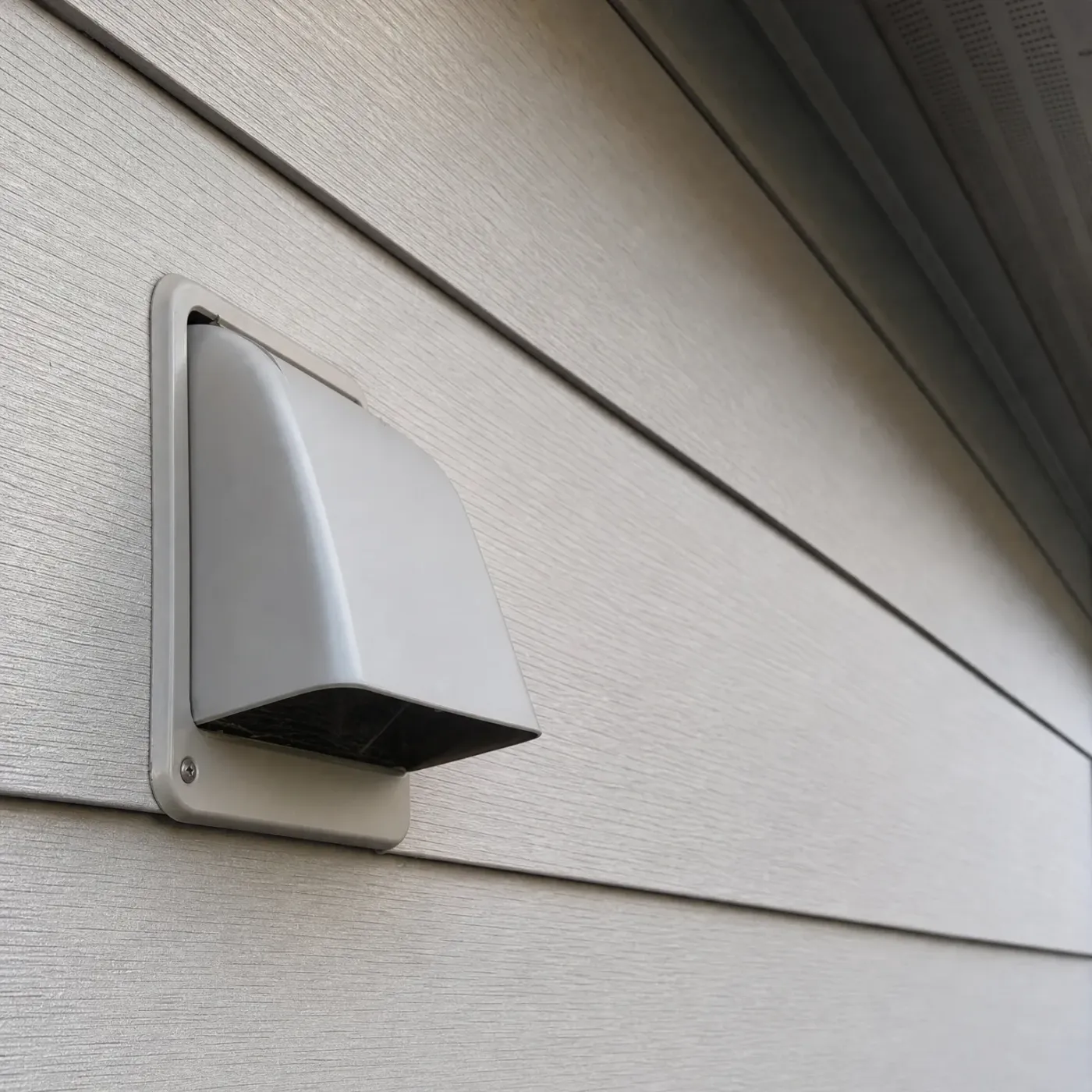
A gray hooded dryer vent cover mounted on light gray horizontal lap siding, viewed at a steep angle.

Get the right pro for your dryer vent

Get my match

One request and the search for a pro is handled.

There's no charge for the request.